Decide whether the load needs rinsing or extraction
A load can need another rinse, more permitted extraction or help after an interrupted cycle. Those are different tasks. Before selecting a utility cycle, write what is unfinished and whether the preceding wash actually completed. Wet fabric alone does not reveal which stage occurred, and an unlocked door does not necessarily mean every intended stage finished.
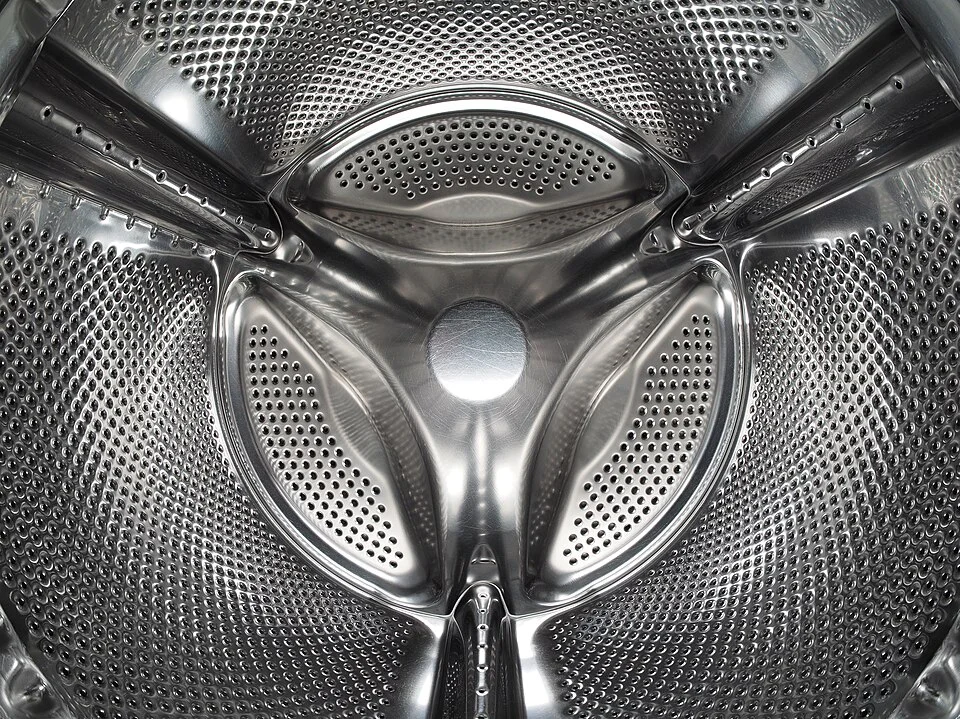
The visible drum provides a load-space reference, with perforations and lifting ribs rather than programme instructions. Describe the unfinished task before choosing a utility cycle. Confirm in the exact model manual whether a named selection drains and spins only or adds rinsing through a separately accepted option.
Photo & usage
Petar Milošević · CC BY-SA 4.0 · Source. Display copies resized and encoded as WebP; no instructional details were fabricated or removed.
Find the exact model's utility-cycle instructions. Some washers have separate Rinse & Spin and Drain & Spin selections; others combine them through an extra-rinse option. Do not assume that a familiar dial name behaves like the last machine you owned. Record the final accepted option state before starting.
Whirlpool washer cycle guide W11744323A provides a specific combined-selection example: the covered Drain & Spin selection can add a rinse through the Extra Rinse option. This is evidence that option state matters, not a universal control recipe. Use your machine's own guide and the fabric-care limits for the actual load.
Record interruption and error information first
If a cycle stopped unexpectedly, copy the displayed message, stage and approximate time before resetting anything. Note a power interruption or deliberate pause if known. Follow the manual's restart or cancellation instructions. Never force a locked door, bypass a lid switch or use a hidden diagnostic mode from an unrelated model.
If water is visible in the drum or an error concerns drainage, consult the relevant user guidance or support rather than repeatedly selecting spin. A utility programme cannot repair a blocked or failed drain path, and repeated attempts can obscure the original symptom. Stop for leakage, abnormal noise or unstable movement.
Whirlpool front-loading washer use and care guide W11339488A distinguishes utility selections and provides model-specific controls. Keep that scope visible when reading its examples. The household record should say which preceding stage is known to have completed and which is uncertain. If the cleaning history is unknown, do not treat one added spin as proof that the load was adequately washed and rinsed.
Keep the load history attached to the recovery choice
If someone else started the wash, ask which programme and options were accepted and whether any completion message was seen. Do not replace a missing answer with the assumption that the longest stage must have finished. A load found wet after a power interruption can have several different histories. Write unknown stage where appropriate and use the documented recovery route or support advice.
After recovery, retain the exact sequence: original programme, interruption, utility selection and final result. That sequence matters if the same error returns or residue remains. A record containing only the last successful spin loses the information needed to decide whether cleaning, rinsing or extraction was incomplete. It also prevents an apparently tidy final load from being described as though every intended original stage had been verified.
Confirm whether the selected route adds water
Read the utility-cycle row and its available options together. If the aim is extraction only, confirm how the actual model selects that task without an unintended rinse. If the aim is rinsing, confirm the permitted combination and whether detergent should be absent. Follow the model and detergent instructions rather than improvising a dose.
Whirlpool: Cycles, Options, and Modifiers on a Top Load HE Washer describes Rinse & Spin as a combined rinse and high-speed spin for covered top-load washers and notes that features vary. It is not the same instruction as a dedicated spin-only stage. The distinction matters when the household is trying to remove remaining water rather than introduce another rinse.
Check garment limits before selecting a high-speed utility programme. A fabric that was washed on a restricted cycle may not tolerate the utility cycle's default spin. If the necessary spin limit cannot be selected, ask the manufacturer for an appropriate permitted route rather than assuming that a short programme is automatically gentle.
Compare intended work with selected options
This table uses illustrative invented situations. The control labels are generic examples, not instructions for a particular washer. The actual manual determines which combinations exist and what they do.
| Known need | Selection to confirm in actual guide | Unwanted assumption |
|---|---|---|
| Completed load needs permitted extra extraction | Drain/spin route with no unintended rinse | Every spin-labelled selection avoids adding water |
| Load needs an additional permitted rinse | Rinse-and-spin route and allowed spin | Drain-only action will remove residual detergent |
| Previous programme stopped at unknown stage | Documented recovery route or support advice | A utility cycle completes all missing wash stages |
The third row is the most important boundary. An interrupted programme may need a different recovery decision from a normally completed load. Keep the preceding status in the record so the next action addresses the unfinished task rather than simply making the fabric feel less wet.
Observe normal operation without intervening mechanically
Start the confirmed permitted selection and let the machine operate normally. Do not reach into moving laundry or open a service panel to see whether water is flowing. Record the start, accepted options, normal completion and any displayed error. A sound of water is an observation, not a measured volume.
If the cycle does not complete or the load remains unusually wet, use the model's user-level troubleshooting and contact support where needed. Do not repeat the same utility cycle indefinitely. Persistent problems can involve load distribution, permitted capacity, drainage or equipment behavior that this record cannot diagnose.
For a load with suspected excessive detergent or residue, revisit the original dosing instructions as well as the rinse decision. An extra rinse may be appropriate for a particular case, but it should not become a permanent way to compensate for an unsuitable dose. Record the reason for the added stage so future cycles do not inherit it without thought.
Judge rinsing and extraction separately
After normal unlocking, inspect the outcome relevant to the selected task. For extraction, note whether the load is in an ordinary manageable condition for its next permitted drying step. For rinsing, record obvious residue or remaining concern without claiming that appearance proves every detergent component has been removed.
Do not label a load sanitized because it received another rinse, and do not use a utility cycle to infer microbiological safety. These selections have defined appliance jobs. The household result is about the ordinary task and the actual instructions, not a health certificate.
If the utility cycle was part of recovering from interruption, record what the manual or support advised and what is known about completion afterward. Preserve an error history for service. A new successful countdown does not erase uncertainty about the earlier wash unless the documented recovery route specifically addresses it.
Finish with a model-specific utility reference
Write a short reference with two routes: the documented rinse route and the documented extraction-only route, including the relevant option state and fabric restrictions. Add the exact manual identifier. If the machine does not offer one route, write that limitation instead of borrowing a button sequence from another washer.
Place the note with the manual rather than covering safety labels or controls. Recheck it if the machine is replaced or a different household member identifies a model mismatch. A generic laundry-room label can outlive the appliance it was written for and become misleading.
Completion means the household can state what the utility selection will do before starting, recognize when an interrupted load needs further guidance and judge the relevant result afterward. The useful distinction is simple but consequential: adding a rinse, draining water and extracting water are related operations, not interchangeable promises hidden behind the word spin.
THE REFERENCE FILE
Sources & scope
Documentation reviewed 1 Nov 2026. Examples are illustrative; this article does not claim hands-on product testing. Follow the instructions for your actual material, model and location.