A laminate worktop can tolerate ordinary daily wiping while remaining vulnerable at a poorly sealed seam. Its decorative face and supporting core are different parts of the assembly. A dark joint may contain dirt, but a raised edge may already involve swelling. Trying to soak that line clean can turn a cosmetic concern into a larger repair.
This guide focuses on counter seams, edge banding and cutouts, rather than laminate flooring. Identify the particular surfacing product before choosing a stain remover. Metal-faced laminates, high-gloss products and matte specialty surfaces may have different permissions. A successful method for the broad face does not automatically belong in an open joint.
Map the places liquid can enter
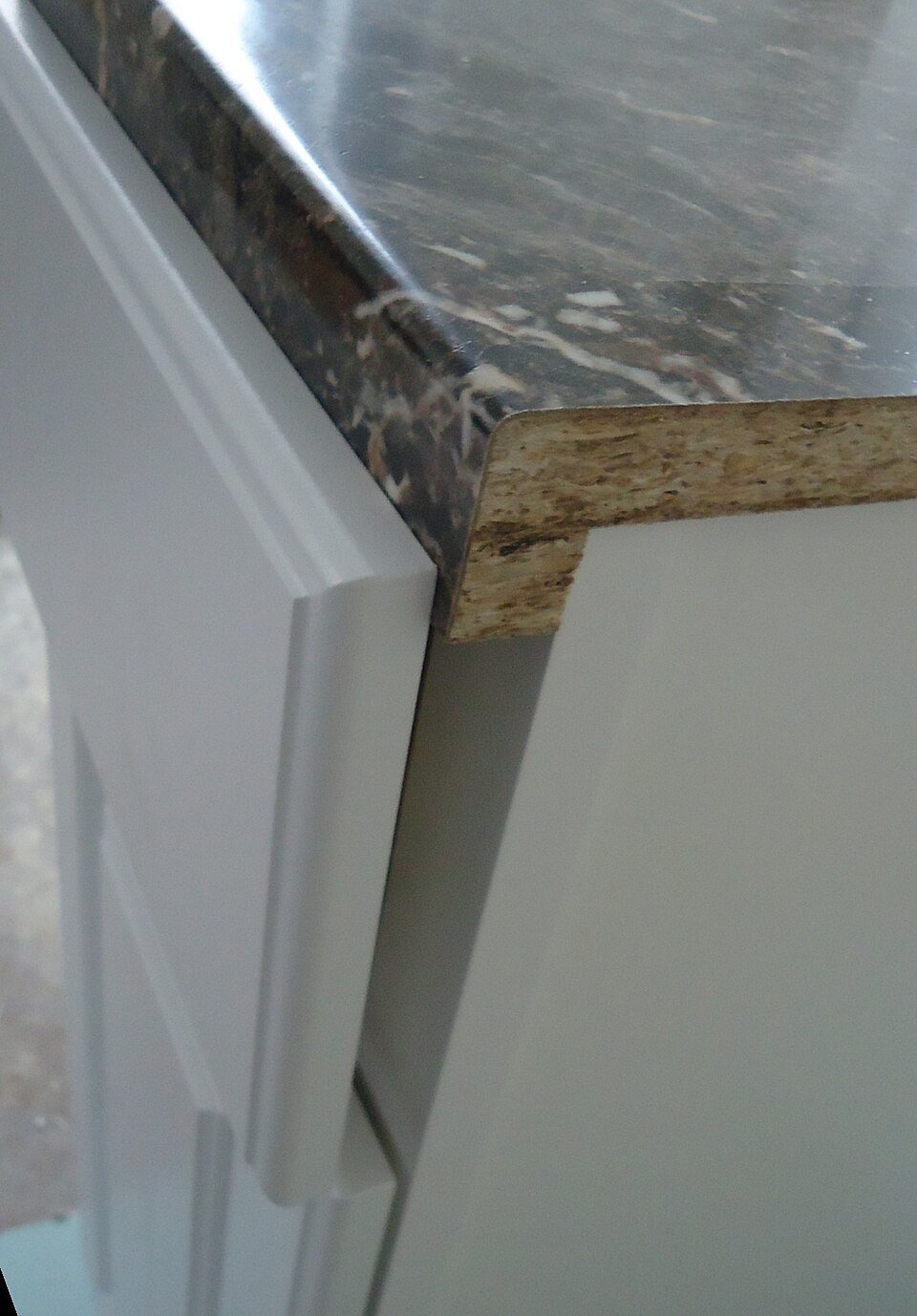
Clear the worktop and examine every joint under good light. Include the rear edge, appliance cutouts, corners and the join between two counter sections. Look for a raised ridge, a hairline opening, lifted edge banding or exposed board. Use a photograph rather than inserting a knife into the seam to investigate.
A line that stays flat and sound is a different cleaning prospect from one that has become rough or swollen. Do not press down a lifted edge repeatedly to test it. If a joint moves, keeps darkening or sits beside recurring leakage, ask the installer about the underlying cause. Cleaning the visible surface cannot restore a swollen core or replace a failed seal.
Confirm the laminate family
Find the brand and product name on the invoice or leftover sample. Formica's general cleaning guidance describes a mild cleaning step, clean-water removal and drying, while warning against flooding near seams. Its UK maintenance article also distinguishes special surfaces such as AR Plus and DecoMetal. These exceptions matter when a counter looks like ordinary decorative laminate but has a different exposed layer.
Carl Hansen & Son's laminate guide supplies another manufacturer example of regular damp cleaning and restrictions on unsuitable products. Follow the instructions for the actual installed product. Do not take permission for a solvent on one standard laminate as approval for lacquered metal-faced surfacing, its adhesive or its edge detail. When the surface cannot be identified, postpone specialist stain treatment.
Remove dry soil before introducing water
Collect crumbs with a soft clean cloth, paying attention to the joint without forcing debris into it. Lift loose particles away from a raised edge rather than rubbing across the lip. Check the cloth for grit and use a fresh face around polished or dark areas where scratches would be conspicuous.
If hardened food bridges an open seam, do not pry it out with a metal scraper. Remove what lifts easily without disturbing the laminate and refer the rest if necessary. Keep small appliances off the working area, moving them according to their instructions. Protect plugs and outlets from cleaning liquid. A clear counter allows you to complete each small area before solution reaches a vulnerable boundary.
Clean the intact face in manageable sections
Prepare the maker-approved mild cleaner and use a clean nonabrasive cloth. Apply the method to an inconspicuous intact area first, then complete the required clean-water wipe and drying. Judge the fully dry result for new haze, color change or altered sheen. Only proceed when the product permits the method and the trial remains stable.
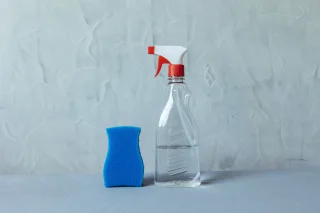
On the main face, wipe away soil with light pressure and collect loosened material promptly. Avoid a wet sponge that releases a puddle when pressed. Do not spray indiscriminately along the rear joint or leave a wet cloth beneath the cleaner bottle. Use separate cloths for cleaning and finishing so detergent does not return to the surface during the final dry pass.
Approach seams with cloth control
At a sound seam, use a well-wrung cloth and short passes directed so liquid cannot collect along the joint. Remove the cleaner as specified without flooding, then dry immediately. Keep the cloth flat enough that a loose hem does not catch the edge. Stop contact at a lifting lip or exposed core.
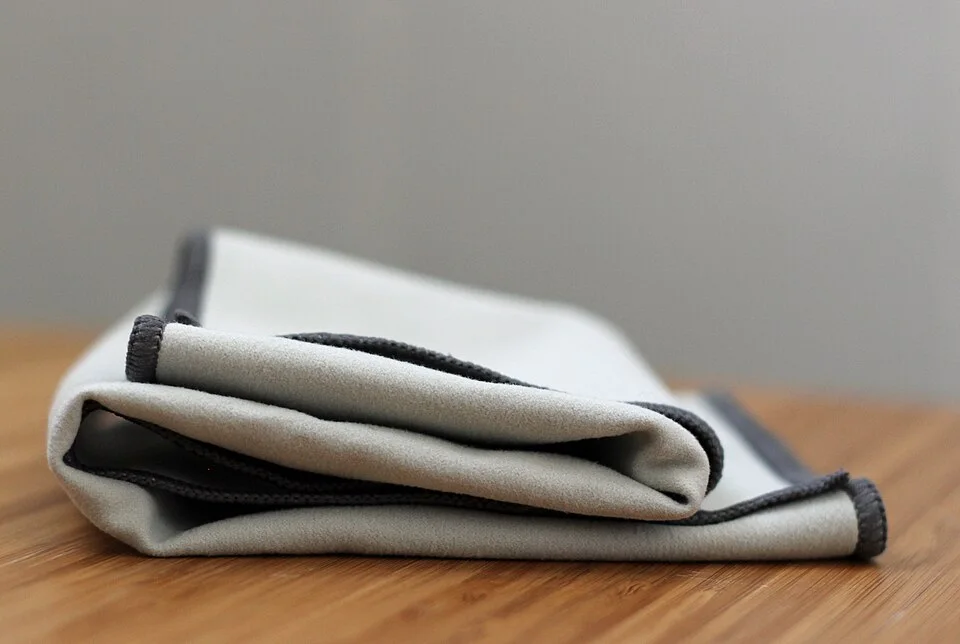
Finished cloth edges are clear in this reference, supporting the check for hems that could catch a lifted lip. It does not depict laminate, a sound seam or a safe amount of water.
Photo & usage
HelenOnline · CC BY-SA 3.0 · Source. Display copies resized and encoded as WebP; no instructional details were fabricated or removed.
The distinction is between the label's need to remove residue and an unnecessary flood rinse. A clean-water cloth can accomplish the directed removal on many laminate surfaces without pouring water onto the counter, but the actual instructions govern. If the joint cannot be cleaned without liquid entering it, postpone that area and ask the installer for a repair and care sequence. An unresolved seam is not an invitation to use a steam nozzle instead.
Interpret the dry result at the joint
| Before cleaning | After controlled wiping and drying | Decision |
|---|---|---|
| Flat dark line with loose crumbs | Debris gone; joint remains flat | Continue ordinary controlled care |
| Raised ridge beside a kettle | Ridge unchanged | Investigate water source and core damage |
| Sticky smear away from joint | Smear gone with sheen preserved | Finish routine cleanup |
| Lifted band with exposed board | Cloth catches the lip | Stop wet cleaning and request repair |
Do not judge success by the line becoming lighter while wet. Moisture changes reflection and can temporarily hide a gap. Use the original photograph and the dry surface to compare geometry as well as color. A joint that remains raised after soil is removed has a different problem from an intact seam with residual food.
Keep stain chemistry away from a structural defect
Special stain methods may be available for an identified laminate, but their instructions do not authorize long contact in an open seam. Check the product-specific permissions and adjacent material compatibility. Never use an acidic ceramic cleaner merely because a white deposit sits nearby; Formica's guidance warns that acid-based cleaners can permanently mark laminate.
Avoid abrasive pads, metal blades and furniture wax as ways to conceal a rough joint. A glossy face does not need an added polish layer to become clean. Do not inject glue under edge banding while the area may still contain moisture. A repairer may need to assess the core, replace a section or address a leak before rebonding. Covering the evidence can make that decision harder.
Make the cleaning route fit the counter
For an illustrative 240-centimeter-long counter, dividing work into six sections gives 40 centimeters per section. That division helps one person clean, remove residue and dry each section before moving on. It is not a surface coverage rate and does not change the cleaner's dilution.
At the section containing a seam, shorten the working area further if necessary so the joint stays visible throughout. Keep the dry cloth within reach on a stable tray. If another person shares the cleanup, give them a specific boundary such as stop before the raised rear joint, rather than a vague request to be careful. Simple spatial instructions are easier to repeat than an elaborate product routine no one remembers.
Check recurrence and completion
Inspect around the kettle, dispenser and dish rack for standing water before replacing them. Dry their bases and use only supports appropriate to the worktop. Repair recurring leaks or poorly sealed details through the correct installer rather than treating every wet patch as a cleaning issue.
The counter is ready for normal use when residue is removed, the face and sound joints are dry and the required product conditions are satisfied. Record any open or raised seam left untreated. Completion can include a repair referral: the clean intact face has been maintained, while a vulnerable core has been kept outside the wet-cleaning attempt.
THE REFERENCE FILE
Sources & scope
Documentation reviewed 1 Nov 2026. Examples are illustrative; this article does not claim hands-on product testing. Follow the instructions for your actual material, model and location.