Define the view you need to interrupt
A sheer curtain can soften an outside view without concealing everything inside. An opaque curtain can cover the glass but leave an opening at the side. Compare the curtains you already have against a particular daytime sight line and an actual indoor task. Do not turn a satisfactory midday result into a claim about nighttime privacy. The light relationship and viewing conditions will change.
Choose the area you want to screen, such as a dining chair visible from your own front path. Describe what privacy means for this exercise: no recognisable face at the chair, no readable large writing on the table, or no clear view of routine movement. Those are different criteria. Do not put personal documents or undressed people in the scene.
Use a neutral object on the chair or ask a consenting household member to sit clothed in the normal position. An outside helper should remain on land you can lawfully and safely use. If there is no accessible outside viewpoint, record privacy as unverified rather than leaning out of a window or entering neighbouring property.
Name reproducible curtain settings
List the settings the existing tracks permit: sheer across the opening with opaque panels parked, opaque panels partly drawn with a central gap, and opaque panels closed normally. Include an uncovered reference if appropriate. Do not pull fabric beyond its stops or climb furniture to improve the overlap.
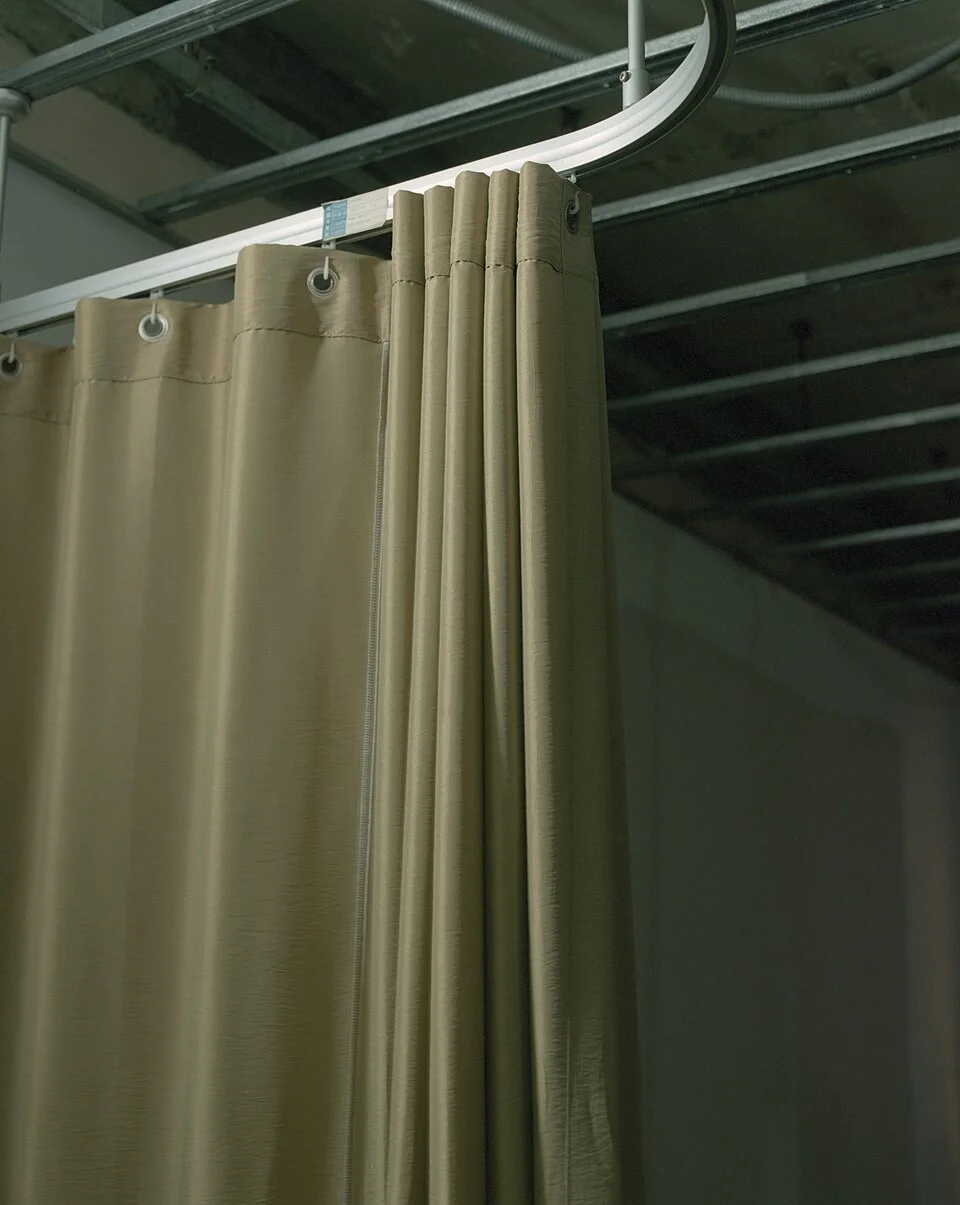
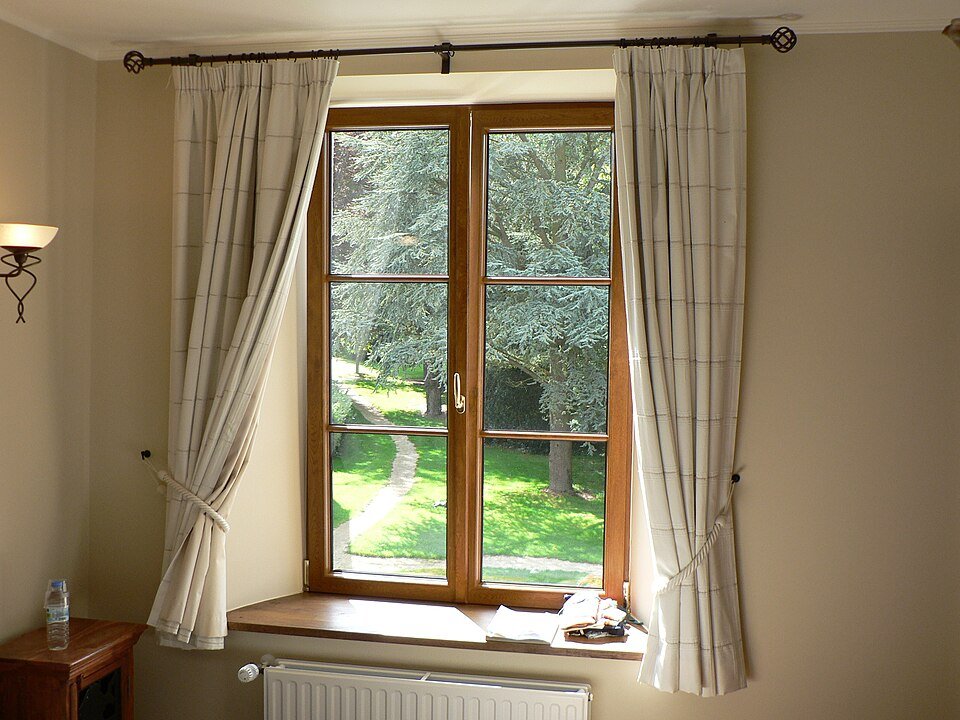
The gathered folds and extended fabric provide visible reference points for describing an opening. Name each actual window setting so another person can restore it, including which layer is drawn and where the edges finish. This display photograph does not establish the cloth’s opacity, and it does not show a matched comparison between sheer and opaque curtains.
Photo & usage
Easysayg · CC BY-SA 4.0 · Source. Display copies resized and encoded as WebP; no instructional details were fabricated or removed.
For each setting record where the edges finish relative to the frame. A note such as left panel reaches the centre mullion is easier to restore than half closed. Check the sides from the actual indoor seat, because an angled outside sight line can pass through a gap hidden from a head-on view.
Keep room lighting, window opening and task position unchanged for the first circuit. Note sun and sky conditions. If you switch a lamp on during the comparison, that becomes a new condition and deserves a separate record. Privacy depends on what is visible from outside, not simply on how dark the room feels from inside.
Check the task without moving it to a brighter place
At the chosen seat use one ordinary page and one faint pencil note. Read the same lines and write a short sentence in each curtain setting. Look at the lower part of the page as well as its centre. Record whether you can keep your usual posture or start moving the work toward a gap.
Check reflections if the task includes a glossy page or screen. A partial opening can send a bright strip across the surface even when the room looks pleasantly subdued. Rotate the material slightly as a diagnostic move, then return it to the reference position before judging the next setting.
Lighting guidance from CCOHS and OSHA helps separate missing light from glare. Keep this household comparison qualitative. A page that becomes difficult under fully drawn opaque curtains may need the existing room light, another task location or a different curtain position; it does not establish a failed lighting standard. YourHome provides the broader context for combining daylight with room lighting.
Ask the outside helper to describe visible detail
At each permitted viewpoint the helper should report detail rather than a vague private or exposed verdict. Ask whether they can identify a face, distinguish the neutral object and see movement near the curtain edge. Keep the indoor scene in the same place. Agree the order of settings before beginning so nobody needs to shout personal descriptions through an open window.
Check one direct view and, where safely possible, one oblique view that actually occurs along the path. The oblique view is useful for side gaps. The helper should not press against the glass or seek an extraordinary viewpoint unless that is the specific exposure you are assessing. Keep the record about ordinary access.
A camera is optional for documenting panel edges, with consent and no personal content. Automatic exposure and processing can change apparent visibility, so a photograph alone should not certify privacy. Do not circulate images of neighbours or record their windows. If no helper is available, complete the indoor task comparison and leave the outside portion pending.
Compare the tradeoff in an illustrative record
This invented example checks three daytime viewpoints and four indoor task details. A screened viewpoint means the agreed neutral object could not be recognised from that location at that moment. It is not a privacy rating for the fabric.
| Existing setting | Viewpoints screened out of three | Task details clear out of four | Observation |
|---|---|---|---|
| Sheer across, opaque parked | 1 | 4 | Object visible from two path positions |
| Opaque partly drawn | 2 | 3 | Central strip affects pencil note |
| Opaque closed | 3 | 1 | Task needs existing electric light |
The opaque closed setting screens two more viewpoints than the sheer in this example: 3 minus 1 = 2. It also leaves three fewer task details clear: 4 minus 1 = 3. Do not divide those counts to calculate a privacy-to-light efficiency. They describe different things and carry no standard weighting.
If privacy at all three viewpoints is essential, the next practical comparison is closed opaque curtains with suitable existing room lighting. If one screened path position is sufficient for the stated use, the sheer might remain a daytime option. The decision must name which viewpoints were checked; it cannot promise concealment from every direction.
Challenge the result when conditions change
Repeat on a duller day or later in the afternoon while it is still daylight. Include any room lamp normally used at that time as its own condition. An outdoor view checked against a bright sky may differ when clouds arrive or an interior light is switched on. Keep the object and helper positions consistent so this repeat has meaning.
Look for ordinary disturbances: a curtain shifts when a door opens, a panel catches behind furniture, or the chair gets pulled closer to the glass. Restore the panel and check the likely final position. Do not pin fabric to electrical fittings, obstruct a required vent or use a temporary tension arrangement that can fall.
The most common error is testing how well you can see outdoors and assuming the outside person has the same view inward. Another is declaring an opaque fabric sufficient without checking its gaps. A third is using a result from bright midday at dusk. Treat each as a missing observation, not a reason to claim certainty.
Record a daytime choice with a clear boundary
Finish with a short instruction tied to the room: sheer only during the checked bright daytime period for the screened chair, opaque closed with the existing light when the path view must be interrupted. Include any panel overlap and the task location. Avoid phrases such as fully private unless you can state the actual limited observation behind them.
Completion means the same task was checked in each curtain position, the outside viewpoints were either verified or explicitly left unverified, and at least one changed daytime condition was considered. Put a separate note in the record that nighttime privacy has not been established. If daytime visibility still fails your needs, seek a suitable approved window treatment rather than overstating what these existing panels accomplish.
THE REFERENCE FILE
Sources & scope
Documentation reviewed 1 Nov 2026. Examples are illustrative; this article does not claim hands-on product testing. Follow the instructions for your actual material, model and location.