A mould patch creates two separate jobs: deciding what has become affected and stopping the moisture that allowed it. The useful question is whether both jobs can be completed safely within a clearly understood area. A small visible mark can accompany a larger concealed problem; a frightening colour cannot tell you the scope.
Build a short handover note before choosing a cleaner, repair trade or mould specialist. It should let someone understand what happened without asking you to strip wallpaper or open a wall.
Start with who can safely be involved
Before inspecting, consider the household. CDC cleanup guidance says people with allergies, immune suppression, underlying lung disease, asthma or COPD should not clean mould. It also advises people with asthma, COPD or immune suppression against staying in a mouldy home or being present during cleanup. Seek healthcare advice about individual concerns before work begins.
Give the observation task to someone who can safely undertake it. If nobody can, your first useful action is arranging help. A diagnosis, sample result or larger patch is not a prerequisite for making that call.
For the handover note, describe accommodation needs rather than circulating private medical details: for example, someone needs to avoid the property during remediation. Ask who will explain when the affected space can be used again. Do not use a household member's reaction to the room as a test of whether work has succeeded.
Make a record from accessible viewpoints
Use a phone, notebook and, only where easily accessible, a tape measure. Work from a dry, stable floor. Your aim is a readable record, not a complete building investigation. Do not climb into roof spaces, enter crawl spaces or remove finishes.
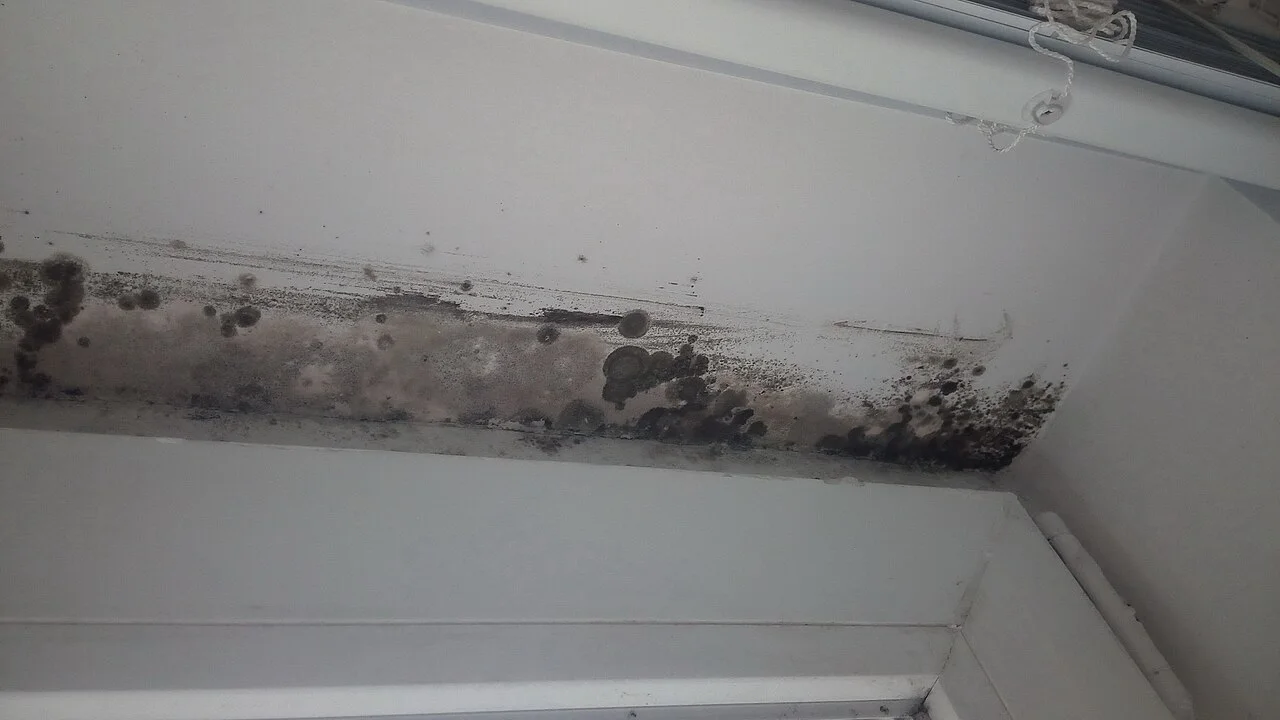
The photograph shows visible growth and staining near a wall/ceiling junction. Take an accessible location photograph and note recurrence or water entry. Appearance alone does not identify the organism, hidden extent or cleanup method.
Photo & usage
Alexander Davronov · CC BY-SA 4.0 · Source. Display copies resized and encoded as WebP; no instructional details were fabricated or removed.
- Location and material
- Name the room and surface: glazed tile, painted plasterboard, carpet or wallpaper. Mark an uncertain material as unknown.
- Visible extent
- Take an overview and a closer photograph without touching the growth. Estimate length and width if direct measurement would bring you against it.
- Water history
- Record when you first noticed it, any known leak, and whether it followed rain, showering or another event. Separate what you saw from what you suspect.
- Previous action
- Note earlier cleaning, repairs and recurrence. Include old photographs if available.
Write “not inspected” for concealed areas. A cupboard back that you cannot see is an unanswered question, not an unaffected surface. Do not pull away mouldy wallpaper or lift carpet to improve the note: EPA warns that disturbing hidden growth can release spores and recommends experienced help for suspected concealed mould. See its home mould guide.
Use area as a checkpoint, then apply the overrides
The EPA homeowner cleanup guidance says an area below about 10 square feet, approximately 0.93 square metres, can usually be handled by the homeowner. It directs larger areas or substantial water damage to more extensive remediation guidance. This is a planning checkpoint, not a promise of safety below that size.
Hypothetical example: a visible rectangle 2 feet by 4 feet measures 8 square feet, approximately 0.74 square metres. Record another affected surface separately and tell the assessor about both. Do not divide a spreading problem into convenient small cleaning jobs.
| Finding | Useful next action |
|---|---|
| Sewage or other contaminated water caused the damage | Use a professional experienced in contaminated-water restoration. |
| The heating, ventilation or air-conditioning system may contain mould | Do not run the suspected contaminated system; arrange qualified assessment. |
| A musty smell has no visible source, or growth appears concealed | Request an investigation before any opening-up work. |
| The affected area is extensive, growing or impossible to establish | Arrange professional scoping rather than assuming the photographed patch is the whole job. |
The first two actions follow EPA's homeowner guidance; the concealed-growth advice comes from its home mould guide. An uncertain boundary is itself useful information to give a contractor.
Compare two small patches with different outcomes
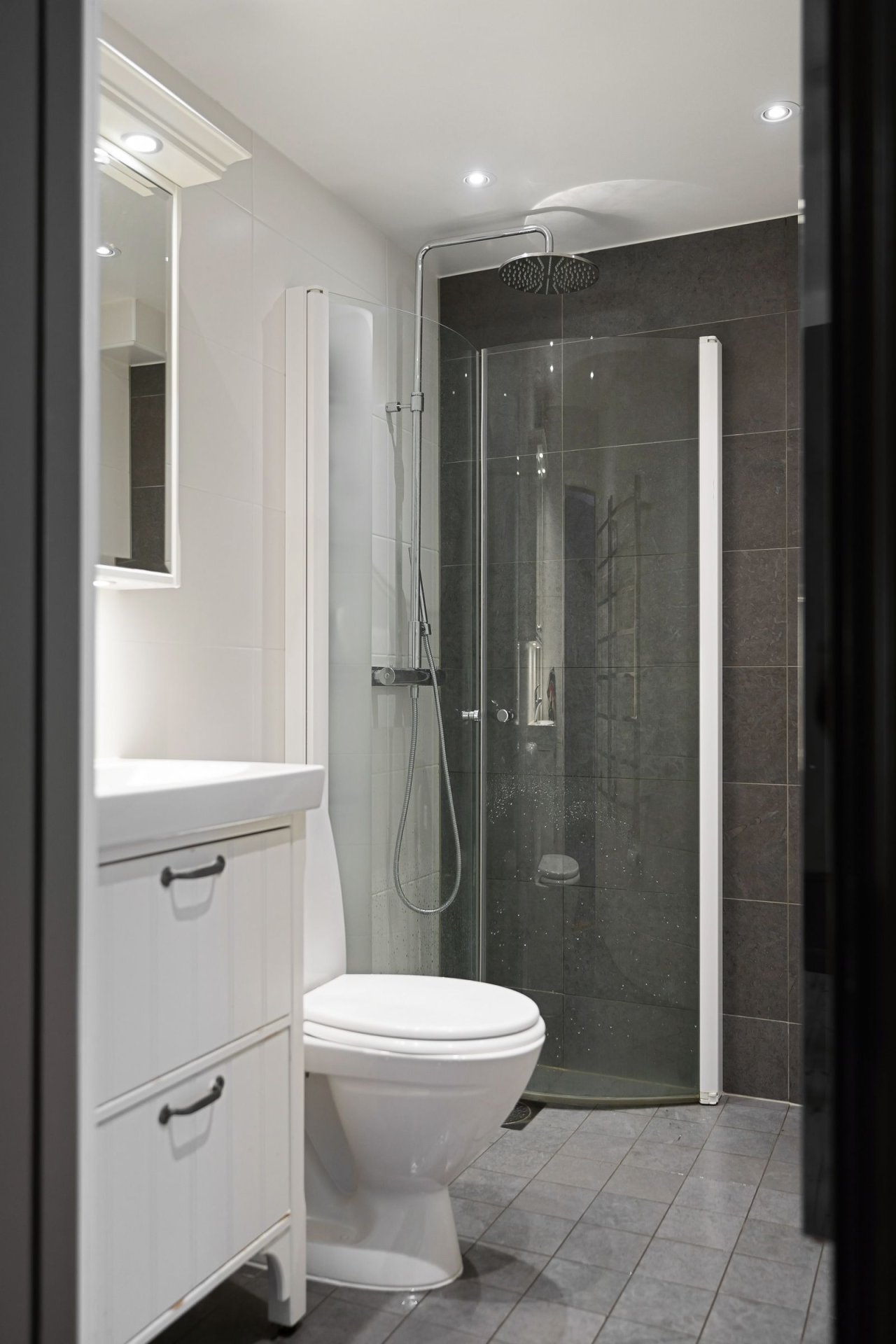
Hypothetical case A: growth is confined to a small, reachable area of intact glazed bathroom tile. There is no known flood, persistent smell or adjacent damaged finish. The moisture pattern coincides with shower use. Someone suitable can do the work with appropriate protection. This may be a limited household cleanup, provided the moisture issue is also addressed.
Even here, identify the precise surface first. A method suitable for the tile face does not automatically suit its grout, sealant or surrounding painted wall. EPA describes detergent and water for hard surfaces, followed by complete drying, but warns that mouldy absorbent materials may require disposal. Check the finish manufacturer's care instructions before choosing a compatible detergent.
CDC recommends at least a NIOSH Approved N95 respirator for cleanup, protective gloves and goggles that keep out particles. Follow the respirator's fitting instructions. If you cannot meet the prerequisites, choose help. Never mix bleach with other cleaners. Stop if the work reveals a larger area or damaged material.
Hypothetical case B: a similarly sized mark sits on wallpaper below an upstairs bathroom. It returned after an earlier wipe, and the room smells musty. Book investigation of the moisture source and possible hidden damage. The practical difference is the unanswered question behind the finish. Buying another cleaning product does not answer it.
Book help around the unanswered question
When the water source is clear, name it in the enquiry: a leaking pipe needs a plumbing repair; rain entry needs the relevant building repair. When the source or extent is unclear, ask for an assessment that explains both. Mould removal and leak repair may involve different people, so ask who coordinates their work.
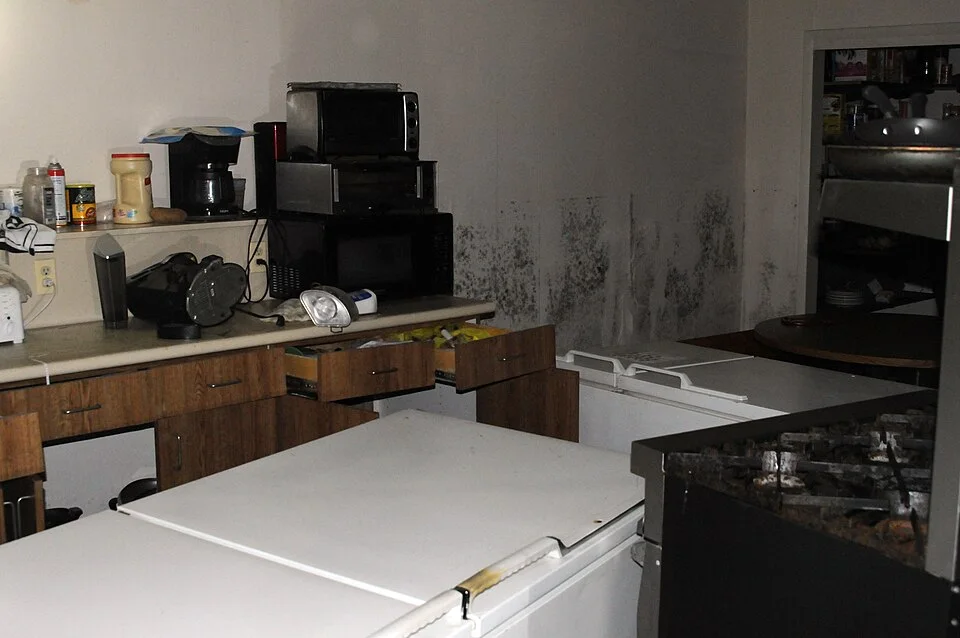
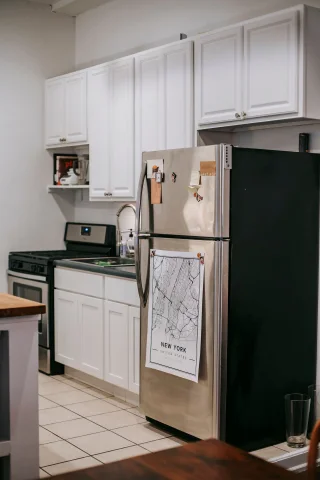
The wide view keeps the affected wall and nearby appliances in context rather than isolating a dark patch. For your enquiry, provide accessible overview and detail photographs with dates, and ask who investigates the moisture source and affected extent. This documented flood-damaged break room does not establish the cause, material condition or required scope in another property.
Photo & usage
Department of Homeland Security. Federal Emergency Management Agency. Public Affairs Division. 3/1/2003 · Public domain · Source. Display copies resized and encoded as WebP; no instructional details were fabricated or removed.
A useful enquiry reads: “There is recurring growth on the bedroom wallpaper below the bathroom. Photographs and dates are attached. Nothing has been removed. Please explain how you will establish the moisture source and affected extent, and what would require a separate quotation.”
Request a written scope covering these points:
- Which rooms, surfaces and belongings the proposed work includes, and which remain unassessed.
- How occupants and unaffected belongings will be protected during investigation and removal.
- Which materials will be cleaned or removed, with reasons for the choice.
- Who repairs the moisture source, and how drying will be checked before finishes are reinstated.
- What happens if opening a surface reveals additional damage, including how changes will be agreed.
Check references for comparable work and ask which remediation guidance the contractor follows. EPA's remediation guide introduction stresses relevant experience, references and preventing the spread of mould during work. Use those points to evaluate the proposal's substance.
THE WORKING FILE / DECISION
Equal patch areas can lead to different next actions
Two hypothetical patches each measure about 0.40 m by 0.50 m, or 0.20 m². One is on an accessible hard surface following a known, resolved moisture event. The other returns after cleaning and sits beside an unexplained damp wall. Equal visible dimensions do not establish equal exposure, material damage or cleanup scope.
Visible area
- Patch A
- 0.20 m²
- Patch B
- 0.20 m²
Moisture cause
- Patch A
- Known and reportedly resolved
- Patch B
- Unexplained recurring dampness
History
- Patch A
- First observed occurrence
- Patch B
- Returns after cleaning
Question to resolve
- Patch A
- Suitability of the documented cleanup route
- Patch B
- Moisture investigation and possible hidden damage
Read the result
Do not let the similar areas erase the different histories. EPA guidance considers area alongside water damage, contaminated water, HVAC involvement and health concerns. Recurrence is a reason to investigate the cause. A useful referral describes what returned, where, when and after which work; it does not prescribe opening a wall or identify a mould species from a phone photo.
Your decision record Blank worksheet
Give a qualified service a clear description of the moisture problem without disturbing it.
- Location
- ________________________________
- Accessible dimensions
- ________________________________
- Date noticed
- ________________________________
- Photograph reference
- ________________________________
- Water / leak history
- ________________________________
- Porous material involved
- ________________________________
- Previous work
- ________________________________
- Recurrence
- ________________________________
- Question for specialist
- ________________________________
Before closing the file
- No suspect material is disturbed for the record.
- Recurrence and water source are explicit.
- The requested service covers the unresolved cause.
Agree what finished means before work starts
Ask what any proposed sampling will change. NIOSH guidance on testing and remediation does not recommend routine air sampling and says no health-based indoor-air mould standards exist. Colour does not establish danger, and a short negative sample may miss exposure. A report should answer a defined question rather than substitute for identifying damage.
Before accepting the handover, walk through the original note with the contractor. EPA's home guide says completion requires the moisture problem to be fixed, mould removal completed, and no remaining visible growth or mouldy odour. It also calls for a follow-up visit to check for renewed damage or growth; staining alone can remain.
Ask for the repair record, drying evidence and photographs of concealed areas before they were closed. Agree who to contact if the original sign returns. Recheck after the circumstances that previously exposed the problem, such as rainfall or normal bathroom use. This is a household follow-up plan, not a substitute for professional completion checks.
If odour persists, dampness returns or the scope remains unexplained, request reassessment before cosmetic work proceeds. Take health concerns to a healthcare professional. The useful outcome is a repaired moisture source and an accountable cleanup, with enough documentation to recognise recurrence early.
THE REFERENCE FILE
Sources & scope
Documentation reviewed 1 Nov 2026. Examples are illustrative; this article does not claim hands-on product testing. Follow the instructions for your actual material, model and location.