A home can need two opposite actions in the same day: shut out afternoon heat, then release stored warmth when outdoor conditions improve. Leaving every window open, or every curtain closed, misses that change. A useful cooling plan gives each room a shade deadline and each opening a reason to be open.
Start with the room where heat causes the most disruption, such as a bedroom that stays warm at bedtime. You need existing window coverings, safe access to window controls, a notebook, and preferably indoor and outdoor thermometers. A humidity reading is useful in muggy weather. No roof access, drilling or alterations to ventilation equipment are needed.
Map the hot hours, not just the compass points
On a day when you are home, note when direct sun first reaches each important window and when it leaves. Look from indoors; do not lean out to inspect upper windows. Record the time the room becomes uncomfortable too. A room may keep getting warmer after sunlight has moved away, so the two times need separate entries.
Choose two or three useful observation points: before work, during the afternoon, and before bed. Put the indoor thermometer away from direct sunlight, cooking equipment and air-conditioning outlets. An outdoor sensor should be in shade in a suitable weather-protected position, following its instructions. A sunlit balcony reading is a poor comparison with shaded indoor air.
Build a small room record with four fields: sun arrival, covering to close, safe opening route, and fallback room. Include obstacles such as a noisy road, a window that cannot be secured, or a door that must remain closed. Actual sunlight matters more than copying an orientation rule from another climate or hemisphere.
This record also distinguishes jobs. A sunlit desk may need shade immediately; a bedroom with little direct sun may need a better evening air path. Buying identical blinds for both rooms could miss the second problem.
Give the sunniest glass a closing deadline
Close the appropriate blinds or curtains before direct sunlight enters, rather than waiting until the room feels hot. If afternoon sun starts while everyone is out, close those coverings before leaving. Keep useful daylight through windows that are already shaded, provided they are not adding unwanted heat.
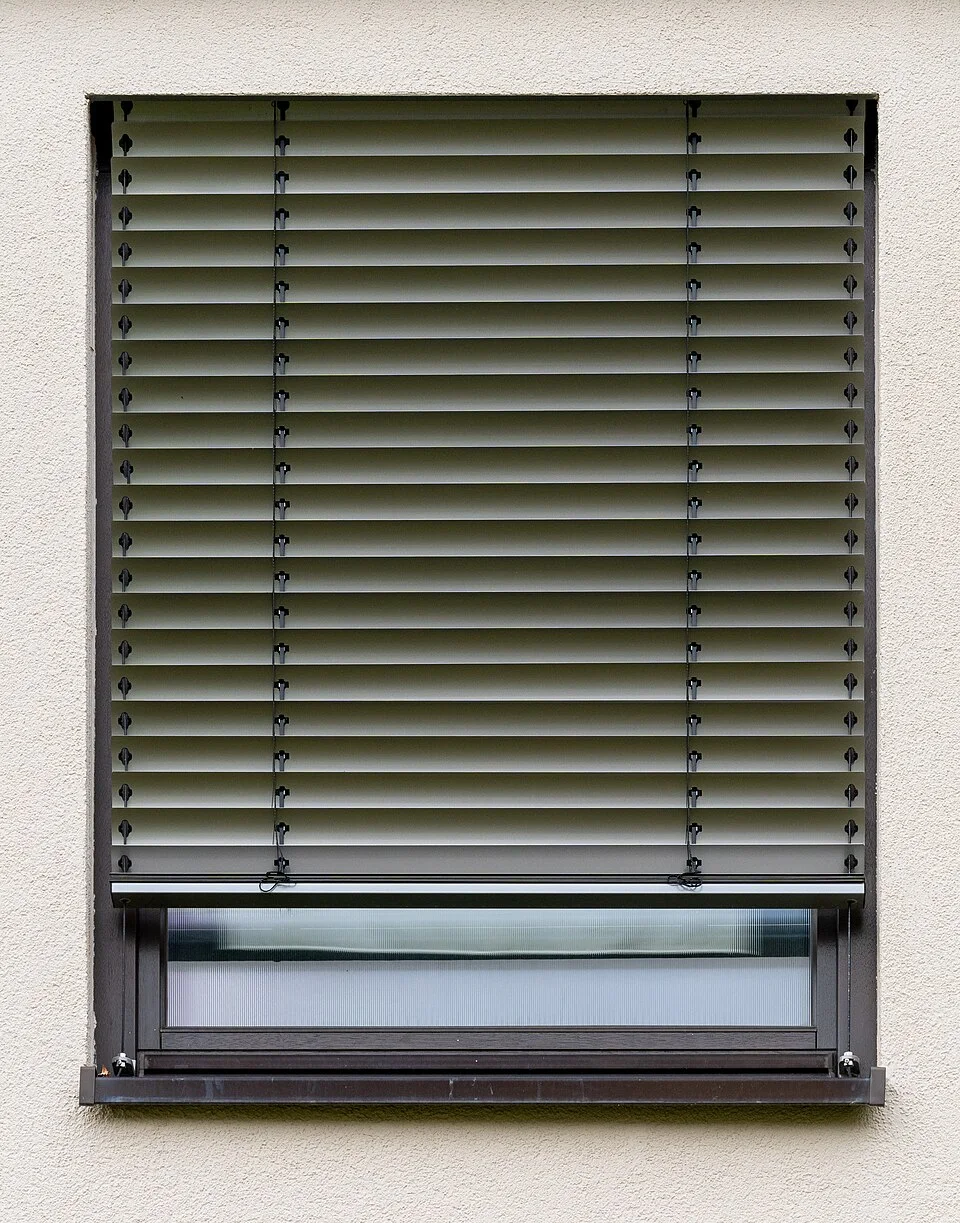
The lowered external blind leaves a narrow strip of glazing exposed at the bottom. Check which part of your actual window receives direct sun and set an intended closing position before that exposure begins. This photograph illustrates coverage, not a measured cooling result; use the covering’s ordinary controls and model-specific operating instructions.
Photo & usage
Roman Eisele · CC BY-SA 4.0 · Source. Display copies resized and encoded as WebP; no instructional details were fabricated or removed.
Australia’s government window guidance recommends summer use of window coverings and shading that responds to climate and orientation. Use that principle to prioritise the glass receiving strong sun during the hours you need comfort. Existing external shutters or awnings are worth including when they can be operated safely according to their instructions.
First check the coverage you already have. Does the blind cover the whole pane? Are curtain panels wide enough to meet? Can you close them without covering an air outlet or trapping fabric against an appliance? Adjust existing controls and furniture before ordering anything. Do not attach improvised foil, films or blankets to glass; ask the glazing manufacturer about compatibility before applying a treatment.
For new exterior shading, take your sunlight notes to an installer or building professional. Fixings, wind exposure and access make this a different job from operating an existing blind. Tenants should take the same notes to the property manager. The useful request is specific: shade this window during these hours while keeping it usable.
Make opening a decision with three checks
Evening is a reminder to check conditions, not an automatic instruction to open everything. The US Department of Energy’s natural ventilation guidance identifies cool nights and regular breezes as favourable conditions and warns against natural ventilation when outdoor air quality is poor.
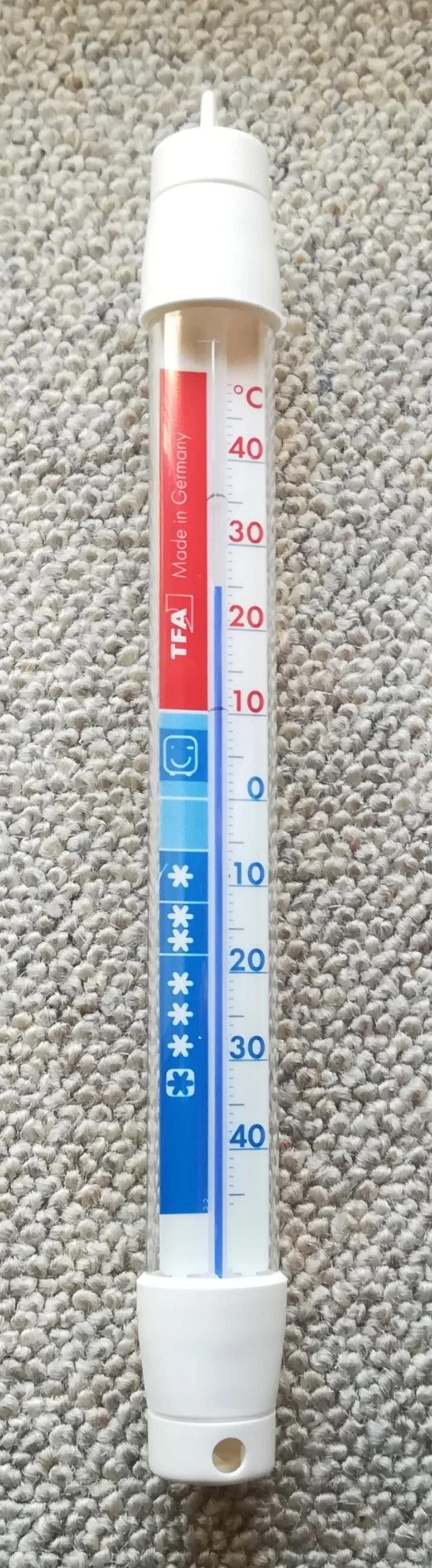
The Celsius scale illustrates the temperature quantity used in the indoor–outdoor comparison. Use instruments suitable for each position and follow their settling guidance before deciding whether opening could cool the room. This close-up does not show both readings, outdoor-air quality, security or moisture conditions; include those separate checks rather than treating one thermometer as permission to open.
Photo & usage
Fst76 · CC BY-SA 4.0 · Source. Display copies resized and encoded as WebP; no instructional details were fabricated or removed.
- Compare temperatures. Open for cooling when outdoor air is cooler than the room you want to cool. If the readings are nearly identical, expect little temperature benefit.
- Check air quality and moisture. Read the local official air-quality report and any smoke advice. Cooler but very humid air may be a poor choice for a home already struggling with dampness. Compare humidity conditions as well as temperature; relative humidity alone changes with temperature.
- Check whether the opening is usable. Rain, gusts, traffic pollution, security and the household’s window-safety arrangements can rule out an otherwise useful opening. Preserve restrictors and guards.
Recheck when conditions change. Close cooling windows when outdoor air becomes warmer, pollution worsens, rain enters, or you can no longer supervise an opening that needs supervision. These decisions concern optional window cooling: keep required background ventilation and installed systems operating as intended.
If you use conventional air conditioning, close the windows serving that space while it cools. Evaporative cooling has different ventilation requirements; follow its operating instructions rather than applying a closed-window rule to it.
Trace a route through the room you actually use
Before opening windows, sketch a route from one safe outdoor opening, through the occupied room, to another safe opening. They need not be perfectly opposite. An internal door can become the missing connection, but only if it is appropriate to leave it open. Never prop a fire door or compromise a required closed door.
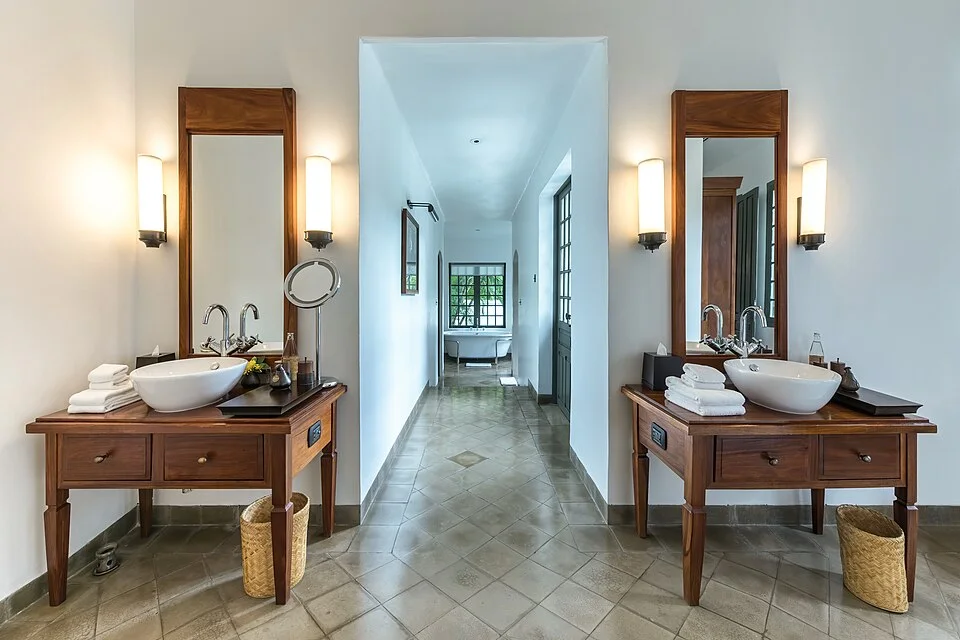
The foreground washstands and long passage make a possible through-room route visible. Sketch your actual accessible openings and occupied area, then confirm which doors and windows may be operated normally before any trial. This architectural view does not show air direction, an open outdoor outlet or permission to prop a door; keep required access and fire arrangements intact.
Photo & usage
Basile Morin · CC BY-SA 4.0 · Source. Display copies resized and encoded as WebP; no instructional details were fabricated or removed.
Try the route while you are awake and home. Clear movable obstructions and pull curtains away from the open part of the window using their normal tiebacks. Notice whether air reaches the chair or bed, rather than moving only through the hall. Close a competing opening temporarily if it appears to bypass the room, then compare comfort. Wind direction can change the result.
With only one usable window, do not promise yourself whole-home flushing. Ventilate that room when conditions permit and use the coolest suitable room for evening activities. A stable freestanding fan, used according to its instructions, can move air around occupants. It does not refrigerate the room. Keep it clear of water and loose fabric; avoid improvised mounting in a window.
Leave loft hatches, roof spaces and installed extract systems out of this experiment. If useful airflow would require altering those, ask a qualified ventilation professional to assess the home.
A worked plan for a warm bedroom
Consider this hypothetical example, not a measured result. A flat has an afternoon-sun living room and a bedroom opening onto a quieter courtyard. At 5 p.m., the bedroom is 28°C (82°F) and shaded outdoor air is 32°C (90°F). Opening for cooling would bring in warmer air. The afternoon coverings stay closed.
At 9 p.m., suppose the bedroom remains 28°C (82°F) while outdoors has fallen to 24°C (75°F), with acceptable air quality and no moisture concern. The household opens the safe courtyard window and a second usable window connected through the hall. Bedroom coverings are drawn aside so they do not obstruct the opening.
After a short observation period, the household checks the bedroom again and notes airflow and comfort. There is no promised temperature drop or fixed flushing duration: building materials, wind and opening size affect what happens. If the room improves, they continue while conditions remain suitable. Before sleep, they secure the windows according to their safety arrangements.
If outdoor air instead stays at 29°C (84°F), the opening step is skipped. They use available cooling or a cooler suitable place. The plan still works because it gives a clear decision, even when the weather offers no free cooling.
Set the fallback before a difficult night
Shade and ventilation cannot guarantee safe conditions during extreme heat. Arrange access to an air-conditioned room or another cooled location before the home becomes intolerable. The CDC’s heat guidance says to use fans only below an indoor temperature of 90°F (about 32°C); above that, they can increase body temperature. This is a fan-use limit, not a guarantee of safety below it.
Do not wait for a number if someone feels unwell. Dizziness, weakness, headache or nausea can be signs of overheating; stop the household experiment and seek medical advice. People with additional heat risks should make a heat action plan with their clinician.
Smoke can remove the night-opening option altogether. Follow local emergency advice and the EPA’s wildfire indoor-air guidance: keep windows closed when advised, use appropriate cooling, and seek shelter elsewhere if you cannot stay cool. Do not remain in an overheating room just to preserve a closed-window plan.
THE WORKING FILE / DECISION
A cooler-feeling breeze can still import warmer air
Take an invented evening sequence for a room at 31°C. At 17:00 the outdoor temperature is 34°C; later it is 29°C while the room is 32°C. The temperature difference reverses. This small comparison concerns sensible heat only: humidity, air pollution, security and heat-health needs still affect what should happen.
17:00
- Room / outdoors
- 31°C / 34°C
- Temperature-only reading
- Outdoor air is 3°C warmer
Later evening
- Room / outdoors
- 32°C / 29°C
- Temperature-only reading
- Outdoor air is 3°C cooler
Either time
- Room / outdoors
- Smoke, unsafe opening or another constraint
- Temperature-only reading
- A cooler outdoor reading does not remove the constraint
Read the result
Move the shading decision earlier than the direct-sun period, then judge opening separately when outdoor conditions change. A fan may change perceived comfort without lowering the air temperature; that sensation is not evidence that warm outdoor air is cooling the room. Write a fallback destination or assistance plan before a difficult night rather than treating this comparison as protection from dangerous heat.
Your decision record Blank worksheet
Choose shading and window timing from indoor/outdoor conditions, with a fallback for unsafe heat.
- Room and occupied hours
- ________________________________
- Direct-sun period
- ________________________________
- Shade action time
- ________________________________
- Indoor temperature
- ________________________________
- Outdoor temperature
- ________________________________
- Air-quality check
- ________________________________
- Opening security
- ________________________________
- Fallback plan
- ________________________________
- Result later
- ________________________________
Before closing the file
- Shade is positioned before the unwanted solar gain.
- Opening considers more than temperature.
- A usable heat-health fallback exists.
Finish with a note someone else can follow
After a few suitable days, write a short instruction beside the household calendar: which coverings close before departure, which room gets the evening temperature check, which openings form the route, and where to go if cooling fails. Include who checks and secures the windows before bed.
Your finish check is practical: coverings operate easily, the route stays clear, required vents remain unobstructed, and everyone understands when to stop opening windows. Compare observations only across reasonably similar weather; one cooler evening does not prove an energy saving. If the room repeatedly stays hot despite sensible shading and favourable outdoor conditions, bring your notes to a qualified home-energy assessor or ventilation professional. They provide a useful starting point for investigating glazing, insulation or ventilation without speculative DIY alterations.
THE REFERENCE FILE
Sources & scope
Documentation reviewed 1 Nov 2026. Examples are illustrative; this article does not claim hands-on product testing. Follow the instructions for your actual material, model and location.