Let the incident guidance set the window boundary
A damp bathroom and smoky outdoor air can create a practical conflict: the usual airing habit may no longer be appropriate. Start with current local official advice and the home's emergency plan, not a humidity target. If authorities direct evacuation or relocation, follow that instruction. This article concerns routine moisture decisions while occupying a suitable location under the relevant guidance.
EPA: Wildfires and Indoor Air Quality explains that wildfire smoke can enter homes and discusses reducing exposure indoors. Its guidance has to be applied to the actual equipment and conditions. Do not assume that every air conditioner has the same outdoor-air control or that shutting a window makes the whole indoor environment safe.
Write the household's moisture-producing essentials and the usual ventilation methods. Identify which rely on windows, which use installed outdoor exhaust and which are merely recirculation. The aim is to reduce unnecessary moisture while obtaining appropriate advice on how the designed systems should operate during the smoke event.
Avoid adding a drying task the room cannot manage
Postpone nonessential indoor laundry drying where practical and use suitable alternative arrangements. Remove ordinary standing water after bathing and keep towels spread appropriately. Avoid unnecessary humidifier output. These actions reduce avoidable moisture without pretending that people can stop bathing or cooking during an air-quality incident.
Keep food preparation practical and follow the relevant smoke guidance on indoor particle sources. Do not add candles, incense or fragrance treatments to make the room seem fresher. They can complicate the indoor environment and the observation record. A changed smell is not evidence that smoke or moisture has been removed.
Use the actual appliance instructions and local advice for essential ventilation. Do not disable a continuously required system or alter shared building controls based on a generic article. If the system's outdoor-air function is unclear, ask the property manager or HVAC professional. A fan symbol on a thermostat does not by itself identify fresh-air supply.
Name what each device actually does
A particle cleaner filters particles in the air passing through it. A dehumidifier removes water vapour under suitable operating conditions. An outdoor-exhaust fan removes air from the room and requires replacement air from somewhere. A circulating fan primarily moves indoor air. These jobs should remain separate in the household plan.
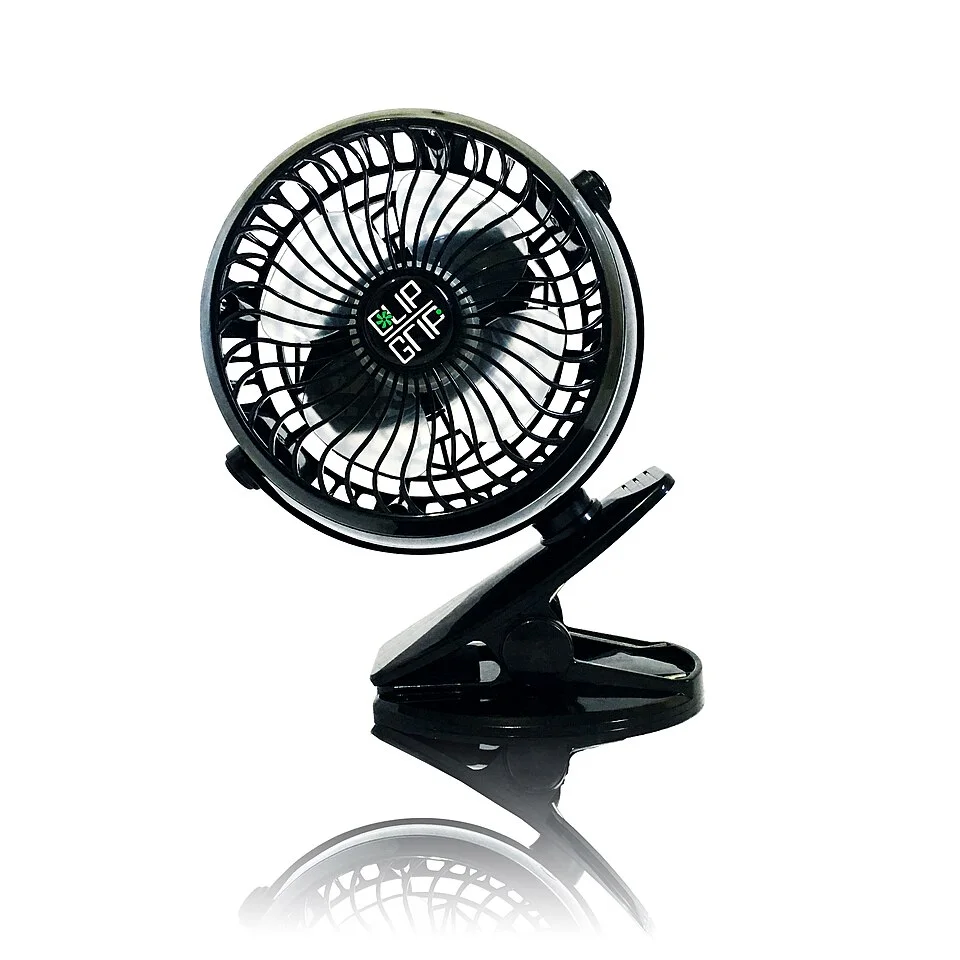
The blades and open grille identify a circulating fan, one of the device types to distinguish in a smoke-limited ventilation plan. Record what your actual equipment is designed to do using its documentation. This photograph does not show a particle filter, a water-collection system or an outdoor exhaust route, and moving indoor air does not establish removal of moisture or smoke.
Photo & usage
Iadirmiz · CC BY-SA 4.0 · Source. Display copies resized and encoded as WebP; no instructional details were fabricated or removed.
EPA: Air Cleaners and Air Filters in the Home describes filtration as a supplement to source control and appropriate ventilation, with limits on what it removes. Do not assume a particle filter removes water vapour or every gaseous component of smoke. Follow equipment sizing, placement and maintenance instructions for the intended use rather than improvising an arrangement that blocks airflow.
An exhaust system can affect how replacement air enters the home, so smoke-event operation may require system-specific advice. Do not seal intended openings, bypass controls or add powerful fans without understanding that context. The household's moisture record can identify a problem, but it cannot design a balanced ventilation strategy for an unknown building.
Compare actions by purpose rather than appearance
This table is an illustrative planning comparison. The household situations are invented, and no removal rate, protection level or tested outcome is claimed. Actual smoke guidance and equipment instructions remain controlling inputs.
| Action | Relevant purpose | Limit |
|---|---|---|
| Remove shower standing water appropriately | Reduce liquid left to evaporate | Does not establish ventilation adequacy |
| Use suitable particle filtration | Reduce particles passing through the filter | Does not dry the room or remove every pollutant |
| Use a suitable dehumidifier as instructed | Manage air moisture | Does not filter smoke as a substitute air cleaner |
| Open windows after official conditions permit | Potential outdoor-air exchange | Still depends on weather and moisture conditions |
The table prevents one visible improvement from being credited to the wrong device. A clearer particle display, a fuller water bucket and a drier wall describe different outcomes. None alone establishes that the entire room environment is safe.
Record enough to support a practical decision
At a consistent suitable position, record room temperature and RH along with ordinary moisture events and any operating changes. Keep a separate note of current official outdoor-air advice and its time. Avoid combining the official outdoor index and a consumer indoor display as if they were measurements of the same place and method.
Observe accessible wet surfaces and act promptly on unwanted water. Do not wait for a preferred percentage before drying a sill or reporting a leak. A central room meter does not establish the condition of a cold corner, damp fabric or hidden wall material. Record which surfaces were wiped so later appearance is interpreted accurately.
If persistent moisture develops while window airing is constrained, request advice on suitable existing-system operation or another practical arrangement. Do not keep the household in an unsuitable hot or damp location solely to preserve closed windows. Local incident guidance and individual circumstances may support relocation to a more suitable environment.
Resume airing conditionally when the incident allows
When official advice and local conditions permit window use, consider temperature, rain, security and outdoor moisture as well as smoke. A muggy outdoor period may be a poor drying opportunity for a cool room even after the particle situation improves. Use intended mechanical ventilation according to its appropriate operating plan.
EPA: Improving Indoor Air Quality emphasizes evaluating outdoor sources when considering ventilation. Apply that principle in both directions: do not open because the room feels stale while smoke remains a concern, and do not assume the first smoke-free-looking moment guarantees suitable incoming air. Follow current information rather than visual clarity alone.
Record the reopening and the room's subsequent temperature, humidity and surface response. There is no universal number of minutes that clears every home or removes a specified moisture load. If you need system-specific recovery instructions, ask the relevant professional rather than deriving an air-change rate from how quickly a smell seems to fade.
Close with roles and conditions the household understands
After the event, keep a short plan identifying the official information source, intended system controls, appropriate filtration and the moisture tasks that can be reduced. Include who can clarify shared-building or HVAC operation. A plan prepared afterward can make the next incident less confusing without inventing a universal appliance setting.
Recheck the original damp locations and address any persistent water damage. A smoke event ending does not repair a leak or dry every affected material. Restore ordinary maintenance routines according to the equipment instructions and retain any professional advice specific to the system.
Completion means the household has a workable conditional routine and knows the limits of each device. The outcome should not claim that a humidity range, closed window or particle cleaner certified the home. It should show how essential activities, moisture control and incident guidance were considered together, with unresolved building or system questions directed to the appropriate source.
THE REFERENCE FILE
Sources & scope
Documentation reviewed 1 Nov 2026. Examples are illustrative; this article does not claim hands-on product testing. Follow the instructions for your actual material, model and location.