A wineglass can leave two different problems on marble: color from the drink and a dull area where acid changed the surface. Wiping away one does not necessarily remove the other. A useful diagnosis begins by looking separately at color, reflection and residue, rather than treating every visible ring as a stain that needs a stronger cleaner.
This guide is for an identified marble tabletop or counter with known care instructions. It provides an observation and cleaning sequence, not a recipe for polishing stone. Marble may be honed, polished or coated, and later treatments can change what an otherwise familiar surface tolerates. Where the finish is unknown, ask the stone supplier before applying a specialist product.
Start with the spill history
Write down what was on the stone and how long it may have remained. Citrus, wine, tomato and vinegar have a different relevance from cooking oil or a damp metal container. Note whether someone already used a bathroom cleaner, abrasive powder or homemade paste. Product history can explain a mark better than its shape alone.
The Natural Stone Institute distinguishes stain categories from acid etching and warns against acidic cleaners on calcareous stone. Its consumer guidance also explains that an impregnating sealer improves stain resistance without making stone stain-proof. Sealed marble is therefore still capable of an acid-related surface change. Do not interpret the presence of a sealer as permission to use vinegar to remove a ring.
Look at color and reflection separately
First view the dry stone under broad, even light. A dark patch is easiest to judge beside nearby stone of a similar background color. Then lower your viewpoint so a window or lamp reflects across the mark. An area that interrupts the reflection may involve a change in texture or finish even if its color is almost unchanged.

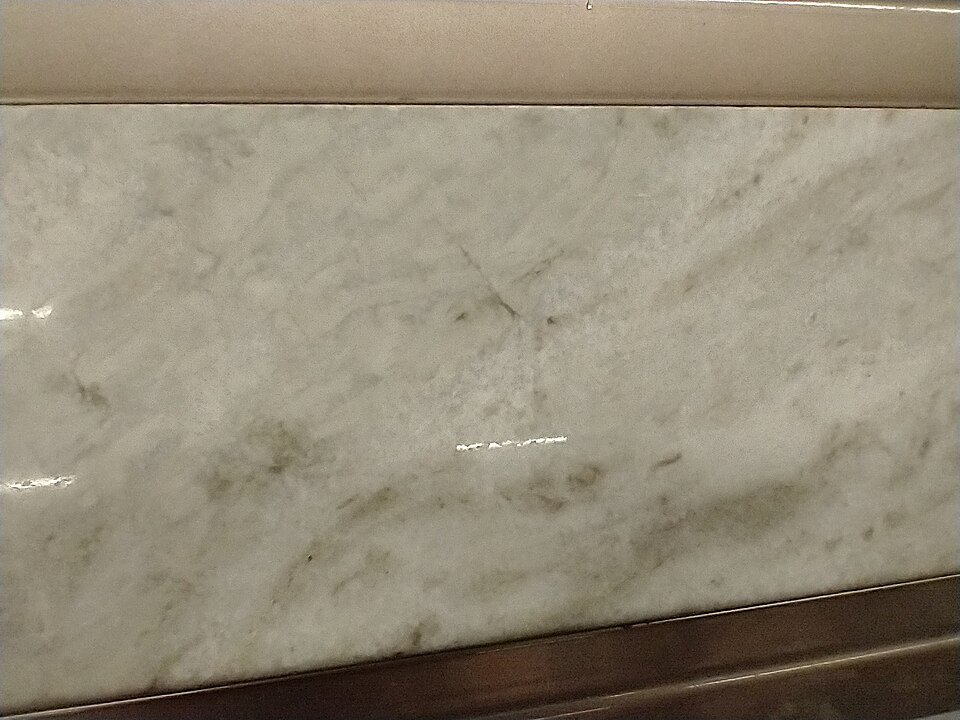
The broad island surface shows veins continuing across a pale background, giving context for distinguishing the stone’s pattern from a newly noticed patch. Inspect your own stone dry in even light, then at a shallow reflection angle. This room photograph shows neither a diagnosed etch nor a cleaning result.
Photo & usage
GoingPublicPR · CC BY-SA 4.0 · Source. Display copies resized and encoded as WebP; no instructional details were fabricated or removed.
Keep natural veins, fills and old repairs in mind. A darker vein continuing beyond the spill may be part of the stone rather than the new mark. A wet patch can look darker and temporarily hide differences in reflection. Photograph only after the area has dried, and use the same angle for the later comparison. Do not wet the whole surface merely to make the mark disappear in a photograph.
Remove the ordinary residue first
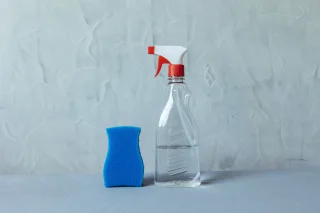
Blot a fresh spill rather than sweeping it outward. Remove loose particles before wiping so they cannot become abrasives. Use the stone supplier's approved neutral cleaning method on a small intact area, following the product label for any dilution, dwell time and rinsing. Keep the cleaner off adjacent metal, wood and fabrics unless those materials are also compatible.
Clean the spill area gently, remove the solution and rinse as required. Dry with a clean soft cloth. Carl Hansen & Son's marble guidance specifies mild neutral products intended for natural stone for its marble surfaces, reinforcing the importance of material-specific cleaning. That does not grant permission for an abrasive spot polish. Wait until remaining moisture has evaporated before deciding what is still present.
Use the dry observations to choose the next question
| Color | Reflected light | Question to take forward |
|---|---|---|
| No remaining color difference | Reflection now matches | Was the mark simply removable residue? |
| Dark area persists | Reflection remains continuous | Is there absorbed staining or remaining moisture? |
| Little color difference | Dull interruption remains | Has the finish been etched or otherwise altered? |
| Colored patch persists | Dull interruption also remains | Are both stain treatment and finish repair needed? |
These invented comparisons guide the referral, not a guaranteed diagnosis. A coating can cloud, a scratch can scatter light and some stones have naturally variable reflection. If the history and appearance conflict, preserve the evidence and ask the supplier. The practical benefit is avoiding an automatic stain remover when the main complaint is loss of polish.
Keep stain treatment separate from polishing
A poultice is intended to address certain absorbed stains; it does not recreate a polished surface removed by acid. Conversely, polishing a stained surface may leave its color problem unresolved. Use Natural Stone's marble guidance discusses both etching and staining and the separate limitations of sealing. Ask a restoration specialist which process addresses which observation.
Do not substitute toothpaste, baking soda, an abrasive eraser or a household acid for a stone-specific recommendation. Local rubbing can leave an island that differs from the surrounding finish. Even a commercially labelled marble polish may not suit a honed surface or a topical coating. Confirm the exact stone, finish and product conditions before any treatment beyond routine cleaning. If the affected area crosses a seam or repair, include that in the request for advice.
Describe the area accurately
For an illustrative planning example, suppose a rectangular affected zone measures 12 by 8 centimeters. Its bounding area is 96 square centimeters, or 0.0096 square meters. That rectangle includes unaffected stone around an irregular mark, so it is an approximate location record rather than a measure of damaged material.
A nearby reference photograph taken with the same lamp position can be more useful than describing the mark as large. Include an overall image showing its location and a close view showing the reflection. Keep the ruler beside the area rather than dragging it across the stone. Do not use the calculated area to estimate a polishing dose or assume that a tiny patch is easy to blend; matching reflection can depend on the whole visible panel.
Decide whether to live with patina or seek repair
A honed marble table can acquire small marks that its owner accepts as part of use. A highly polished top in strong side light may make the same change distracting. Either preference can be reasonable if the stone is stable. The cleaning decision should not be disguised as a requirement to restore a new appearance after every meal.
Ask a repairer about likely sheen matching, treatment boundaries and protection of nearby materials. Report cracks, loose fills or raised edges separately because they may affect the work sequence. Avoid promising that a sealer will prevent every future mark. If a surface coating is proposed, request its own cleaning and renewal requirements; changing the protection system creates a different care routine rather than eliminating care altogether.
Account for a coating above the marble
A stone tabletop may have received a topical protective treatment after installation. In that case a cloudy mark can involve the added layer as well as the marble beneath it. Check service records and ask the supplier whether the routine cleaner and proposed restoration method suit that coating. A stone name alone does not answer the uppermost-surface question.
Tell the repairer whether the mark crosses an existing patch, seam or edge repair. Photograph those boundaries without probing them. If a proposed treatment requires removing a coating, ask how the finished appearance and future care will change across the visible panel. Do not begin stripping a small island in order to see whether the marble below is intact. Preserving the layer sequence gives the specialist a better chance of identifying the actual defect.
Complete the cleanup and reduce repeat exposure
The routine clean is complete when residue is removed, the stone is dry and no new haze or scratches have appeared. Keep a note of the remaining color and reflection observations. Return glasses on suitable coasters and use a preparation board for acidic food. Check beneath trays so dampness does not remain hidden against the top.
Store the neutral stone cleaner separately from bathroom descaler, and tell anyone sharing the room why the distinction matters. If the mark persists, stop repeating the same wipe and follow the chosen repair or acceptance decision. A reliable endpoint is a clean, stable surface with an understood remaining defect, not an endless effort to make an etched ring respond like a removable spill.
THE REFERENCE FILE
Sources & scope
Documentation reviewed 1 Nov 2026. Examples are illustrative; this article does not claim hands-on product testing. Follow the instructions for your actual material, model and location.