Choose a planning horizon without predicting lifespan
A water-using appliance can be cheaper to buy and more expensive to operate, but a lifetime claim requires assumptions about use, rates, repairs and replacement timing. Choose a comparison horizon and label it a planning period, not a promise that either product will last that long.
Use the same horizon for candidates serving the same household task. Record the purchase price, delivery, installation and necessary accessories. Keep optional service contracts and financing costs separate so the comparison can show which decisions create them.
FTC's warranty guidance supports keeping written coverage and receipts. ENERGY STAR provides washer buying context, while EPA's water-bill guide explains varied charging structures. Together they support a record method; they do not supply a universal appliance lifespan, repair bill or household saving.
Capture the installed purchase cost
Obtain a written quote for the exact model and service. Include removal of the old appliance if needed, required connection parts and any work identified by the appropriate installer. A shelf price is not necessarily the cost of a usable installation.
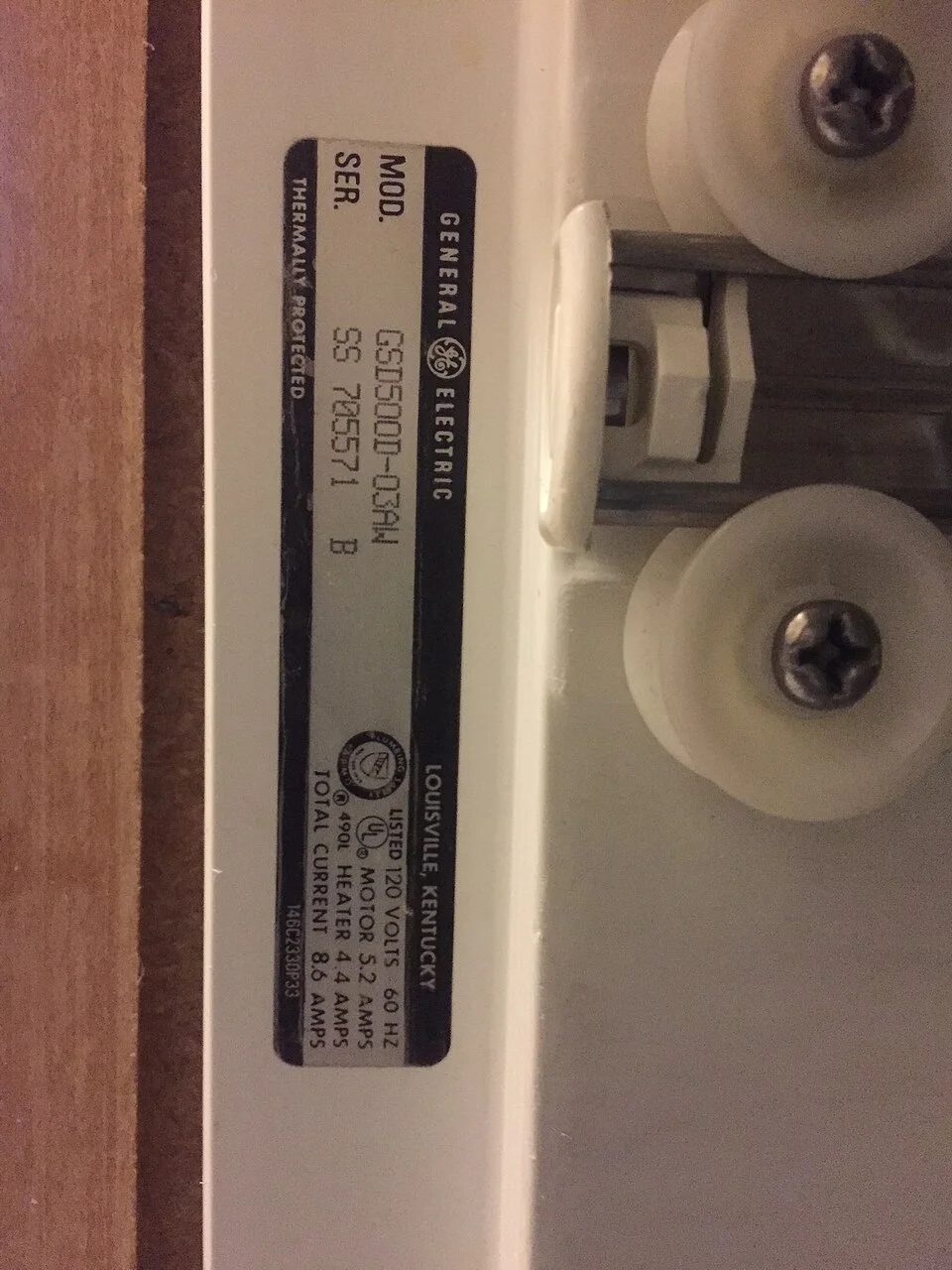
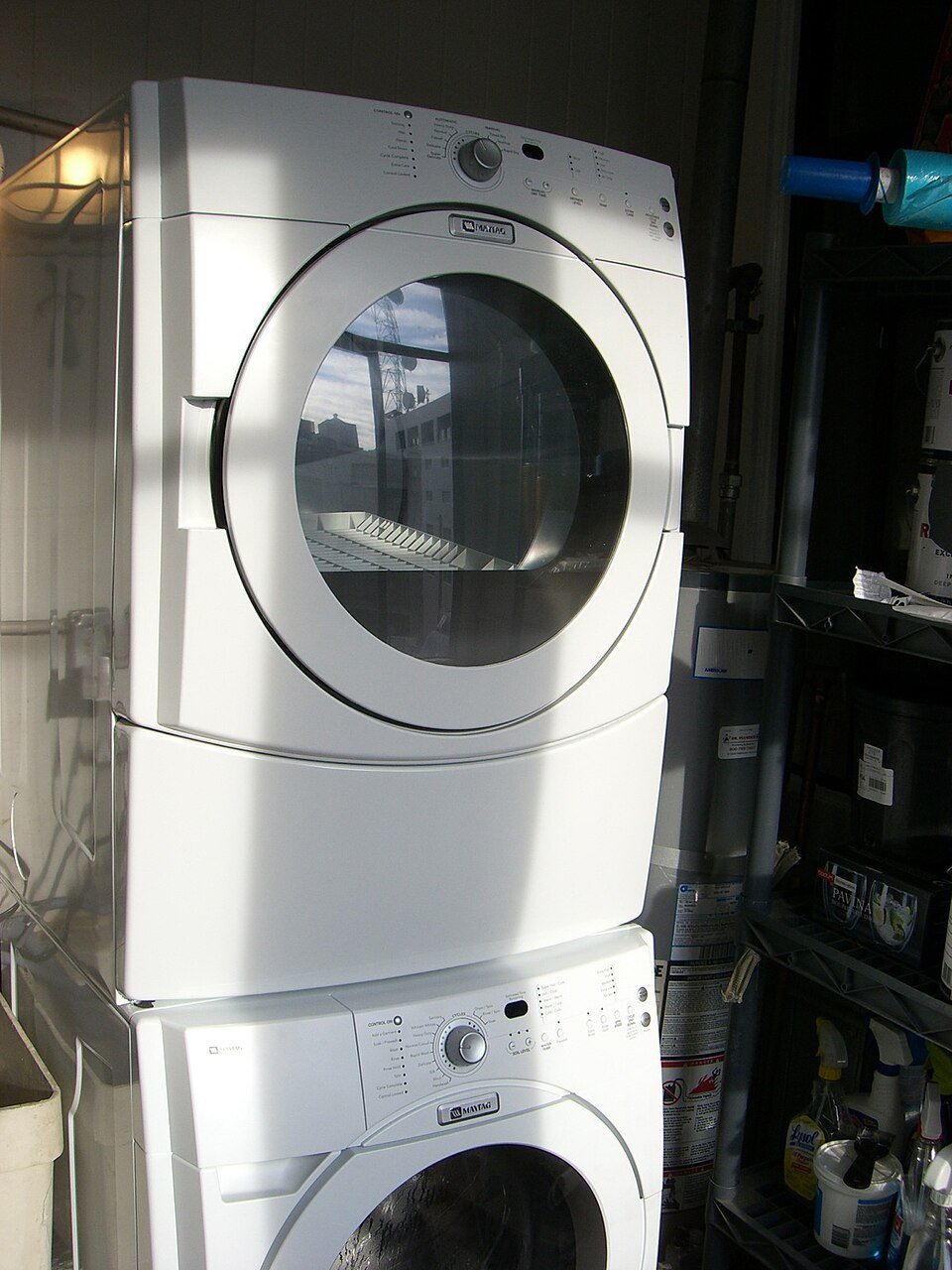
The plate separates model and serial fields from electrical ratings, giving a physical identity reference for the cost file. Retain the full quoted model and installation scope with the purchase record. A familiar brand or visually similar front is insufficient for matching a quote, and these ratings are not a measured water-use figure.
Photo & usage
Steven Pavlov · CC BY-SA 4.0 · Source. Display copies resized and encoded as WebP; no instructional details were fabricated or removed.
Check whether taxes and delivery are included before comparing totals. Record discounts only when applicable to the actual transaction. A hoped-for rebate should remain conditional until eligibility and the claim process are verified.
Keep the installation scope with the price. A lower quote that excludes necessary work is not directly comparable with a complete service. Do not guess the missing work cost simply to preserve a tidy two-column table.
Build the water component from compatible data
Use a clearly defined programme volume or other appropriate model data and a realistic cycle frequency. Keep standardised ratings distinct from actual household measurements. If the data cannot support a litre-per-cycle estimate, state that limitation rather than inventing one.
Apply the account's eligible variable water and sewer components, respecting minimums, tiers and allowances. Fixed fees that remain unchanged should not be treated as avoided operating cost. Keep rate effective dates with the calculation.
Separate water heating from water volume. This file may include other cost components when supported, but the worked comparison here is deliberately limited to purchase and water charges. It does not make an electricity-bill-only argument or promise total ownership cost from incomplete inputs.
Calculate an illustrative eight-year comparison
This illustrative USD scenario gives appliance A an installed purchase cost of USD 700 and B a cost of USD 820. Comparable stated water assumptions are 15 and 11 litres per cycle, with 200 cycles per year. The eligible variable water-and-sewer rate is USD 5 per cubic metre.
A uses a scenario 3 cubic metres yearly, costing USD 15. B uses 2.2 cubic metres, costing USD 11. Over eight chosen years, those water components are USD 120 and USD 88. Purchase plus this limited water component totals USD 820 for A and USD 908 for B.
B's water component is USD 32 lower over the horizon, but its purchase cost is USD 120 higher, leaving it USD 88 higher in this limited comparison. No repairs, energy, financing, discounting or residual value are included, so this is not a complete ownership verdict.
Treat service costs as evidence or scenarios
Use actual maintenance requirements and quoted service prices where available. Record the source and what the service includes. Do not describe a speculative major repair as inevitable or assume a warranty will pay every cost.
For unknown repairs, show a separate scenario rather than burying an invented annual allowance in the main total. A sensitivity case can illustrate how much a repair would change the comparison without predicting that it will occur.
Keep wear items, routine maintenance and fault repair distinct. An optional service contract may overlap written warranty coverage. FTC's guidance recommends reading the terms; the household file should identify provider, duration, exclusions, labour and claim route before assigning value to the contract.
Test which assumption drives the decision
Recalculate with a plausible frequency range and the actual tariff structure. A household using the appliance less often will usually have a smaller operating-volume difference under the same assumptions. A tier threshold can change the eligible marginal rate.
Use the worked example's difference as a boundary question. A candidate with a higher purchase price needs another supported benefit or cost difference to offset it in this limited calculation. That benefit might be capacity, accessibility or service suitability, but it should be named rather than invented as a monetary saving.
Do not extend the horizon until the preferred product wins. Keep the chosen period justified by the household's planning need and show alternative horizons transparently if they matter.
Preserve the purchase and service documents
Save the final quote, receipt, exact model and serial number, warranty, installation record and manual. Keep serial numbers private where unnecessary for sharing. Photograph the rating plate only from safe accessible positions.
Record actual service visits with the reported symptom, work description and cost. Attribute technical conclusions to the provider. Keep parts and labour lines where supplied so later comparisons do not confuse a callout with a completed repair.
If a spoken purchase promise matters, ask for it in writing before relying on it. FTC's warranty publication specifically discusses written records and spoken promises. Apply the relevant local consumer process for disputes rather than treating this spreadsheet as proof of legal coverage.
Review actual experience against the scenario
After a suitable period, compare actual cycle frequency and eligible water charges with the assumptions. Do not expect the whole utility bill to match the appliance's small modelled component. Other household uses and account adjustments remain present.
Update the file with observed costs while preserving the original scenario. A difference is information for future decisions, not necessarily evidence that the product or calculation failed. Check which assumption changed.
The lifecycle file is complete when the purchase decision is reproducible, unknowns remain visible and actual service evidence has a place to accumulate. It should support a reasoned ownership comparison without pretending to predict every future expense.
Show an uncertain repair as a separate scenario
Add a sensitivity row for a possible repair only when it is clearly labelled hypothetical. In the article's illustrative comparison, A's limited eight-year total is USD 820 and B's is USD 908. If A alone incurred an additional hypothetical USD 150 repair, its scenario total would become USD 970, or USD 62 above B.
That does not predict a repair or prove B has lower expected ownership cost. It shows that a single uncertain service event can outweigh the small water-charge difference in this example. The proper response is to investigate warranty, service availability and actual reliability evidence, rather than treating the hypothetical repair as fact.
Keep scenario rows outside the actual-cost ledger. When work occurs, record its real invoice, coverage and date. If it never occurs, the scenario remains a planning question rather than an expense.
Apply the same discipline to residual value and replacement timing. Do not credit one candidate with an invented resale amount while assuming the other has none. Where evidence is weak, omit the component or show a transparent range applied consistently.
A balanced file can support a choice even when the cost result is close. Fit, accessibility and service arrangements may decide the purchase, provided those reasons are stated plainly.
THE REFERENCE FILE
Sources & scope
Documentation reviewed 1 Nov 2026. Examples are illustrative; this article does not claim hands-on product testing. Follow the instructions for your actual material, model and location.