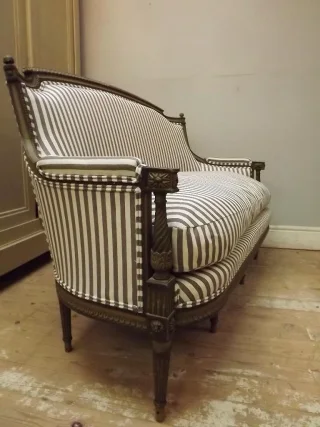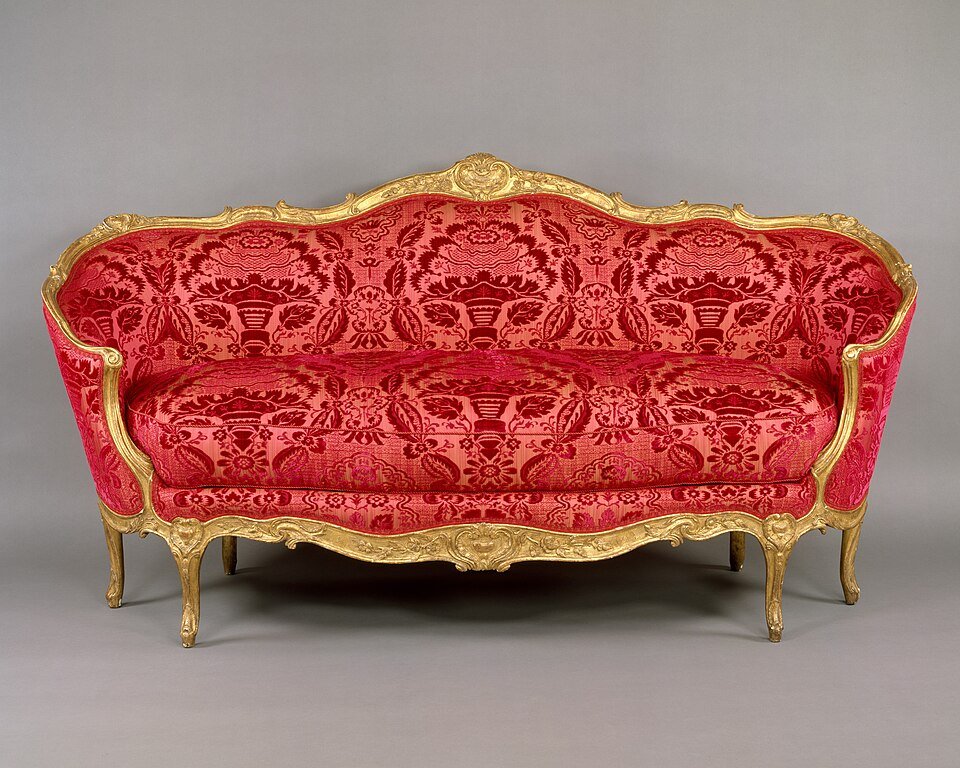
An S code on upholstery changes the usual response to a spill. Water-based spot cleaning may be prohibited, even if the fabric feels like a familiar washable textile. The best first action is to collect the spill without adding a second liquid, identify the furniture and decide whether the maker's specified solvent method is practical at home.
This guide concentrates on that decision and the useful work you can complete before a professional visit. It does not provide a universal solvent recipe. The chosen product, fabric, dyes, backing, adhesives and nearby finishes all matter. A clean-looking spot is a poor result if the treatment has changed the color or weakened material beneath it.
Confirm that S applies to the affected fabric
Find and photograph the furniture label, fabric name and model. Mixed-material furniture can carry different care requirements on the seat, decorative back and separate scatter cushions. If the tag is missing, ask the retailer or manufacturer using the product record. Do not identify S fabrics by touch or assume a synthetic fiber must tolerate water.
La-Z-Boy's S instructions specify water-free dry-cleaning solvent for spot care and warn against water and saturation. Ethan Allen's guide also uses the furniture label to select a compatible category. These are examples of restricted permissions rather than endorsements of every solvent in a cupboard. GUBI directs users to both furniture and fabric guidance and recommends an upholstery specialist for professional cleaning. Keep that dual check in mind when the upholstery was specified separately from the frame.
Collect fresh material without an improvised rinse
Blot liquid promptly with a clean undyed absorbent cloth, pressing and lifting rather than rubbing. Change to a dry face as it wets. Lift loose solids gently with a soft edge if this can be done without scraping the weave. Do not pour water around the stain to prevent a ring; the S restriction is still relevant during an urgent spill.
Write down the spill contents and approximate time. Include oil, pigment or sugar if known, and note whether it reached a seam. Keep the original container available for ingredient information if useful. Do not apply an absorbent powder unless the furniture instructions specifically recommend it, since particles can lodge in texture or complicate later treatment. Immediate collection and accurate information are meaningful progress even when no cleaner is applied.
Vacuum only dry loose soil with the right tool
For dry surrounding debris, use the furniture-approved upholstery attachment at a suitable setting. Check the tool for rough edges and trapped grit. Keep away from loose yarns, delicate trim and damaged seams. Ordinary dry vacuuming is not a method for removing fresh liquid; use the appliance only within its stated purpose.
Do not brush a crushed or pile fabric aggressively because a general S-code page mentions brushing. Fiber structure can impose a tighter boundary than the code alone. If the fabric is shedding, snagging or unusually fragile, stop contact and ask for advice. A record of which dry areas were gently cleaned helps a specialist distinguish original soil from any changes caused during the initial response.
Decide whether the named solvent method is feasible
Obtain the exact recommended upholstery cleaner and read its label in full. Check ventilation, ignition precautions, protective equipment, application, residue removal and disposal. If the required conditions cannot be met in the room, choose a specialist. Do not substitute rubbing alcohol, nail-polish remover, paint thinner or automotive cleaner because each is described as a solvent.
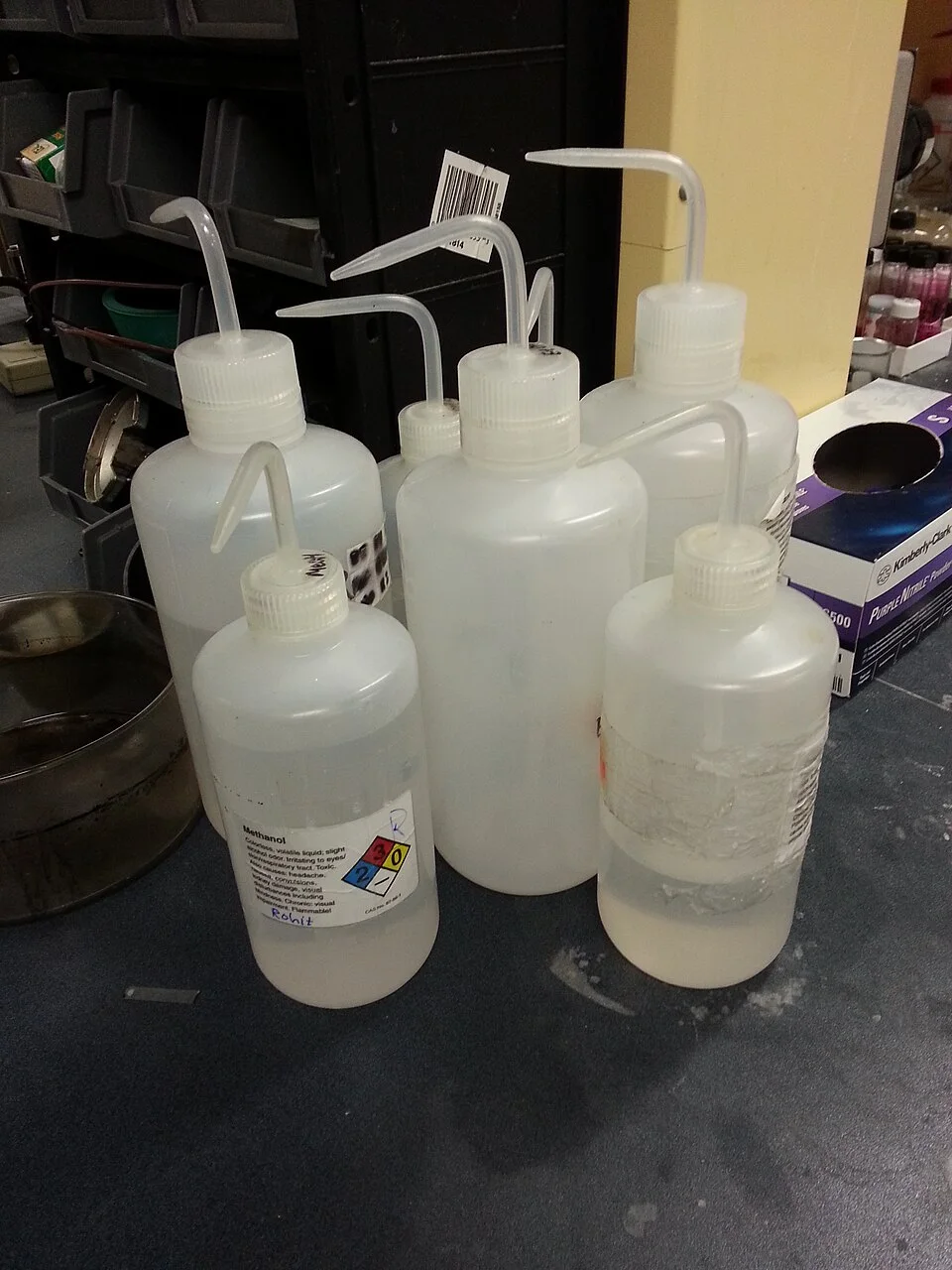
The foreground bottle has chemical identification and hazard information while neighbouring bottles are less clearly labelled. Read the complete label for the exact upholstery product, including ventilation and ignition precautions, before deciding whether home treatment is feasible. The methanol bottle is a hazard-label reference, not an upholstery-cleaner recommendation or evidence that the room meets product requirements.
Photo & usage
Alan Blayney · CC BY-SA 3.0 · Source. Display copies resized and encoded as WebP; no instructional details were fabricated or removed.
Ask whether the product suits the fabric's backing and the furniture construction. The S code concerns a cleaning category, not a guarantee about every adhesive or trim. Protect wood, leather and metal according to their instructions. If a recliner or powered mechanism is involved, follow the furniture's electrical precautions and keep liquid away from equipment. Never attempt to compensate for uncertain compatibility by applying only a tiny amount to the visible stain.
Use a decision comparison instead of escalating chemistry
| Situation | Useful work now | Boundary |
|---|---|---|
| Fresh drink spill, product not yet identified | Blot and recover the care record | No improvised water rinse |
| Approved cleaner available but ventilation cannot meet label | Document spill and arrange specialist care | Do not use the product in unsuitable conditions |
| Hidden trial transfers color | Stop and photograph the result | No extension to the visible panel |
| Widespread gray soil over several panels | Request overall professional cleaning | Do not multiply small spot treatments |
These are invented scenarios, not tests of a particular fabric. They show that choosing professional care is a specific material decision rather than a failed attempt to clean. A clear handover can save repeated incompatible treatments and gives the cleaner a better basis for proposing an appropriate method.
Describe scale without guessing absorbed volume
Suppose an illustrative arm panel measures 25 by 60 centimeters, or 1,500 square centimeters. A visible spill outline measuring 5 by 10 centimeters occupies a 50-square-centimeter bounding rectangle, about 3.3 percent of the panel. That calculation describes the visible area only. It cannot establish how much liquid entered the padding or how far dissolved dye travelled.
Give the specialist both an overview and a close photograph. Include seams, piping and neighboring materials in the overview. A statement such as spill crossed the arm seam is more useful than estimating that the chair is only three percent affected. Keep your measurements observational; do not derive a solvent quantity or drying time from them unless the actual product instructions provide a method.
Finish the handover with an honest condition record
List the fabric identity, S label, spill contents, timing and everything already applied. If you only blotted and vacuumed dry debris, say exactly that. Avoid calling the item dry-cleaned or disinfected when no such process occurred. Preserve any cleaner packaging relevant to a hidden trial.
After authorized treatment, inspect only under the specified dry conditions and compare color, hand and panel shape. Follow the cleaner's return-to-use instructions. Completion means that the selected process was compatible and the remaining condition is understood. A persistent mark may need acceptance, repair or replacement advice; repeated applications of unrelated household solvents are not the necessary next step.
THE REFERENCE FILE
Sources & scope
Documentation reviewed 1 Nov 2026. Examples are illustrative; this article does not claim hands-on product testing. Follow the instructions for your actual material, model and location.