A shower curtain can look clean when you rehang it and still return to the same damp, spotted condition. The useful question is where water stays after the shower ends: inside a folded liner, along a hem resting on the bath, or throughout a bathroom that remains wet.
Treat this as two connected jobs. Clean each layer using its own care instructions, then watch one ordinary drying cycle before deciding the problem is solved. The aim is a curtain that sheds shower water and dries between uses, with no need to keep escalating the cleaning treatment.
Read the damp pattern before taking anything down
Inspect the curtain when the shower has been unused for a while. Look at the bathroom-facing surface, the shower-facing surface and the space between an outer curtain and liner. Use good room lighting; avoid shaking or dry-brushing spotted material. Photograph the affected areas so that later comparisons use the same locations.
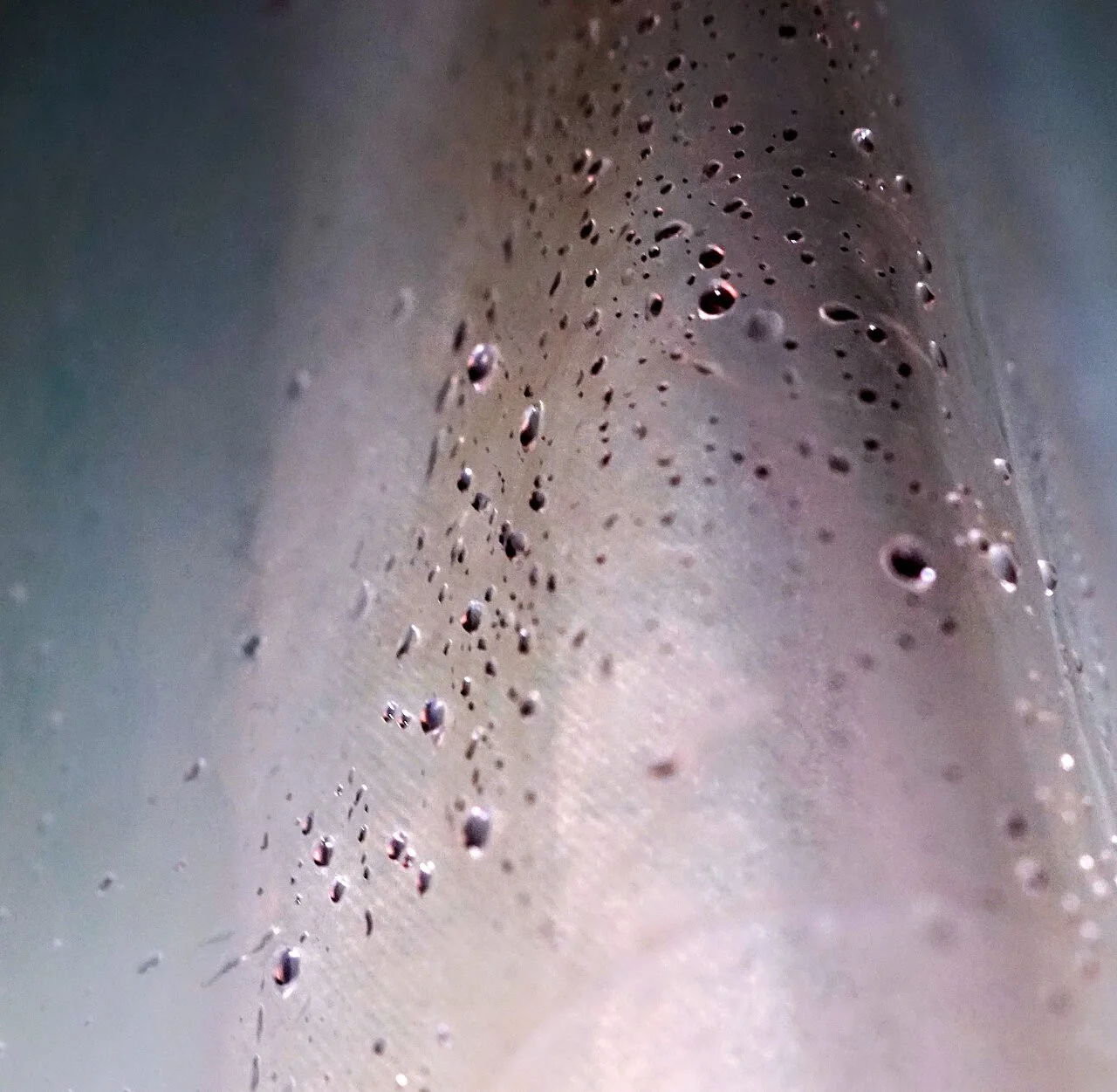
The close photograph makes separate droplets on a clear plastic curtain visible. Check the lower edge and folds after an ordinary shower; do not identify a stain or mould species from droplet colour in a photograph.
Photo & usage
FuriousYogi · CC BY-SA 4.0 · Source. Display copies resized and encoded as WebP; no instructional details were fabricated or removed.
Make a short map rather than trying to identify growth by colour. Note whether marks follow the bottom seam, repeat inside folds, surround eyelets or extend onto neighbouring finishes. Colour alone does not tell you what a deposit is or which treatment is appropriate.
- Only the lower edge stays wet
- Look for a hem resting on the bath floor or ledge, trapped folds, or water held between layers.
- Vertical strips stay wet
- Look for sections pressed together or against the enclosure after use.
- The curtain and surrounding room remain damp
- Check how the bathroom is ventilated and whether other surfaces dry before the next shower.
These observations choose the next check; they do not prove a cause. Persistent dampness when nobody has showered belongs in a separate leak investigation, especially if a wall, floor or fitting is also wet.
Give each layer its own care decision
Find the sewn label, packaging or exact product page for both curtain and liner. Record washing method, temperature, bleach restrictions and drying instructions. Include any coating-care directions. Fabric appearance and a label saying “mildew resistant” do not authorise a hot wash, bleach treatment or tumble drying.
For a concrete example, IKEA's BORSTALOE polyester curtain instructions permit a warm durable-press machine cycle and line drying, while prohibiting bleach and tumble drying. Dunelm's Essentials White PEVA curtain is marked wipe-clean only. These are instructions for those products, not material-wide rules.
If the label is missing, ask the supplier using photographs and purchase details. Do not run an experimental machine wash on an unidentified plastic liner. Replace an inexpensive unidentified liner if obtaining suitable care guidance is impractical; save the replacement's instructions.
Before removal, check for split eyelets, brittle plastic, peeling surfaces and open weighted seams. Replacement is more useful than repeated scrubbing when the material can no longer hang intact or contain water. Leave sewn-in weights and magnets enclosed.
Prepare the clean, including a reason to stop
Gather the care instructions, permitted detergent or cleaner, soft cloths and a clean container for carrying the curtain. Arrange a drying position over the bath or shower tray that lets water drain safely. Clear toiletries and make the floor dry before unhooking anything. If the hooks cannot be reached safely from the floor, arrange suitable assistance.
Where mould is suspected, follow CDC mould-cleanup precautions: wear a NIOSH-approved N95 respirator, protective gloves and goggles without open ventilation holes. CDC advises people with allergies, immune suppression, underlying lung disease or chronic respiratory disease such as asthma not to undertake mould cleanup. Arrange help instead.
Ventilate while using cleaning products and follow their protective-equipment directions. Use only the product permitted by the curtain instructions. CDC warns against mixing bleach with other cleansers. Do not add vinegar, bleach, descaler or a disinfectant to this cleaning process, or apply cleaner over unidentified chemical residue.
Take down the layers separately, supporting their weight as you release the hooks. Carry a damp curtain in the container rather than dragging it through the home. Keep hooks out of the washing machine and clean them separately according to their material instructions.
Clean by the permitted route, then inspect dry
For a machine-washable curtain
- Remove detachable accessories as instructed. Check the washing-machine manual for restrictions on waterproof or coated items; the curtain label and appliance instructions both need to allow the load.
- Select the labelled temperature and cycle. Use a compatible laundry detergent at its stated dose for the load and local water conditions. Leave out extra stain treatments unless the curtain maker specifically permits them.
- Allow room for the curtain to move. Do not automatically add towels as scrubbers or pack several curtains together. If the item will not fit within the machine's permitted loading guidance, choose another manufacturer-approved route.
- Remove promptly when the cycle finishes. Unfold it gently and follow the specified drying method. Do not assume a dryer is permitted because machine washing is.
For a wipe-clean liner
Support a small area at a time and use a soft damp cloth, adding a cleaner only if the manufacturer's instructions permit it. Work both accessible faces and gently open the folds. Avoid abrasive pads and forceful scrubbing at welded seams. Remove cleaner residue by the stated method without flooding adjacent surfaces.
A wipe-clean instruction does not approve soaking or machine washing. If ordinary permitted wiping cannot remove the deposit, ask the manufacturer or replace the liner. Do not transfer the detergent method for a washable textile onto an unidentified coating.
For either route, let the item dry before judging the result. Check seams, eyelets, surface texture and any remaining odour. Stop if the coating flakes, plastic cracks or a seam opens. A remaining stain alone cannot establish whether cleaning succeeded; persistent visible growth or a musty smell calls for reassessment rather than stronger treatment.
Rehang so water has somewhere to go
During showering, position the water-containing liner inside the bath or tray and the decorative outer layer outside, where the product design calls for separate layers. Follow the enclosure instructions for side overlap. Check that water drains into the intended wet area rather than onto the bathroom floor.
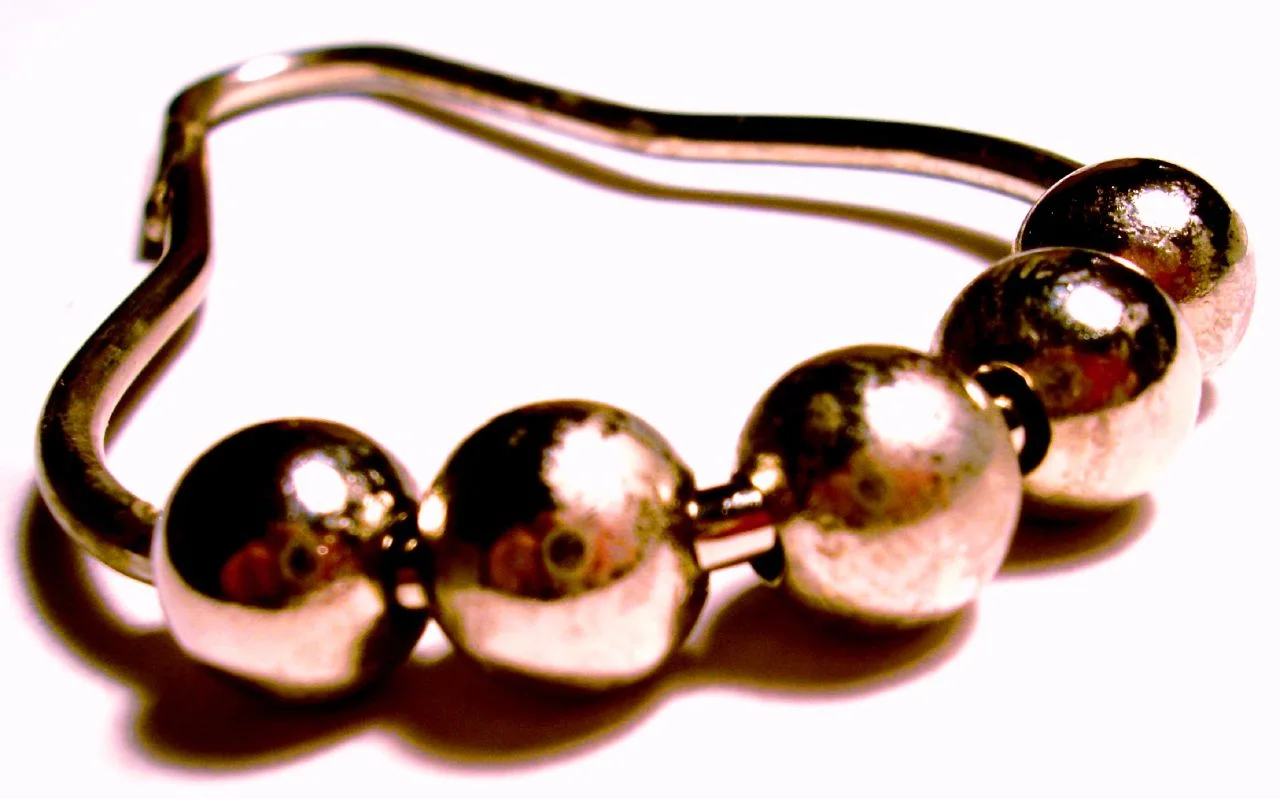
Inspect rings and attachment points so the permitted curtain can hang without being bunched by a snag. The ring design pictured is one example; follow the actual curtain and rail instructions when removing or refitting it.
Photo & usage
darwin Bell from San Francisco, USA · CC BY 2.0 · Source. Display copies resized and encoded as WebP; no instructional details were fabricated or removed.
After showering, spread the curtain across the rail so folds open. Here, “open it out” means spreading the material, not parking it in a tightly gathered bundle. Separate touching layers where the hanging arrangement allows, and keep the hem from sitting in collected water. Avoid pulling against hooks or a tension rod.
If excessive length makes the hem pool, check the product's sizing and hanging guidance. Do not cut through a weighted seam or reposition a rail without checking its installation requirements. A correctly sized replacement may solve the contact problem more reliably.
The EPA's household mould guide links recurring bathroom mould with moisture control and recommends increased ventilation. Run existing extraction using its normal controls and instructions; use an opening window where safe and appropriate. Judge the arrangement by drying, not fan noise. An extractor that fails to clear moisture needs assessment by a qualified ventilation professional.
Follow one drying cycle instead of setting a blind schedule
In this hypothetical example, a household finds that its washable outer curtain dries, but the liner's bottom corner stays folded against the bath. Washing both layers again would leave the same contact point. The useful first change is spreading the liner after showering and checking its fit.
Keep a brief note after an ordinary shower: where droplets remain, whether the layers touch, whether extraction ran and what is still damp before the next use. Compare the lower corner with an unfolded central panel. If the corner improves while the room dries normally, keep the new hanging habit.
If the whole curtain remains damp along with the mirror and walls, investigate ventilation performance rather than repeatedly replacing liners. If moisture appears during an unused period, record when and where it appears and contact a plumber or property manager. These observations require no removal of fan covers, wall panels or seals.
THE WORKING FILE / LOG
Clean appearance and complete drying are separate finish checks
In a hypothetical bathroom, the outer curtain is dry after ordinary use while the liner’s folded lower edge remains damp. Cleaning both layers together misses the location of the repeated wetness. Start with each label and keep the cleaning decision separate from the drying observation.
| Checkpoint | Outer curtain | Liner |
|---|---|---|
| Care permission | Record its own label | Record its own label |
| After permitted cleaning | Inspect when dry | Inspect when dry |
| After normal bathing | Usually clears | Lower fold remains damp in this example |
| Next question | Any retained staining? | Is water trapped by folds or the hanging position? |
Read the result
Change one permitted hanging or use detail and follow the next ordinary drying cycle. The point is not to impose a universal number of minutes: material, room conditions and ventilation differ. Write where the remaining water sits and whether the same patch returns. A stain left on a dry, intact material is not automatically the same problem as continuing moisture or material damage.
Your log record Blank worksheet
Give the curtain and liner separate care routes, then observe where water persists.
- Layer / material
- ________________________________
- Care permission
- ________________________________
- Permitted cleaning route
- ________________________________
- Dry inspection
- ________________________________
- Wet location after bathing
- ________________________________
- Hanging position
- ________________________________
- Ventilation use
- ________________________________
- One change
- ________________________________
- Next-cycle result
- ________________________________
Before closing the file
- Curtain and liner are treated separately.
- Drying is observed at the dampest part.
- Recurring moisture receives follow-up.
Define a finished job and the next action
Finish checks are practical: permitted cleaning residue is removed, the material is intact, water stays inside the enclosure during use, and the opened folds and hem dry between showers. Revisit the photographed areas after subsequent use. Set the next clean around returning film or deposits and the product's care guidance, rather than a universal calendar interval.
The EPA notes that mould can leave staining, so original colour is not a sufficient finish test. Its guide calls for professional guidance where mould exceeds about 10 square feet (0.9 square metres), or where there is substantial water damage or contaminated water. Growth spreading beyond the curtain warrants a wider assessment.
If the curtain still smells musty or develops new visible growth after the permitted clean and drying changes, replace the affected item and investigate the moisture source. Give the relevant professional photographs and the drying notes. Repeated chemical treatment cannot correct a leak, persistent surface contact or inadequate extraction.
THE REFERENCE FILE
Sources & scope
Documentation reviewed 1 Nov 2026. Examples are illustrative; this article does not claim hands-on product testing. Follow the instructions for your actual material, model and location.