A wool rug can survive years of careful use and still be altered by one aggressive spill treatment. Rubbing can disturb the pile, unsuitable chemistry can affect color, and excess water can reach backing or the floor beneath it. The useful response is prompt collection followed by a method chosen for the entire rug construction, not simply for the word wool.
This guide concerns a small household spill on an identified wool rug. Antique, hand-dyed, fragile, silk-blend or unknown rugs deserve specialist advice before wet treatment. A rug may also contain viscose, cotton foundation or a latex backing that changes its care requirements. Keep those materials in the decision rather than treating the visible pile as the complete object.
Read the label and construction first
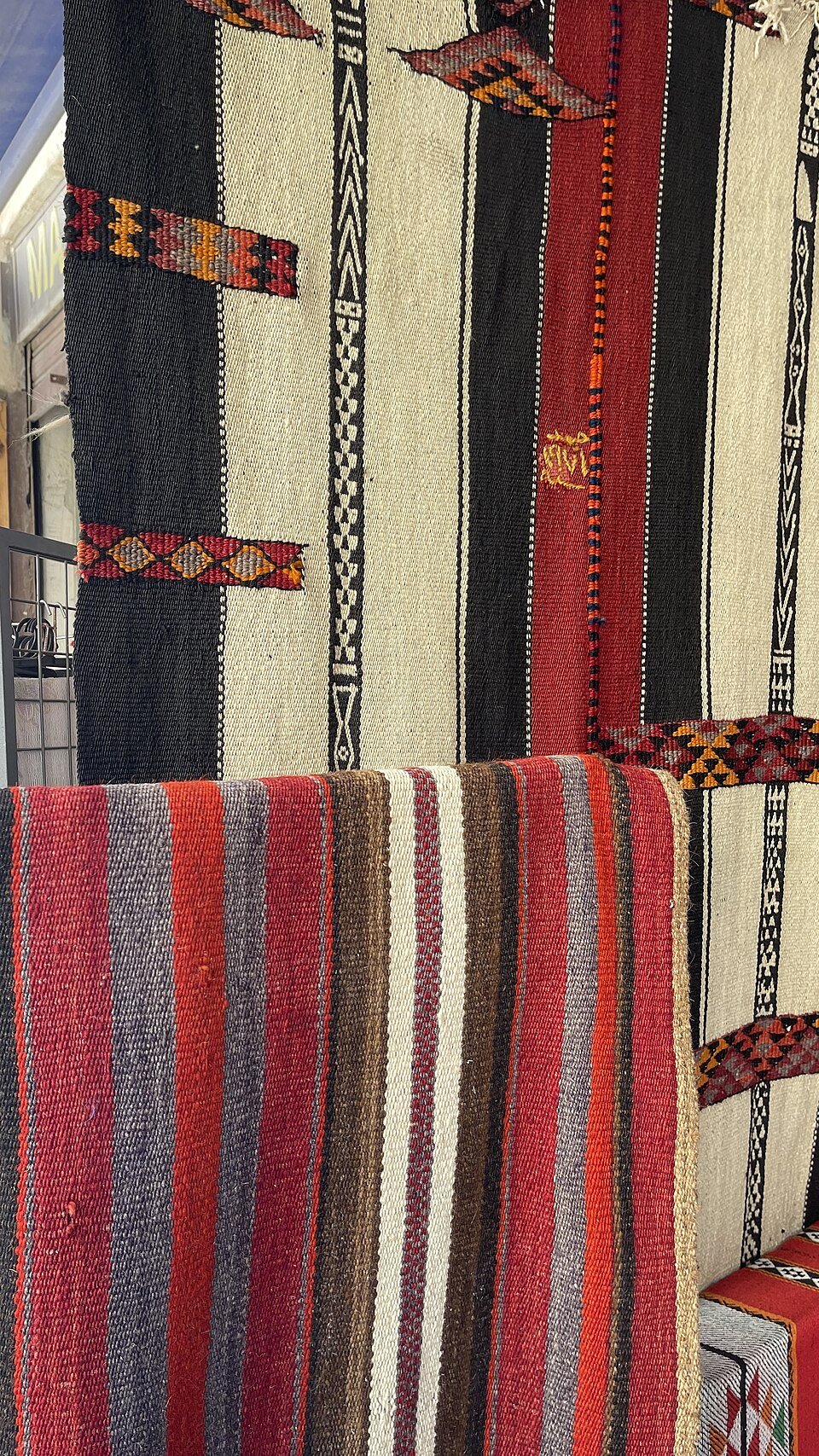
Find the fiber composition and care label, photographing both sides if this can be done without awkward lifting. Note whether the rug is tufted, woven, backed or fringed. Do not pull a corner hard to expose the underside; use assistance for a large rug and keep it supported. Ask the retailer for missing construction details.
WoolSafe and IWTO publish care guidance specifically for wool carpets and rugs, including appropriate cleaning products and spill responses. Carl Hansen & Son's rug guide provides another manufacturer's care context. None establishes that every wool blend is washable or suitable for a domestic extractor. If the rug includes a more sensitive fiber or an unknown dye treatment, obtain advice for that combination before adding liquid.
Collect the spill without widening it
Blot fresh liquid with a clean white absorbent cloth, pressing and lifting rather than rubbing. Replace the wet area of cloth promptly. Work from the perimeter toward the center where possible so the spill does not spread into a larger outline. Lift solids gently with a soft edge without scraping or pulling loops.
Record the substance and any treatment already used. A clear drink can still contain sugar, while a sauce may combine oil and color. Do not add a home mixture while deciding which stain category applies. If the spill is extensive, has reached the backing or lies on a valuable rug, stop after safe collection and contact a rug specialist. A small visible outline does not reliably show the volume held below the pile.
Check the floor and underlay without damaging either
Where the rug can be moved safely, inspect underneath for moisture. Protect the floor according to its own finish requirements and keep a damp rug from remaining unnoticed on wood or another sensitive surface. Do not use a plastic sheet as an unattended drying solution if it traps dampness against either material.
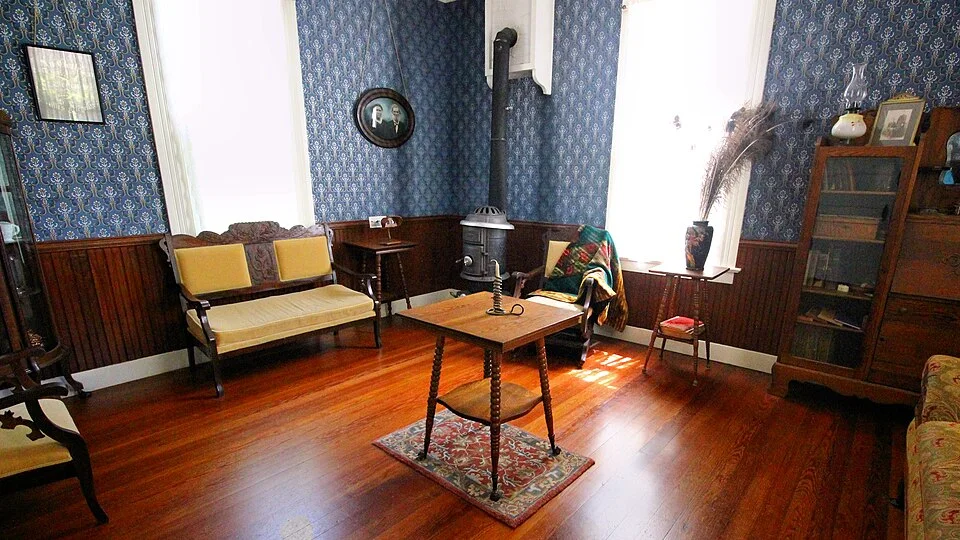
The table legs occupy much of the small rug, while the surrounding floor remains visible. Before checking underneath your damp wool rug, plan how furniture and the textile can be supported without dragging, sharp folds or damage to either surface. This room photograph shows an access constraint, not moisture below the rug or permission to lift its table alone.
Photo & usage
Larry D. Moore · CC BY 4.0 · Source. Display copies resized and encoded as WebP; no instructional details were fabricated or removed.
Avoid dragging a heavy wet rug or folding it tightly over a chair. Wet weight and a sharp crease can affect shape and backing. Ask the rug maker or specialist how to support it during any permitted drying. If the floor has already darkened or changed, document that separately. Cleaning the rug face cannot determine whether the floor beneath it needs finish assessment.
Remove surrounding dry soil with an approved tool
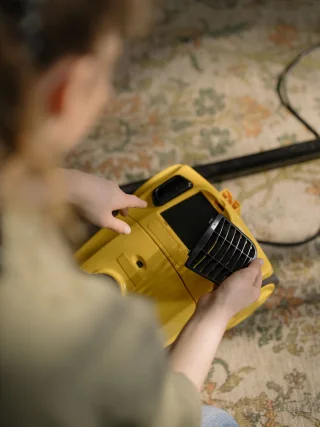
When the surrounding debris is dry, vacuum with the rug-approved setting and attachment. Check for grit on the tool and avoid catching fringe, loose knots or lifted binding. A powered rotating brush is not automatically appropriate for loops or delicate construction. Follow the rug's instructions rather than the vacuum's generic rug symbol alone.
Do not use an ordinary dry vacuum on fresh liquid. Keep the machine within its stated purpose. Remove dry particles gently before a permitted spot treatment so they do not turn into a muddy ring. If fibers pull or the rug's edge moves into the nozzle, stop and change the approach. A powerful tool can produce a visibly clean patch while also disturbing the textile.
Trial the wool-compatible spot method
Choose the product approved for the rug and stain, using WoolSafe-approved products where consistent with the actual care instructions. Read its application and residue-removal directions in full. Test an inconspicuous representative area and let it dry completely before extending the method. Observe dye transfer, stiffness, pile change and any boundary ring.
Do not substitute bleach, concentrated alkaline cleaner or a dish-detergent mixture because the spill looks oily. A compatible product must account for wool and dyes as well as soil. If the rug maker prohibits household wet treatment, the hidden test does not override that boundary. Ask a specialist instead. Keep cleaner packaging available so any later assessment can identify exactly what contacted the rug.
Treat with controlled contact and minimal disturbance
Follow the authorized sequence and avoid saturating the rug. Use gentle blotting or the specified tool rather than scrubbing across the pile. Change cloth faces as material transfers. Remove product residue as directed, without inventing a flood rinse that reaches the backing. Do not chase a remaining color spot with repeated unmeasured applications.
Keep fringe outside the assumption that the pile method applies; its fiber and construction may differ. Dry under the maker's permitted conditions and avoid direct heat or strong sunlight used as an improvised accelerator. Keep the rug out of service while damp. If odor, persistent wetness, color bleeding or distortion appears, stop and request rug-specific advice rather than covering the area and continuing normal use.
Compare the dry result with the starting record
| Dry observation | Possible interpretation | Next move |
|---|---|---|
| Spill outline gone and pile feels normal | Small spot care succeeded | Return to use after completion checks |
| Colored outline remains without residue | A persistent stain may remain | Ask for cause-specific treatment |
| Pile is matted or rougher | Mechanical or moisture-related change is possible | Stop further rubbing |
| Boundary ring appears beyond the spill | Soil, cleaner or dye may have migrated | Arrange specialist assessment |
These invented comparisons are not claims from hands-on testing. They distinguish soil removal from texture damage, which a distant before-and-after photograph can hide. Inspect by sight and permitted light touch, using the same pile direction and room lighting as the original record.
Use dimensions to describe the problem accurately
For an illustrative rug measuring 160 by 230 centimeters, the area is 3.68 square meters. A rectangular observation zone of 20 by 15 centimeters covers 0.03 square meters. Dividing 0.03 by 3.68 and multiplying by 100 gives about 0.82 percent of the face area.
These figures describe scale, not a safe liquid quantity or the actual stain penetration. A small percentage near fringe can present a different treatment problem from a larger mark on sound central pile. Tell the specialist whether the spill crossed an edge, backing or a contrasting color. A precise location and substance history matter more than calling the rug only slightly affected.
Know when spot care is complete
The rug and any relevant underlay should meet the maker's drying requirements, with no remaining removable product residue and no new pile distortion. Check the floor beneath before returning the rug to position. Do not claim complete internal drying merely because the upper fibers feel dry.
Record the approved cleaner and result for future small spills. For widespread soil or an unresolved stain, request a rug-specific cleaning assessment rather than continuing isolated spot treatments. Completion means the small spill has been managed within the construction's limits and any remaining defect has a sensible next step. Preserving wool texture, color and shape is part of cleaning success, not an optional extra.
THE REFERENCE FILE
Sources & scope
Documentation reviewed 1 Nov 2026. Examples are illustrative; this article does not claim hands-on product testing. Follow the instructions for your actual material, model and location.