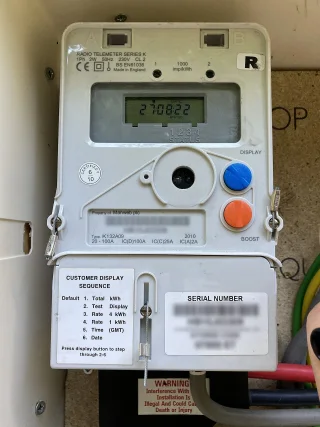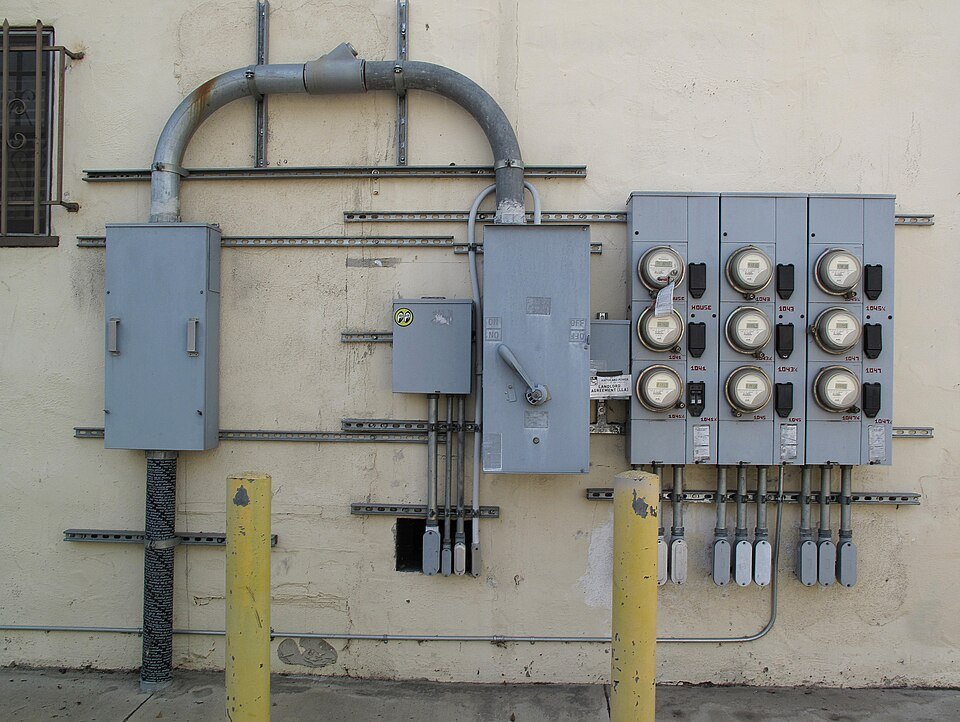
A higher electricity total does not always mean the household used electricity more intensively. A bill covering thirty-four days naturally has more opportunities to accumulate use than one covering twenty-eight. Divide the energy by the actual service period before deciding that an appliance or routine caused the increase.
Build a small comparison record from the bill's electricity section. Keep money separate at first. This procedure explains a specific period-length issue; it does not identify an appliance fault, predict a future bill or replace the utility's own correction process when readings are estimated.
Copy the service dates rather than the payment date
Find the electricity service start and end dates, billed day count and total kWh. The issue date and payment due date describe administration, not necessarily the energy period. Record them separately if useful, but do not use their spacing as the denominator for daily use.
Check whether the bill already prints a day count. Use the utility's stated convention and investigate discrepancies instead of casually adding both endpoints. Consecutive cumulative readings measure the interval between them; counting the shared boundary day twice can distort adjacent periods.
PG&E — Electric Rule 9: Rendering and Payment of Bills provides a utility-specific example of regular billing and proration rules. It is not a universal day-count rule for every supplier. If your own bill splits periods or includes a correction, preserve those sections and consult its explanation. Do not force a complex statement into one neat month simply because the payment arrives monthly.
- Copy both service boundaries and the supplier’s billed-day count from the electricity section.
- Mark the kWh total and its actual, estimated or corrected status before dividing.
- Calculate kWh per billed day, then write the context that day normalization does not remove.
Verify the energy field and reading status
Copy electricity consumption in kWh, not the dollar amount or an instantaneous kW field. EIA — Measuring Electricity distinguishes power from energy accumulated over time. Keep the units visible in every column so that a later calculation cannot silently divide watts by billed days and call the result daily consumption.
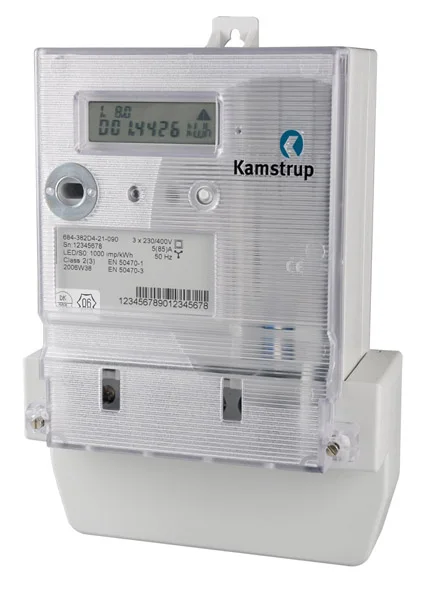
The display includes a kWh marking, helping distinguish accumulated energy from price or instantaneous power. Copy the relevant register and unit into the comparison record, then retain the service-day count and actual or estimated status from the utility. The meter photograph supplies neither billing dates nor an allocation among periods.
Photo & usage
Gert Skriver · CC BY 3.0 · Source. Display copies resized and encoded as WebP; no instructional details were fabricated or removed.
Mark actual, estimated or corrected status using the utility's terminology. If either endpoint was estimated, the period's apparent daily rate may be provisional. Preserve that limitation beside the figure rather than relegating it to a note nobody sees when comparing rows.
Portland General Electric — Understanding My Bill explains how estimates and later corrections can affect its customers' bills. Use your supplier's process for your own account; the example does not promise a particular correction date elsewhere. When a catch-up statement spans several earlier periods, compare a reliable actual-to-actual interval if available rather than treating the latest bill alone as a sudden household change.
Calculate daily kWh before percentage change
Divide the billed kWh by the verified billed days. Keep several decimal places during the calculation and round only for display. Label the result kWh per day, not kilowatts per day. It is an average energy rate across the period, not a claim that each day used the same amount.
Use a simple explicit sequence for each row: verify dates, confirm kWh and status, divide by days, then record relevant context. A calculator or spreadsheet is sufficient. If the formula references a currency column by mistake, a plausible-looking result can still be wrong, so check units as well as arithmetic.
Compare daily values only after the rows use the same scope. A bill combining electricity and another service cannot contribute its total amount as electricity consumption. Likewise, imported grid electricity may not represent all household electricity where solar generation, export or storage changes the accounting boundary.
Read an illustrative unequal-period comparison
All numbers here are illustrative. Period A uses 280 kWh over 28 days, giving 10 kWh per day. Period B uses 340 kWh over 34 days, also giving 10 kWh per day. The raw consumption increase is 60 kWh, or 60 ÷ 280 × 100 = about 21.43 percent.
The daily comparison shows no increase under these invented conditions. A normalized thirty-day equivalent would be 300 kWh for either period: 10 × 30. This thirty-day figure is a comparison device, not a rebill or a prediction of the next calendar month.
Now suppose Period B instead uses 374 kWh over 34 days. Its average is 11 kWh per day, which is 10 percent above Period A's 10. That indicates a higher period-average rate of use, but not its cause. Weather, visitors, appliance use and reading quality remain separate questions requiring evidence.
Add context without turning it into an explanation
Record major changes such as guests, absence, working from home or unusual heating and cooling use. Keep the notes factual. A warmer period and higher daily kWh can be associated in the record without proving how much of the increase came from cooling.
Avoid comparing a winter and summer period as though day normalization also normalized weather. It removes one arithmetic difference only. If you need a closer behavioral comparison, choose periods with reasonably similar conditions and record the remaining differences honestly.
Mark major equipment changes by date. A new appliance introduced halfway through the period cannot be assigned the entire change simply because it is new. Longer records or appropriate device-level measurements may help, but a daily bill average alone cannot isolate individual contributions. Keep the conclusion at the level the evidence supports.
Use a decision boundary for follow-up
If daily kWh is similar and the bill is higher, investigate rate and charge changes separately. If daily kWh is higher across comparable reliable periods, review context and then select a specific appliance or routine to examine. Avoid replacing equipment based solely on a higher total covering more days.
If the reading status is provisional, preserve the comparison as provisional and obtain a clearer actual interval before drawing a strong conclusion. Contact the utility when dates, meter identifiers or billed units do not reconcile. Keep the original statement and your calculation together so the question is concrete.
Do not invent a universal percentage that proves a fault. The significance of a change depends on household size, ordinary variation and the question being asked. Choose a practical review trigger for your own records, state why it matters and avoid presenting it as an official threshold.
Check a partial first or final service period
A move-in or move-out bill deserves its own row. Copy the actual service boundary and distinguish a partial period from an ordinary full cycle. The first few days may contain unusual cleaning, moving or setup activity, so a daily average can be correct arithmetically while remaining unrepresentative of settled occupancy.
For example, an illustrative 66 kWh over six days gives 11 kWh per day. Multiplying that by thirty produces a 330 kWh comparison scenario, but it does not establish what the next complete period will use. Keep the original six-day observation visible beside the extrapolation so its short basis is not forgotten.
Compare the first settled complete period when available rather than replacing the partial-period record. If the move also changed meter, property or heating equipment, treat the new home as a different operating context. Day normalization cannot make two buildings equivalent. This boundary prevents a useful arithmetic adjustment from becoming an unsupported claim about the new household routine.
Complete the record with a reproducible conclusion
Save the two original bills, copied service dates, day counts, kWh and reading statuses. Keep the daily calculations and the specific context notes. Another household member should be able to repeat the arithmetic without guessing which dates or totals were used.
Write a narrow conclusion: period length explains the raw increase, daily use also increased, or the evidence remains provisional. Do not merge these into a general claim that the home is efficient or inefficient. Money and consumption can move differently, and each deserves its own record.
Completion means the comparison distinguishes period length from average use and identifies the next relevant question. Review the conclusion when corrected data arrives. A clear daily record is useful because it prevents a larger calendar interval from masquerading as evidence of an appliance problem.
THE REFERENCE FILE
Sources & scope
Documentation reviewed 1 Nov 2026. Examples are illustrative; this article does not claim hands-on product testing. Follow the instructions for your actual material, model and location.