Compare a defined fixture state
A showerhead's printed maximum flow, a partly opened tap and a household collection measurement describe different conditions. Put them in separate columns before drawing a comparison. This article assumes you already have safely collected records or manufacturer data; Ceetv's existing bucket-and-timer guide covers the basic shower measurement.
Identify the fixture, model where known, spray mode, control position and date. Record whether the figure is a label rating, a certified product value or an observation in your home. A difference between those figures does not by itself prove a defect.
EPA's showerhead and bathroom-faucet publications cover distinct WaterSense product categories. Saving Water Partnership explains where showerhead ratings may be found and notes mode differences. Do not apply a bathroom-faucet certification claim to a kitchen tap or assume every mode uses the listed maximum.
Match the conditions that affect the comparison
Use the same fixture mode and normal control position when comparing before-and-after household observations. Note other water use during the interval and avoid deliberately creating simultaneous demand as a pressure test. If conditions cannot be matched, state the difference.
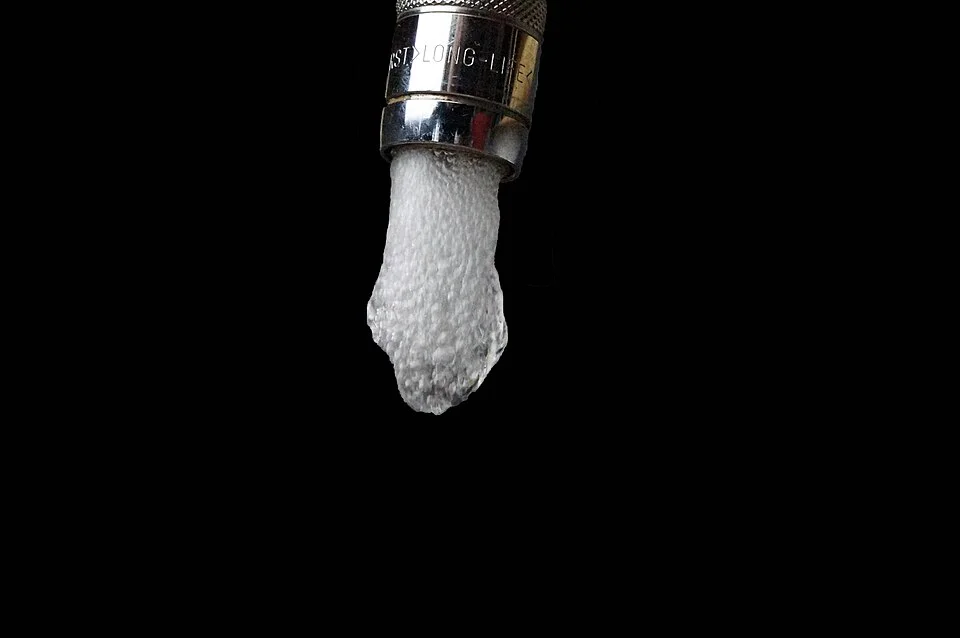
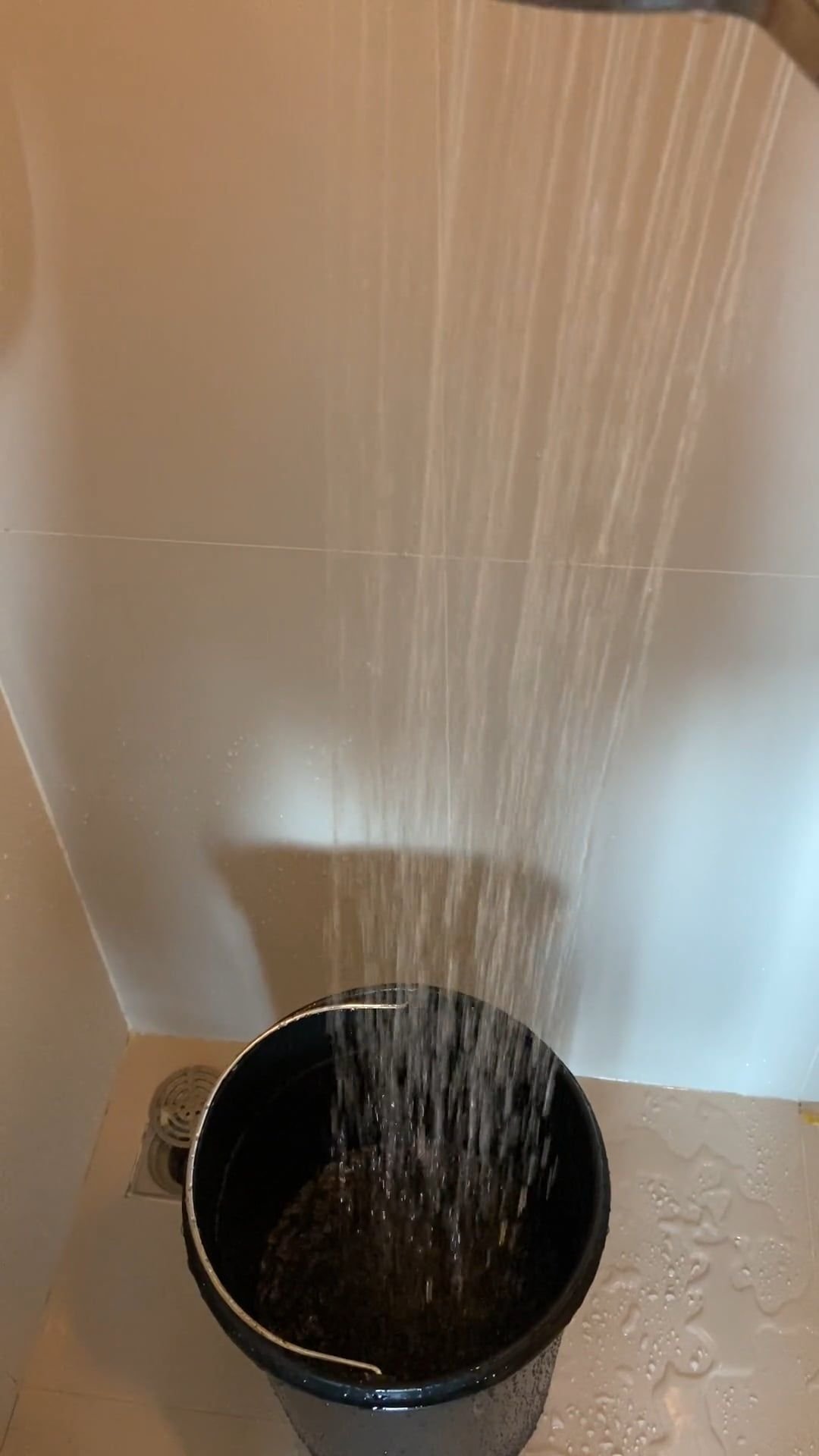
The close view makes the emerging stream’s width and aerated shape visible, features a collecting vessel must capture completely. Keep the actual fixture mode, normal control position and collection approach consistent between observations. This photograph shows no catch or measured volume; spillage or a partial stream would invalidate a household comparison.
Photo & usage
Pixelmaniac pictures (Leave a reply) · CC0 · Source. Display copies resized and encoded as WebP; no instructional details were fabricated or removed.
Keep the collection method, vessel and timing approach consistent. Spillage or incomplete capture can make one result appear lower. Mark an observation invalid when a known capture error occurred rather than averaging it into the result.
Use cool water for a suitable observation and keep people out of a potentially hot stream. Do not change heater settings, remove flow controls or alter plumbing for this comparison. If the fixture cannot be observed safely using an appropriate ordinary setting, use product data or a qualified service instead.
Calculate rates before comparing percentages
In this illustrative set, fixture A delivers 1.8 litres in 15 seconds and fixture B delivers 1.5 litres in 15 seconds under the same stated conditions. A's rate is 1.8 × 60 ÷ 15 = 7.2 litres per minute. B's is 6.0 litres per minute.
The observed difference is 1.2 litres per minute. Relative to A, that is 1.2 ÷ 7.2, or about 16.7 percent lower. Relative to B, A is 20 percent higher. State the comparison base so the percentage is not misleading.
These invented results do not establish certified performance, pressure or a daily saving. They describe two observation conditions. A replacement's household suitability also depends on the intended task, compatibility and the manufacturer's installation requirements.
Look at the spread before claiming a change
Compare repeated observations collected under the same approach. Keep all valid results and note invalid ones with the reason. If the apparent difference between fixtures is similar to the variation within each set, the evidence for a meaningful household difference is weak.
Do not add excessive decimal places to compensate for a small vessel or uncertain stopwatch timing. Report a practical range or rounded rate consistent with the method. A household collection exercise is not a laboratory flow certification.
If one result differs substantially, first check mode, capture, control position and recorded volume. Repeating the same mistake several times does not improve accuracy. Resolve a clear procedural problem before collecting more water solely to enlarge the dataset.
Distinguish fixed-time and fixed-volume tasks
A lower flow rate reduces volume for a task that lasts the same time, but may simply increase duration when filling a fixed-volume container. Decide which task the household actually performs before estimating an effect.
For an illustrative six-minute fixed-time use, a 1.2-litre-per-minute difference corresponds to 7.2 litres. For filling a 3-litre vessel, both fixtures supply 3 litres if there is no spillage or extra running; their filling times differ instead.
Keep any changed behaviour explicit. If someone compensates for a different spray by using it longer, the original fixed-time estimate may not apply. Observe the actual routine through a proportionate record rather than describing a label difference as guaranteed household savings.
Assess the function without inventing performance claims
Ask whether the fixture performs its normal task acceptably for the household. Record specific observations such as an incomplete capture pattern or difficulty using a selected mode, without claiming professional testing or universal satisfaction.
For a replacement, confirm compatibility with existing controls and the manufacturer's requirements. Do not remove an integral limiter, modify a valve or substitute an aerator solely to make a comparison favourable. Use an appropriate installer where the work requires it.
Keep maintenance condition visible. Deposits or damage can affect an observed pattern, but the comparison alone does not identify the cause. Follow the product's cleaning instructions or seek advice before treating an unfamiliar finish or component.
Turn the comparison into a purchase record
Save the exact candidate model and its stated rating, certification where verified and installation requirements. Keep the household observation beside it as a different evidence type. A product page for another finish or variant may describe a different flow option.
If estimating water charges, use verified use duration and the account's eligible variable rates. Keep fixed fees and hot-water energy outside that simple volume calculation unless separately supported. State the scenario rather than promising a specific bill reduction.
Check return and installation terms before committing. A fixture that meets a flow preference may still be unsuitable for the system or household task. The decision should satisfy those practical boundaries, not merely produce the lowest number in a table.
Close with a narrow conclusion
Write the final conclusion in terms of the evidence: under the named mode and method, one observed rate was lower by a stated amount. Include the spread and any unmatched conditions. Avoid broad claims about pressure, health, energy or long-term performance.
Retain the original volume and time values so the rate can be recalculated. If a later observation differs, compare conditions before assuming the fixture has changed.
The comparison is complete when measurement types, operating states and task assumptions remain distinct. It should help the household choose or investigate a fixture without turning a modest observation into a universal performance verdict.
Show how a longer use can change the outcome
Use duration belongs beside flow when estimating a timed task. In an illustrative case, a 7.2-litre-per-minute fixture runs for six minutes and supplies 43.2 litres. A 6-litre-per-minute fixture running for seven minutes supplies 42 litres. The second rate is lower, but the actual scenario difference is only 1.2 litres.
If the second use lasts eight minutes, it supplies 48 litres, exceeding the first scenario by 4.8 litres. This does not predict that people will compensate for a lower rate. It shows why a flow percentage should not be copied directly into a household-use saving without a duration assumption.
Record ordinary duration where it can be observed proportionately and without intruding on personal privacy. A simple user-reported range may be sufficient for planning. Keep it labelled as reported rather than measured if no timing was performed.
For fixed-volume tasks, use the volume needed instead. Filling the same vessel does not automatically save water because one fixture fills it more slowly. The useful decision is whether the fixture suits the household task under its intended conditions, with any volume difference supported by the actual task definition.
Record whether the outlet was handheld or fixed during capture. Moving a handheld spray closer to the vessel can improve capture without changing the fixture’s actual rate, so a better-collected result should not be mistaken for increased supply.
THE REFERENCE FILE
Sources & scope
Documentation reviewed 1 Nov 2026. Examples are illustrative; this article does not claim hands-on product testing. Follow the instructions for your actual material, model and location.