Define the retreat as an ordinary room-use choice
This plan was reviewed on November 1, 2026 for a November 22 release. It describes observations you can make later and contains no claim that those observations have happened. Here an evening refuge means an existing room used temporarily for a particular activity, such as an hour of reading or quiet conversation. It is not an emergency shelter, a cooling centre or a certification that a room is safe.
Choose the activity, intended duration and usual evening hours first. A room that works for reading alone may not work for a two-person conversation, and a pleasant early evening may differ from conditions later at night. Identify who will use the room and any practical needs they already know about. Do not ask anyone to demonstrate tolerance of discomfort to make the comparison complete.
If there is an active hazard, serious overheating concern or another urgent problem, use the relevant assistance and established advice rather than waiting for this notebook exercise. The comparison addresses ordinary comfort preferences between usable spaces. It cannot clear a damp, damaged, poorly accessible or otherwise concerning room merely because its light or sound seems preferable.
Shortlist two rooms and their actual seats
Pick two existing rooms the household can genuinely spare. Name the seat or table in each and the route needed to reach it. Check ordinary door operation, access to controls, a suitable place for the activity and whether using the room displaces someone else’s necessary task. A guest room full of stored items is not automatically a ready retreat because it is farther from the street.
Use ordinary furniture that can support the intended activity without improvised stacking or trailing leads. Check the route at evening light levels, including the return trip carrying a book or drink. Note where a person can put belongings and whether they can get up easily. These are practical observations, not an accessibility or building-safety certification.
Describe each room’s starting state: doors, windows, coverings, lamps and relevant operating equipment. Keep necessary ventilation and continuous services in their intended condition. Do not make one room appear quieter by turning off something needed for normal operation. If a room only works after a complex setup, include that burden in the decision rather than hiding it from the comparison.
Observe thermal conditions from the intended position
Sit in the proposed seat long enough for an ordinary first impression rather than judging from the doorway. Note moving air, direct sun if still present, a locally warm surface and any unwelcome coolness beside glass or a wall. Use descriptive terms tied to the body and location. “Cool on the window side of the chair” says more than assigning the whole room a cold label.
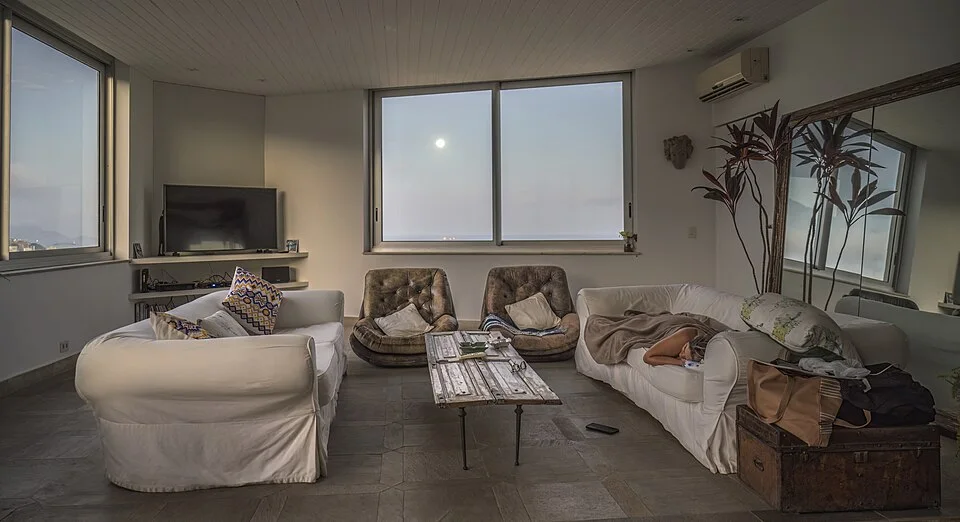
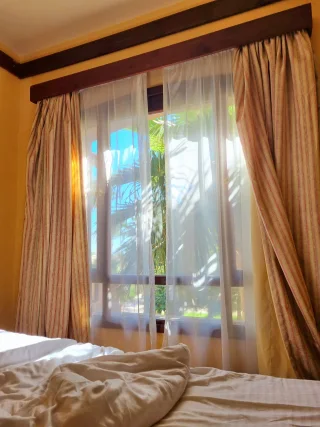
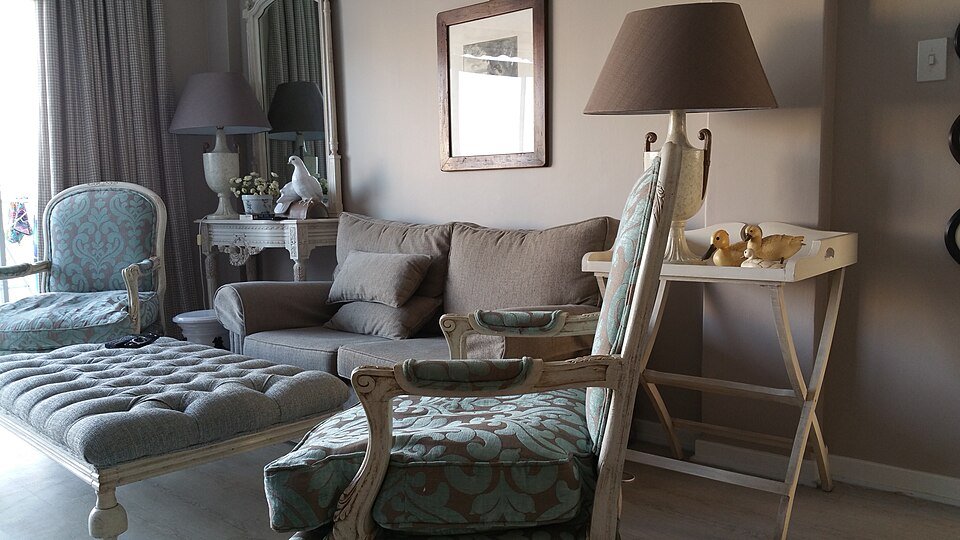
The seats sit near broad glazing and an elevated cooling unit, showing local features worth noting before comparing two rooms. Record the actual occupied seat, direct sun, covering state and airflow at similar times. A photograph cannot establish radiant temperature, cooling performance or which seat feels more comfortable; do not turn the visual arrangement into a thermal result.
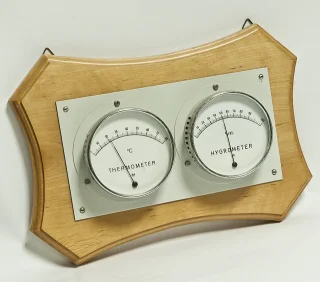
HSE’s thermal comfort guidance explains why air temperature is only part of the picture. If using a thermometer or combined instrument, follow its instructions, keep it away from direct sun and supply air, and record its settled position. With one instrument moved between rooms, allow settling each time and acknowledge that the readings are sequential rather than simultaneous.
Keep clothing and activity similar during the visits where practical, but record differences instead of asking someone to remain uncomfortable. Do not touch suspect surfaces or test equipment beyond ordinary controls. The thermal observation is a preference for this use period; it does not determine heat-stress risk, hidden dampness, air quality or the condition of the building.
Check task light and sound as separate dimensions
Bring the actual reading material or other task to both rooms. From the intended posture, check whether you can follow it comfortably in the ordinary lighting arrangement and whether a bright window, lamp or reflection occupies your view. CCOHS’s lighting survey distinguishes visibility, glare and contrast; use those as separate descriptions. Do not assume the room with the brightest ceiling light is automatically better.
For sound, use equal short listening periods and note steady background, discrete events and known sources separately. A distant rumble is not a confirmed neighbour appliance unless its source is actually known. CCOHS’s source-and-path approach provides useful context, but the notebook should retain uncertainty. Keep a timed interval interrupted by a delivery or passing vehicle rather than quietly discarding it.
Check both conditions during the activity, not just while sitting silently. Conversation may be easy in a room where silent reading notices every event. If participants differ, record each account. A room should not win because the person most affected by a glare patch or recurring event was absent from the inspection.
Compare an illustrative pair without a total score
The invented comparison below represents two hypothetical rooms visited for the same reading activity. Each is checked for ten minutes. The notes demonstrate how a trade-off can remain visible; they are not measured results, recommended room conditions or a prediction for a particular home in November.
| Dimension | Room A, window chair | Room B, interior chair |
|---|---|---|
| Local thermal impression | Unwelcome moving air on one side | Acceptable during visit |
| Reading light | Page usable; bright window in side view | Page usable with existing task lamp |
| Discrete sound events | 4 events in 10 minutes | 1 event in 10 minutes |
| Practical use | Always available | Available only until 21:00 |
The two visits total 10 + 10 = 20 minutes. A had three more noticed events than B during those visits, but sequential observations do not prove B will always have fewer events. Do not multiply those counts into an hourly forecast. B may be the useful temporary choice before 21:00, while its availability prevents treating it as an unrestricted all-evening solution.
Repeat the comparison in reverse order
On another suitable evening, visit B first and A second using the same intended activity and similar times. Record weather, household activity and any change in room setup. Reversing order helps expose a simple timing effect: the second room may seem quieter because outside activity diminished, not because its walls or location differ. It does not remove every confounder.
If the preferred room changes between visits, look for the dimension that changed. A window-side draught may disappear on a calmer evening; a quiet interior room may become unavailable or receive sound from another activity. Keep these conditional results. The purpose is to choose a workable retreat when needed, not to prove that one room has an enduring superior rank.
Permit only ordinary, reversible adjustments before a final trial, such as using an existing task lamp correctly or choosing another established seat. Record the adjustment and check it separately. Avoid moving a heater, obstructing ventilation or sealing a door to force a better result. If a candidate needs work beyond normal room use, remove it from the temporary shortlist until that issue is addressed appropriately.
Finish with a time limit and an exit condition
Choose the room for a specific activity and period, and write the condition that makes it usable. Include how to restore the space afterward and when another occupant needs it. “Use Room B for reading until 21:00 with its existing task lamp” is a practical instruction. “Room B is the safe room” assigns authority the comparison does not provide.
Name reasons to leave or reconsider: uncomfortable conditions, a changed noise pattern, unavailable lighting, blocked access or another occupant’s need for the space. Anyone should be free to end the retreat early. A temporary refuge is useful because it offers a manageable alternative, not because the notebook obliges people to stay until the scheduled finish.
The comparison is complete when the selected room has been tried in normal use, each important dimension has a separate note and the limitations travel with the decision. Date the actual visits when they occur. Retain the November 1 review date as the plan’s editorial date, and leave future checks as intentions until someone has actually made and recorded them.
THE REFERENCE FILE
Sources & scope
Documentation reviewed 1 Nov 2026. Examples are illustrative; this article does not claim hands-on product testing. Follow the instructions for your actual material, model and location.