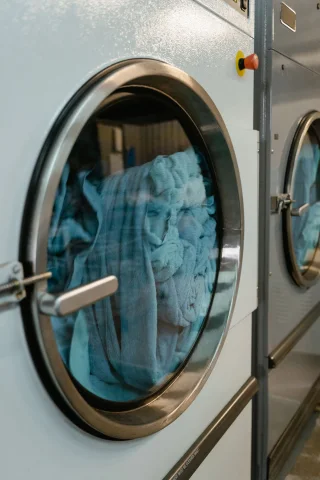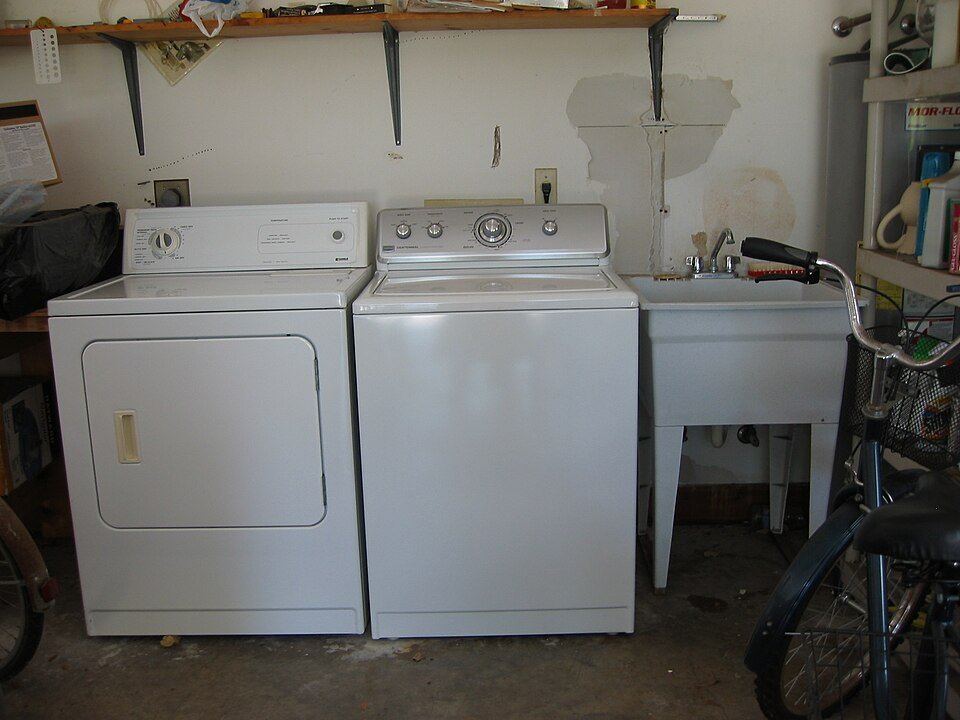
Find the quick row for the exact washer
A quick button promises a short task, but its name does not describe every load it can wash appropriately. Find the cycle guide for the exact model and market, using an accessible label or existing paperwork. Record the programme name, permitted load description, soil level and available options. A family resemblance between control panels does not make their limits interchangeable.
Whirlpool front-loading washer use and care guide W11339488A gives a specific example: its Quick combinations are intended for small loads of two to four lightly soiled garments. That is guidance for the covered washer, not a universal two-to-four-item rule. A different machine may specify kilograms, a drum fraction or a different item limit. Use its own document.
Read garment labels alongside the machine guide. A short cycle is not permission to ignore temperature, action or spin restrictions. Keep items needing special treatment out of the comparison unless both the fabric and appliance instructions permit the selected combination.
List what makes this a quick-load candidate
Before loading, describe the actual items and their soil: a few lightly worn work shirts differs from muddy trousers or dense towels. Do not use item count alone to equate a small shirt with a thick bath sheet. Record dry mass only if the guide uses it and you can weigh the load safely with a suitable scale.

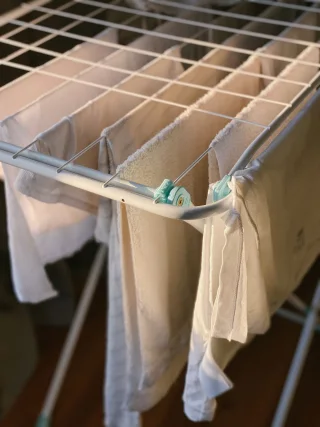
The label carries fabric composition and care symbols, including a hand-wash symbol. Read the actual garment’s complete instructions before adding it to a quick-load candidate. A small item or lightly worn fabric does not make machine washing permitted; separate incompatible care needs and check the washer’s programme limits independently.
Photo & usage
GinetexGermany · CC BY-SA 3.0 · Source. Display copies resized and encoded as WebP; no instructional details were fabricated or removed.
Separate incompatible care needs rather than choosing the least demanding programme name for the whole mixed basket. Check pockets, fasten items as instructed and avoid tightly packing the drum. The programme's capacity may be lower than the washer's headline capacity. A machine advertised for a large cotton load can still have a much smaller quick-programme limit.
Whirlpool washer cycle guide W11744323A explicitly notes that not all cycles and options apply to every model and directs users to garment guidance. That is why the record begins with model identity. Do not borrow a neighbouring cycle's load allowance because its temperature looks similar or its display shows the desired finish time.
Keep a mixed basket from hiding the limiting item
When most items fit the quick description but one does not, make a separate decision for that item. A muddy trouser leg, dense towel or specially treated garment can determine a different route without changing the suitability of the lighter pieces. Record which item was removed and why. Do not simply reduce the whole basket by one arbitrary item and assume it now meets the programme's intended soil and fabric conditions.
If the guide gives both a capacity and a soil description, both must be satisfied. A load below the stated mass can still be too heavily soiled for the quick programme. Conversely, lightly soiled items can exceed its capacity. Keeping those two checks separate makes the household card more useful than a single rule about how full the drum looks.
Capture the settings after the machine accepts them
Write the programme, temperature, soil setting, spin setting and any added rinse or time-saving option. Confirm what the display actually accepts. Some combinations are unavailable, and some machines remember previous selections. A setting you intended to choose is not necessarily the setting that ran.
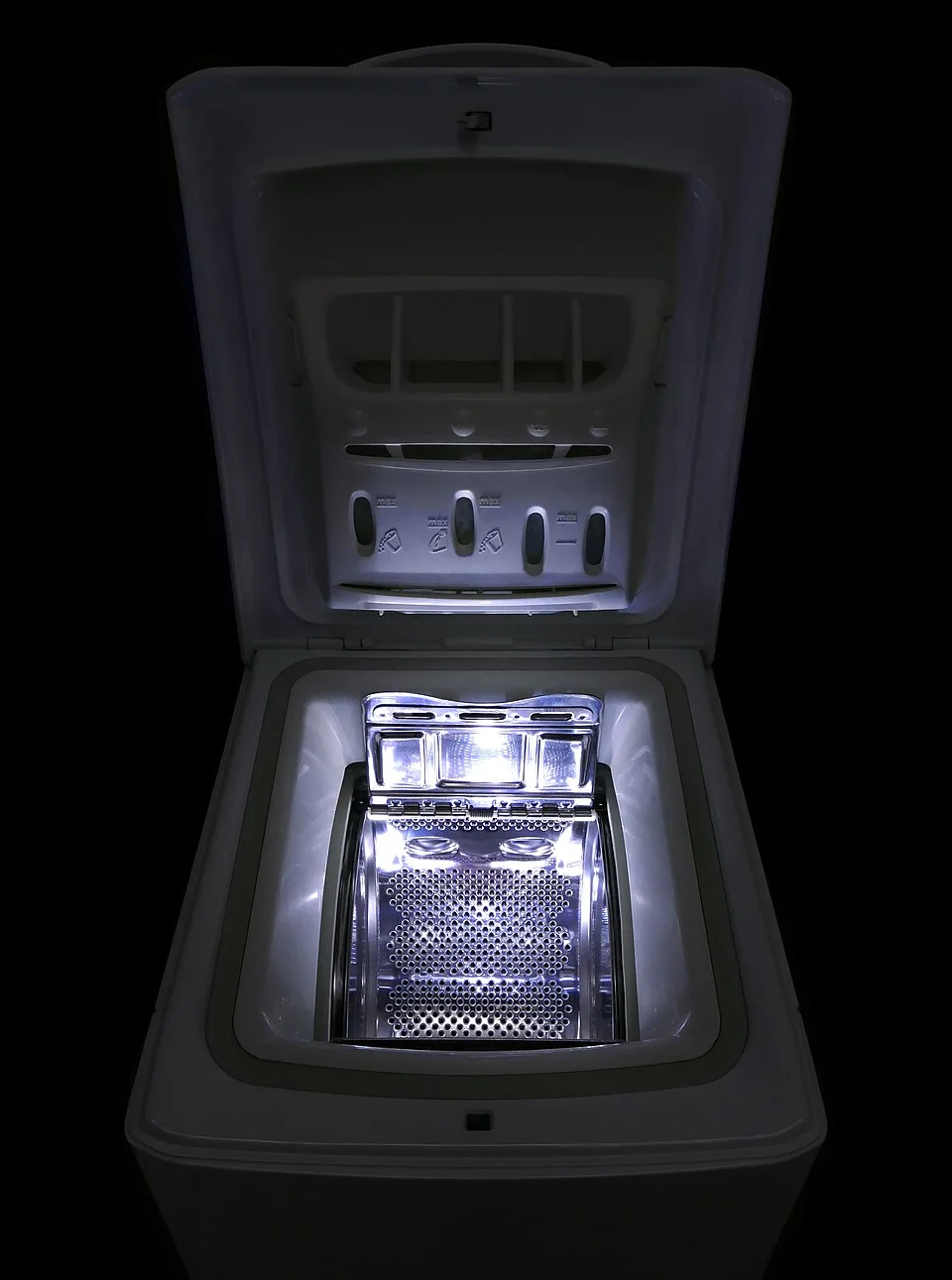
The open washer shows the physical drum and loading opening, useful for recognizing the difference between space and programme permission. Confirm the selected cycle’s load limit and accepted settings in the exact model guidance. An apparently spacious drum does not authorize a full-capacity quick load or establish detergent placement for another washer.
Photo & usage
W.carter · CC BY-SA 4.0 · Source. Display copies resized and encoded as WebP; no instructional details were fabricated or removed.
Dose the detergent according to the washer and detergent instructions for load, soil and water conditions. Do not use the full-load dose merely because the dispenser has a large compartment. This article does not provide a universal volume: formulations and dosing systems differ. Avoid adding more product to compensate for a programme that is unsuitable for heavy soil.
Whirlpool: Compact Front Load Washer Control Panel Symbols and Usage describes a Save Time option for covered compact washers as appropriate only for lightly soiled laundry. It is a useful example of a modifier with a scope, not evidence that every button labelled fast changes the cycle in the same way. Record whether you selected a separate programme or a modifier.
Compare total work, including a repeat wash
The following numbers are illustrative and invented. They compare the time consequences of two hypothetical choices for a load that did not suit the first short programme. They do not predict cleaning, water use or electricity use for any washer.
| Route | Recorded machine time | Total |
|---|---|---|
| Unsuitable quick run, then permitted normal run | 25 minutes plus 65 minutes | 90 minutes |
| Permitted normal run initially | 65 minutes | 65 minutes |
The repeat route uses 90 minus 65, or 25 additional minutes of cycle time. It also requires extra handling not included here. This does not prove that a normal programme always cleans better or that quick cycles always waste resources. The useful lesson is narrower: the shortest first display can produce a longer overall task when the load was outside its intended use.
Judge the laundry after normal completion
Let the programme finish and unlock normally. Never force a locked door or lid. Check the originally noted soil areas, obvious residue and whether the load reached the expected spin condition. Follow fabric-care requirements for any subsequent treatment, and avoid putting an unsuccessfully cleaned stain through heat merely to finish the schedule.
Record the result in observable terms: collar mark remains, no obvious residue seen, or several items unusually wet. Do not label the load sanitized or hygienically cleared based on appearance, smell or a short programme name. This comparison is ordinary laundry care, not a microbiological test.
If the result is poor, revisit suitability, dose and loading before treating the appliance as faulty. If an appropriate programme repeatedly fails, or there is an error, leakage or abnormal operation, contact support with the model and record. Do not open a service panel or run a hidden diagnostic sequence from an unrelated online video.
Use the next ordinary load for a fair comparison
At the next naturally occurring similar load, choose the permitted programme that matches the items and soil. Keep the detergent, broad load composition and care constraints comparable where practical. Record differences rather than pretending a household laundry basket is a controlled laboratory sample.
Do not deliberately soil garments or rerun clean laundry merely to produce a trial. A useful record can be built during necessary washing. If the next load is much heavier or more soiled, it still helps the household routine but cannot isolate the programme change. Preserve that limitation in the note.
Keep the chosen programme's actual finish and result separate from the initial estimate. Water pressure, sensing or balancing can alter elapsed time on some machines. A quick programme taking longer than its first display does not automatically indicate a fault. Use the relevant troubleshooting instructions if operation repeatedly departs from the model's guidance.
Keep a specific quick-load rule by the manual
Write a short card stating the exact model's quick-programme description, capacity limit, suitable soil and any essential option restrictions. Include the document identifier or manual page. Avoid a generic household rule such as quick for everything under half a drum; it may contradict the actual guide.
Add examples from your routine that genuinely fit, such as a small group of lightly worn compatible items, and a clear exception such as heavily soiled workwear. Do not copy illustrative limits from this article onto the card. The card should remain tied to the appliance document and the care labels.
Completion means the household can decide suitability before pressing Start, capture the accepted settings and judge the ordinary result without a repeat-wash habit. The quick programme keeps a defined useful job. Its value comes from matching the load, not from treating a short countdown as evidence of cleaning quality or a guarantee of lower resource use.
THE REFERENCE FILE
Sources & scope
Documentation reviewed 1 Nov 2026. Examples are illustrative; this article does not claim hands-on product testing. Follow the instructions for your actual material, model and location.