A dusty bookcase contains several care problems in one place: shelf finishes, paper, bindings and decorative objects. Cleaning them all with the same damp cloth risks transferring moisture to books. Work one shelf at a time and keep shelf care separate from book care. This routine concerns ordinary household books and dust, with valuable, fragile or damp material reserved for specialist advice.
Inspect before moving the first row
Look for leaning shelves, loose brackets and overloaded spans before unloading. Do not climb the bookcase or use a shelf as a step. Reach only from a stable suitable position and get help with high or heavy items. A cleaning session should not become an improvised structural repair.

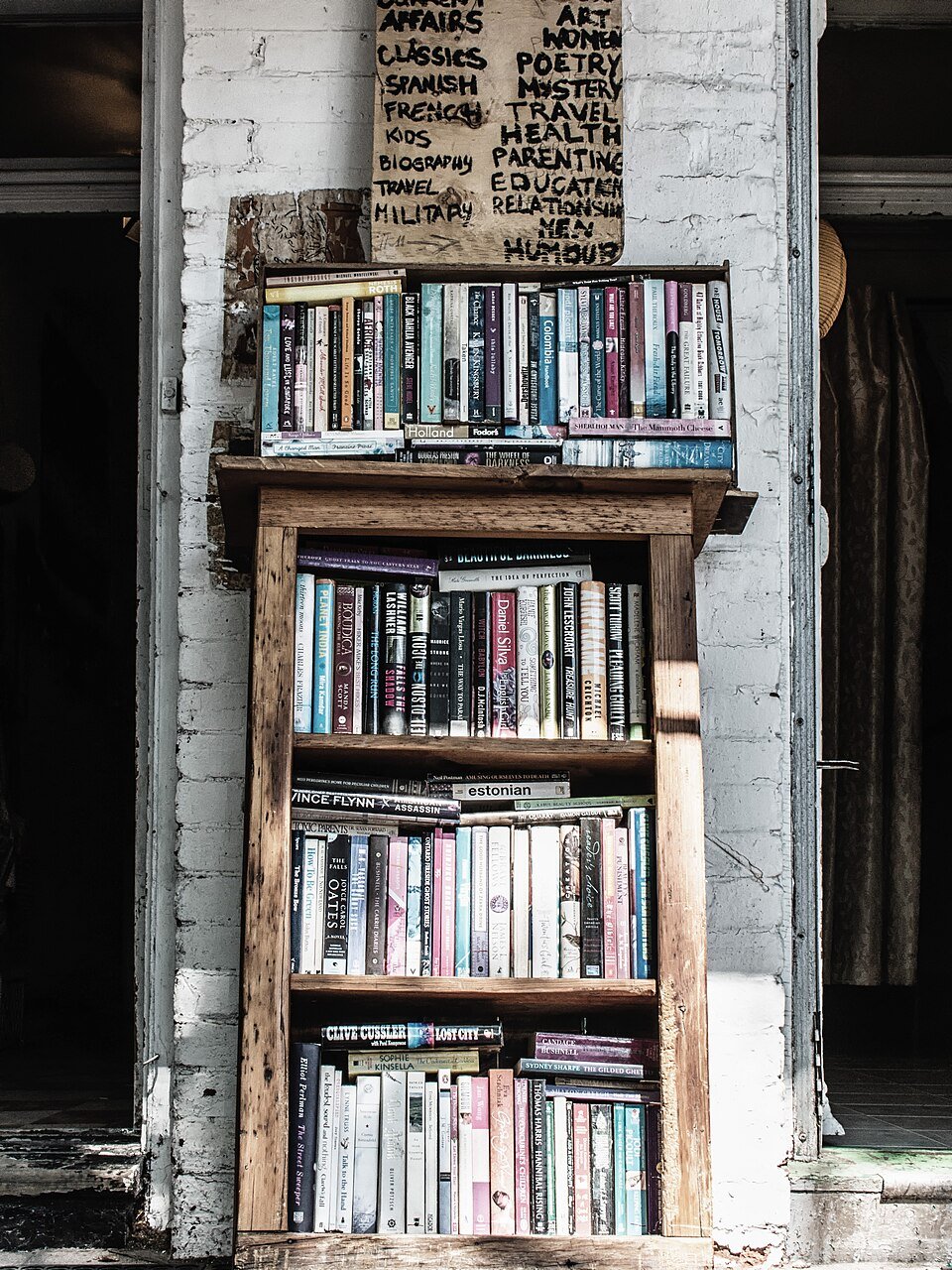
The visible spines, upper edges and tightly filled row show places to check before moving books for shelf dusting. Look for loose material, fragile bindings or a volume trapped by its neighbours, then support each book as appropriate. This historic library reference does not authorize household treatment of valuable or damaged collections.
Photo & usage
Matl · CC BY-SA 3.0 · Source. Display copies resized and encoded as WebP; no instructional details were fabricated or removed.
Check for dampness, musty areas, visible mould or pest evidence. EPA's biological-contaminant guidance makes moisture control a separate concern from ordinary cleaning. If books or the wall behind them are damp, pause the routine and investigate appropriately. Do not brush suspicious material around the room or vacuum it as ordinary shelf dust.
Identify fragile books, flaking bindings, artworks and sentimental papers. Keep them outside casual household treatment and consult an appropriate conservator where necessary. A general home-cleaning source does not authorise wet wiping of paper, leather bindings or valuable collections. The scope boundary should be decided before tools touch them.
Create a protected landing place
Use a clean dry table or tray large enough for a manageable group of books. Keep it away from drinks, open windows with incoming rain and cleaning-product containers. Place books so they cannot slide or topple. Photograph the shelf order if that will make replacing them easier.
Gather separate tools for shelf surfaces and ordinary dry dust pickup. Inspect them for grit and residue. Keep any damp shelf cloth physically separate from the books' landing area. A clean-looking cloth used on another task may still carry a product unsuitable for bindings or paper.
Empty only one manageable section at a time. Pull books by supporting the body rather than tugging repeatedly at the top of the spine. If books are tightly packed, make space gently before removing one. Do not force a fragile volume from a compressed row; that is a handling problem requiring another approach.
Clear and examine the exposed shelf
Remove ordinary loose debris using a tool compatible with the shelf finish. Check the back corner, front lip and underside where accessible. Do not assume a wood appearance means a particular coating or that a decorative laminate tolerates excess moisture.
If the maker permits a lightly damp wipe, keep water controlled and perform any directed drying step. EPA discusses damp dusting for appropriate household surfaces, but that general advice does not establish permission for your shelf. Follow the furniture's instructions and stop if a veneer edge lifts or the finish changes.
Inspect for a mark that dust had concealed. A stain, sticky deposit or damaged coating needs a separate decision. Do not apply several cleaners while books wait on the table. Complete ordinary safe dust removal and record the unresolved finish issue. Keeping the shelf empty until advice arrives may be better than returning books onto an unstable surface.
Handle ordinary books with a limited dry method
For intact everyday books, remove loose surface dust only by a gentle dry method suitable for their condition. Support the book and keep debris from falling between pages. Do not spray, immerse or wipe paper with a damp shelf cloth. Avoid forcing a binding open beyond its normal movement.
Do not attach a powerful vacuum directly to fragile page edges or flaking surfaces. If a particular book needs more than light ordinary dust removal, seek appropriate material-care advice. This article does not prescribe a conservation treatment or a universal brush technique for all bindings.
Inspect decorative objects separately and follow their material instructions. A ceramic ornament, a framed photograph and a painted figure may require different methods. Keep damp or treated objects off the books until they are completely ready to return. The landing place should stay dry throughout the task.
Use a shelf-status comparison
These observations are invented and illustrative. They describe the state of three areas during one hypothetical bookcase session and do not report material testing. The comparison shows why a room-wide “done” judgment can conceal an unfinished shelf.
| Area | Observation | Status |
|---|---|---|
| Upper shelf | Dust removed; permitted wipe fully dry | Ready for intact books |
| Middle shelf | Veneer edge lifted | Hold for furniture-care decision |
| Lower rear corner | Dampness behind row | Stop routine; investigate moisture |
The dry upper shelf can be completed while the other two remain open. Do not move damp books into the clean upper row to make the lower area look finished. Separate the affected items and seek appropriate advice. The record should preserve location, because a recurring damp corner is more informative than an unexplained general note about a musty room.
Replace books with access and support in mind
Return books only to a dry stable shelf. Support rows appropriately and avoid compressing them so tightly that the next removal strains a binding. Keep objects from leaning against fragile spines or blocking a frequently needed item behind a precarious stack.
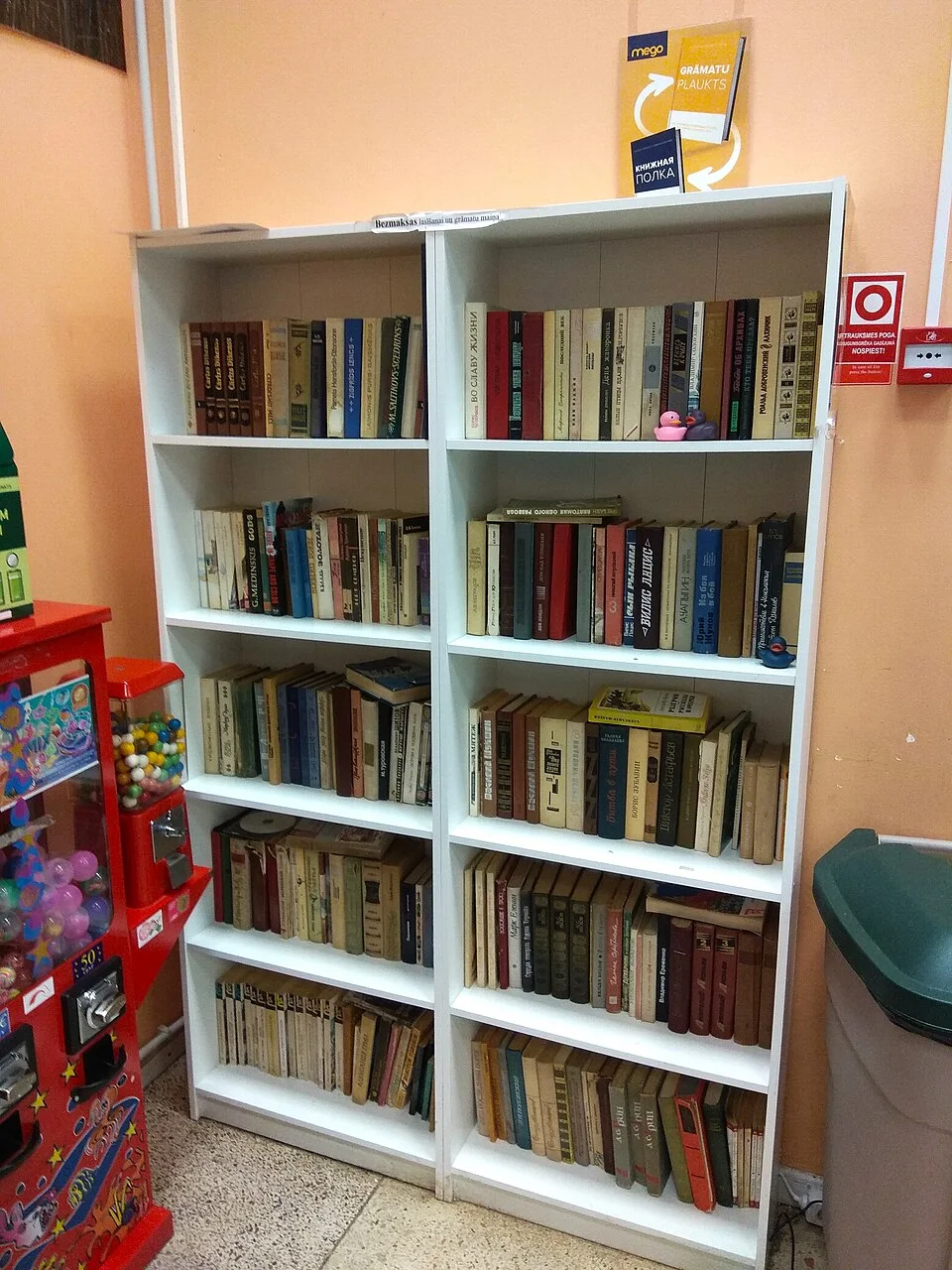
The full-height unit shows shelf openings, side panels and the base together, useful for planning how books will be returned with support and access. Inspect your own unit for condition and follow its installation and loading instructions. The photograph does not reveal anchoring, a rated shelf load or proof that the displayed arrangement is secure.
Photo & usage
Egilus · CC BY-SA 4.0 · Source. Display copies resized and encoded as WebP; no instructional details were fabricated or removed.
Leave any furniture ventilation or clearance requirement intact. Do not push a bookcase closer to a damp wall to reclaim floor space after cleaning. If moving the unit is needed, follow its anchoring and handling instructions and obtain help. Cleaning does not authorise removing required anti-tip fittings or altering the structure.
Compare the replaced row with the initial photograph. Check that books stand securely and the shelf is not overloaded. Keep held books and unresolved objects clearly identified in a suitable dry location, rather than creating a floor pile that will be forgotten when the cleaning tools are put away.
Finish the floor and the tools
Collect dust that reached the accessible floor after the shelf work. Use a floor-compatible method and keep hard vacuum attachments away from the bookcase finish. Do not drag a loaded unit to reach behind it. Record any inaccessible floor area as a separate task needing proper handling.
Care for cloths and tools according to their instructions. Keep shelf-cleaning cloths out of the ready book-handling area while damp. Wash hands before returning papers or photographs to storage. Dispose of ordinary collected debris without shaking it across the room.
CDC's household guidance distinguishes ordinary cleaning from disinfection. Do not spray disinfectant onto books simply because the shelf session involved dust. A special illness or contamination concern needs relevant advice and material compatibility, not a routine chemical addition to this dry-paper task.
Keep a small record of meaningful changes
Write down only issues that affect future care: the shelf with a lifting edge, a high row needing help or a damp location awaiting investigation. Include photographs if they make the location clear. Avoid inventorying every ordinary book unless the household has another reason to do so.
For the next session, begin with the same protected landing place and a smaller group if handling felt crowded. Adjust the number of books moved at once rather than rushing to clear the whole unit. A manageable sequence protects the books and makes finish inspection easier.
The task is complete when dry intact books are supported on dry stable shelves, ordinary debris is collected and special material concerns are explicitly held. That is a practical household outcome without pretending that a damp cloth or general cleaning source supplies a conservation method for every volume.
Check bookends before replacing the row. Dust or grit underneath them can scratch a shelf when they slide back into position. Handle each by its material instructions and confirm that its base is dry and stable. Do not return a damp decorative object to act as a temporary bookend while you search for the original support.
THE REFERENCE FILE
Sources & scope
Documentation reviewed 1 Nov 2026. Examples are illustrative; this article does not claim hands-on product testing. Follow the instructions for your actual material, model and location.