Keep a preliminary estimate distinct from a cutting plan
Patterned curtain fabric is not bought reliably by multiplying the window area. The usable fabric width, heading, seams, pattern direction and repeat can require whole lengths that leave apparent surplus. Start with a preliminary quantity budget, then obtain a maker's cutting plan before purchasing costly or non-returnable fabric.
Record the exact fabric reference, usable width, vertical and horizontal repeat, direction and whether the design uses a straight or offset match. Ask the supplier to explain any missing specification. A photograph cannot establish the repeat or how neighbouring lengths must align.
John Lewis's curtain guide distinguishes services with different pattern-matching provisions. Do not assume every ready-made or made-to-measure route will match across windows. Confirm what the selected service provides and which measurements it needs.
Establish the heading and coverage first
Choose the installed coverage, opening arrangement and heading before estimating cloth. Obtain the maker's fullness method rather than applying a universal multiplier. IKEA's measuring publications show how heading and coverage affect fabric width within their guidance, but a bespoke construction can require a different calculation.

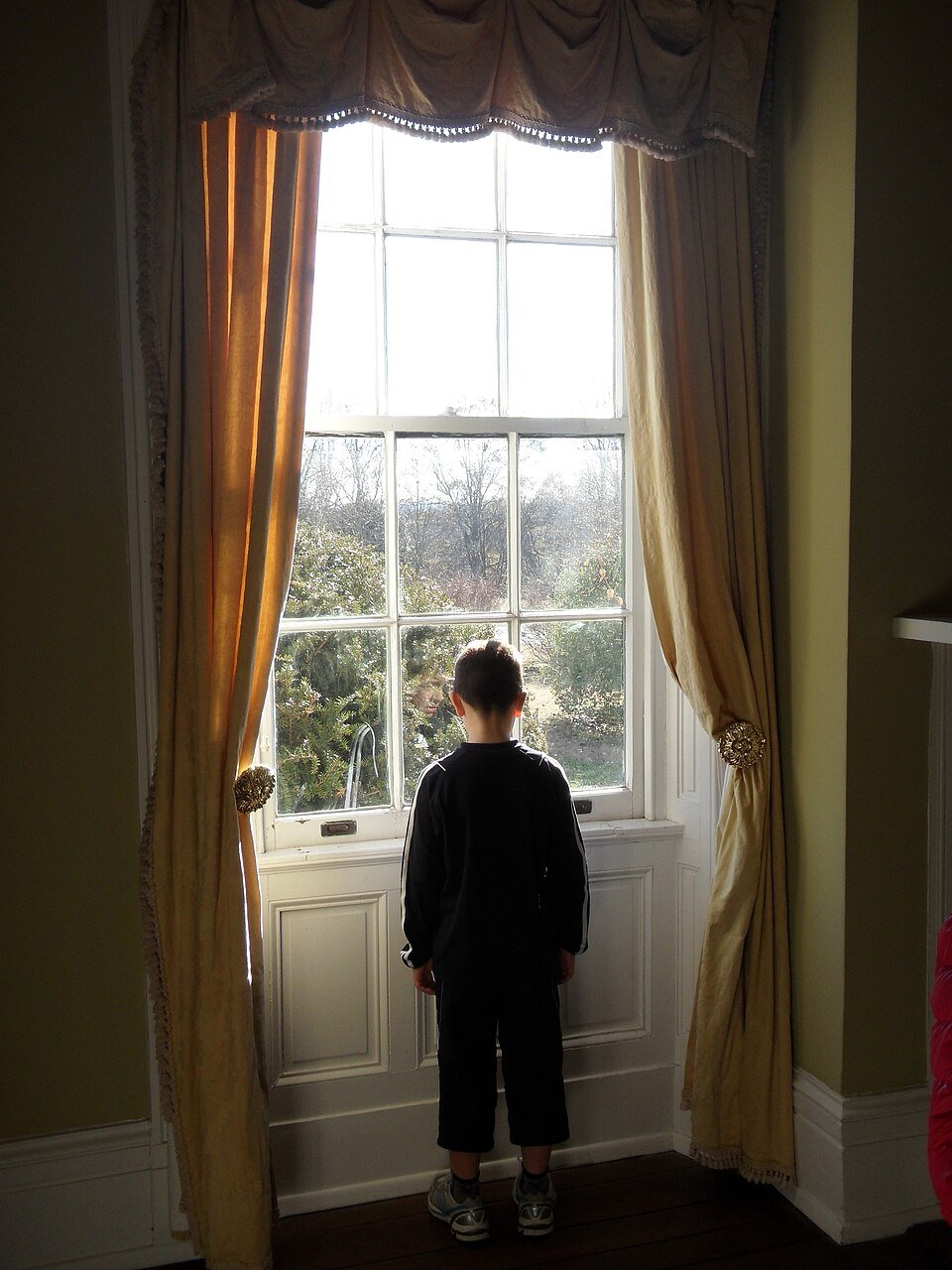
The display combines tied curtain panels with separate valances and beaded strands, making different finished components visible. Define your own required closed coverage and chosen heading before applying the maker’s fullness convention to the fabric calculation. A decorative display does not establish usable cloth width, pattern-repeat length or cutting allowances for your window.
Photo & usage
Ojochegbe3572 · CC BY-SA 4.0 · Source. Display copies resized and encoded as WebP; no instructional details were fabricated or removed.
Record finished drop separately from construction allowances. A maker may add heading and hem material, seam allowances or other details. Ask for those figures or a preliminary quantity directly. Do not combine a retail finished-curtain width with a raw-fabric cutting method without checking the convention.
Keep lining and interlining as separate material decisions. They may have different widths, care requirements and quantities. Adding one general percentage to face fabric does not produce a complete bill of materials for every curtain construction.
Count whole fabric widths
Determine the usable width after any selvedge or construction allowance specified by the maker. Divide the required flat width by that usable width, then consider whole lengths and the maker's seam layout. Fractional arithmetic does not mean a fractional width can always be placed anywhere without visual consequences.
Ask how the widths will divide between the two curtains. A centre seam, half width or prominent motif near an edge can change the desired layout. Symmetry may require a different plan from the minimum theoretical cloth quantity.
Do not rotate a directional fabric to avoid a seam unless the supplier and maker approve that use. The pattern, drape and construction may rely on orientation. Record the approved direction clearly so a low preliminary estimate does not become a reason to cut unsuitable pieces.
Round a hypothetical cut drop to whole repeats
This illustrative straight-match example assumes the maker has already specified four full fabric lengths. Each preliminary cut length, including its chosen construction allowances, is 252 cm. The stated vertical repeat is 32 cm.
252 ÷ 32 = 7.875 repeats, so a whole-repeat budget rounds up to eight repeats: 8 × 32 = 256 cm per length. Four lengths require 4 × 256 = 1,024 cm, or 10.24 metres, before any additional maker-specified matching or placement allowance.
Using the unrounded 252 cm would give 10.08 metres, a difference of 0.16 metre. This simplified arithmetic does not cover half-drop matches, motif placement, fabric faults or matching across multiple windows. It is a budgeting example, not permission to order exactly 10.24 metres without a reviewed cutting plan.
Decide where the pattern should appear
Look at a full repeat or an appropriate larger sample where available. Choose whether a prominent motif should align at the curtain tops, centre opening or another visual reference. Ask the maker how that choice affects quantity and seams.
A small swatch may show colour and texture but omit the full design. Do not approve pattern placement from a fragment that never shows the largest motif. Request the repeat diagram or a suitable image with dimensions from the supplier.
For adjacent windows, decide whether matching top lines matters and whether different drops change the lower pattern. The service may need additional cloth or a coordinated cutting order. Keep those decisions in writing rather than expecting the maker to infer them from the room name.
Confirm supply and inspection arrangements
Ask whether the entire required quantity can come from one suitable batch and how the supplier identifies it. Discuss returns and inspection before cutting. Fabric sold by length may have terms different from a standard packaged product.
On receipt, follow the supplier's inspection process for identity, quantity and visible faults. Keep labels and the order record. Do not cut around a suspected defect without first discussing it, since cutting can affect the available resolution and the matching plan.
If additional fabric becomes necessary, ask about batch and pattern consistency before assuming a later order will match. A similar colour reference does not guarantee an invisible join. The preliminary budget should include the risk of a tightly constrained order, not conceal it.
Submit a complete maker review pack
Provide window identifiers, hardware and heading, finished coverage, confirmed drop readings, fabric specification and placement preferences. State which numbers are measurements and which are assumptions. Include the preliminary arithmetic as a question, not as an instruction to use insufficient cloth.
Ask the maker to confirm total quantity, seam arrangement and any additional allowances. If the answer differs from your estimate, request the reason. A higher quantity may reflect a legitimate matching requirement; a lower one may use a construction choice that should be understood before approval.
Keep the final approved quantity separate from earlier estimates. If the fabric changes, repeat the review with its actual width and repeat. Transferring metres from one design to another is a common way to create an expensive shortage.
Close the estimate against the completed order
Record the purchased length, final fabric reference and maker-approved plan. Store any useful offcuts under the textile's guidance, labelled with the room and pattern direction. Keep pieces only where they have a plausible repair or matching purpose.
At handover, inspect the agreed pattern relationships in the installed curtains and raise specific discrepancies through the service process. Do not claim a mismatch proves poor workmanship without comparing it with the approved layout and fabric constraints.
The estimate is complete when the order rests on a reviewed construction plan rather than area alone. The numerical example is a tool for asking better questions, while the actual cutting decision belongs to the confirmed fabric and maker specification.
Ask about the horizontal seam relationship
A vertical repeat calculation does not establish how neighbouring widths join. Obtain the horizontal repeat and match type, and ask the maker where seams will fall relative to prominent motifs. Some layouts require a different starting point or additional cloth to create the intended symmetry.
For a fabric with an offset match, do not apply the straight-match example as a final quantity. Ask for the supplier's specification and the maker's layout. Record whether successive lengths start at different points in the design and how that affects the total order.
Compare the maker's final quantity with the preliminary budget line by line: number of widths, cut length, repeat treatment and placement allowance. A clear explanation is more useful than a generic waste percentage. Keep the reviewed layout with the order so later questions can be assessed against the actual plan.
Check the order unit before payment. Fabric sold in half-metre increments may require rounding the maker-approved quantity to the supplier’s available increment. Record that purchasing round-up separately from the construction allowance so it is not added twice.
THE REFERENCE FILE
Sources & scope
Documentation reviewed 1 Nov 2026. Examples are illustrative; this article does not claim hands-on product testing. Follow the instructions for your actual material, model and location.