A washable throw can simplify life with a pet, but only if the household knows how to handle it after an accident. Hair, a muddy pawprint and urine are different cleaning problems. Start by defining what happened and protecting nearby surfaces. Then choose a route supported by the textile instructions and the circumstances rather than treating every pet fabric as ordinary lightly soiled laundry.
Name the contamination before making a load
Identify whether the throw contains routine hair and dust, mud, urine, faeces or vomit. Check whether the pet is ill or whether a veterinarian has given specific cleaning instructions. CDC describes additional disinfection considerations for illness and items contacting waste; routine washing advice should not displace that guidance.
Wear suitable gloves for soiled handling and avoid shaking the throw. Keep children and pets away from the work area. If the contamination is extensive, the textile is uncleanable or safe handling is uncertain, seek appropriate advice or arrange disposal rather than improvising a complicated home treatment.
Read the throw's complete care label. Its washable outer fibre may include a backing, trim or filling with additional limits. Photograph the label before it becomes harder to read when wet. Make a separate decision for the sofa or bed underneath if the accident passed through the throw.
Protect the route to the laundry area
Fold the soiled part inward and carry the throw in a suitable washable container. Do not trail it across the floor or set it on the kitchen counter while finding detergent. Remove nearby personal items from any utility sink or tub used for the cleaning task.
CDC recommends choosing an appropriate cleaning location for pet supplies and cleaning the sink or tub afterwards. Use a dedicated container where practical and keep food preparation areas outside the route. Do not wash the pet with a surface cleaning or disinfection product.
For accessible solid waste, remove it carefully using appropriate disposable materials without grinding it into the fabric. Follow local disposal requirements. Avoid forceful spraying that splashes the surroundings. Collect loose hair by a compatible method only where doing so will not spread wet contamination. A dry hair-pickup technique is not automatically suitable for a wet accident.
Resolve cleaning and disinfection compatibility
Routine cleaning removes soil; disinfection is a distinct process with specific products and conditions. Decide whether the circumstances require it before starting, then check whether the textile and chosen product support the required route. A scented detergent or deodorising spray does not establish disinfection.
Do not override a low-heat or no-bleach instruction because a general pet-cleaning page describes another method. If a necessary infection-control process is incompatible with the throw, ask the relevant professional about alternatives or replacement. An unsuitable textile cannot be made suitable by quietly changing its care limits.
For a compatible laundry stain or odour product, read permitted materials, precleaning, contact time and removal instructions. Do not mix products or add household chemicals to an unknown previous treatment. Keep the packaging and record what you used so persistent odour can be assessed with a clear history.
Wash with a defined endpoint
Select the textile-permitted cycle and a detergent compatible with the washer. Follow the detergent's load and soil directions. ACI's laundry guidance separates soil levels as well as fabric care; keep the load easy to manage and avoid adding delicate personal items merely to fill unused space.
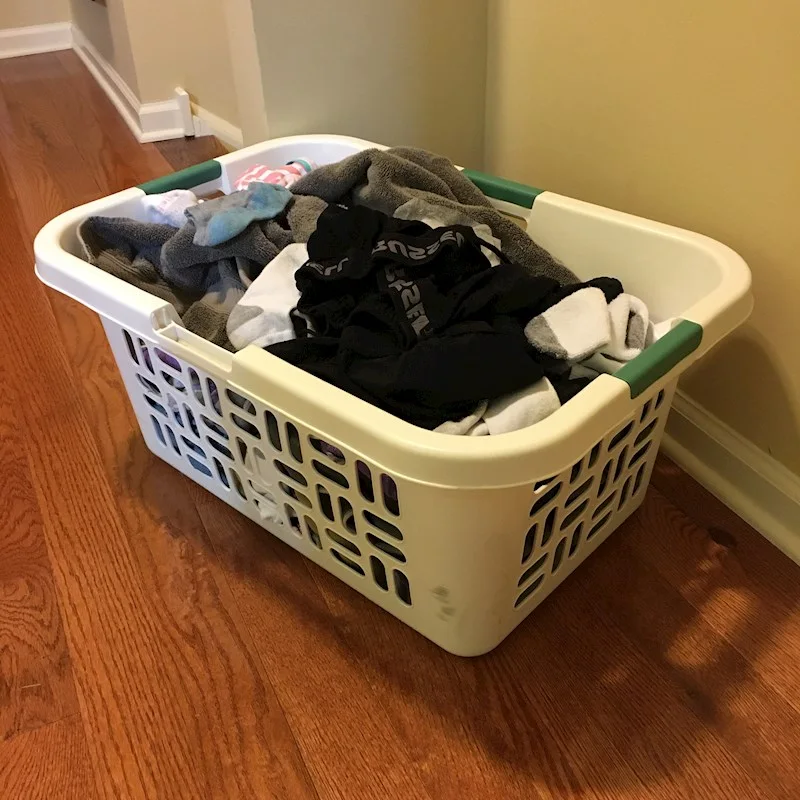
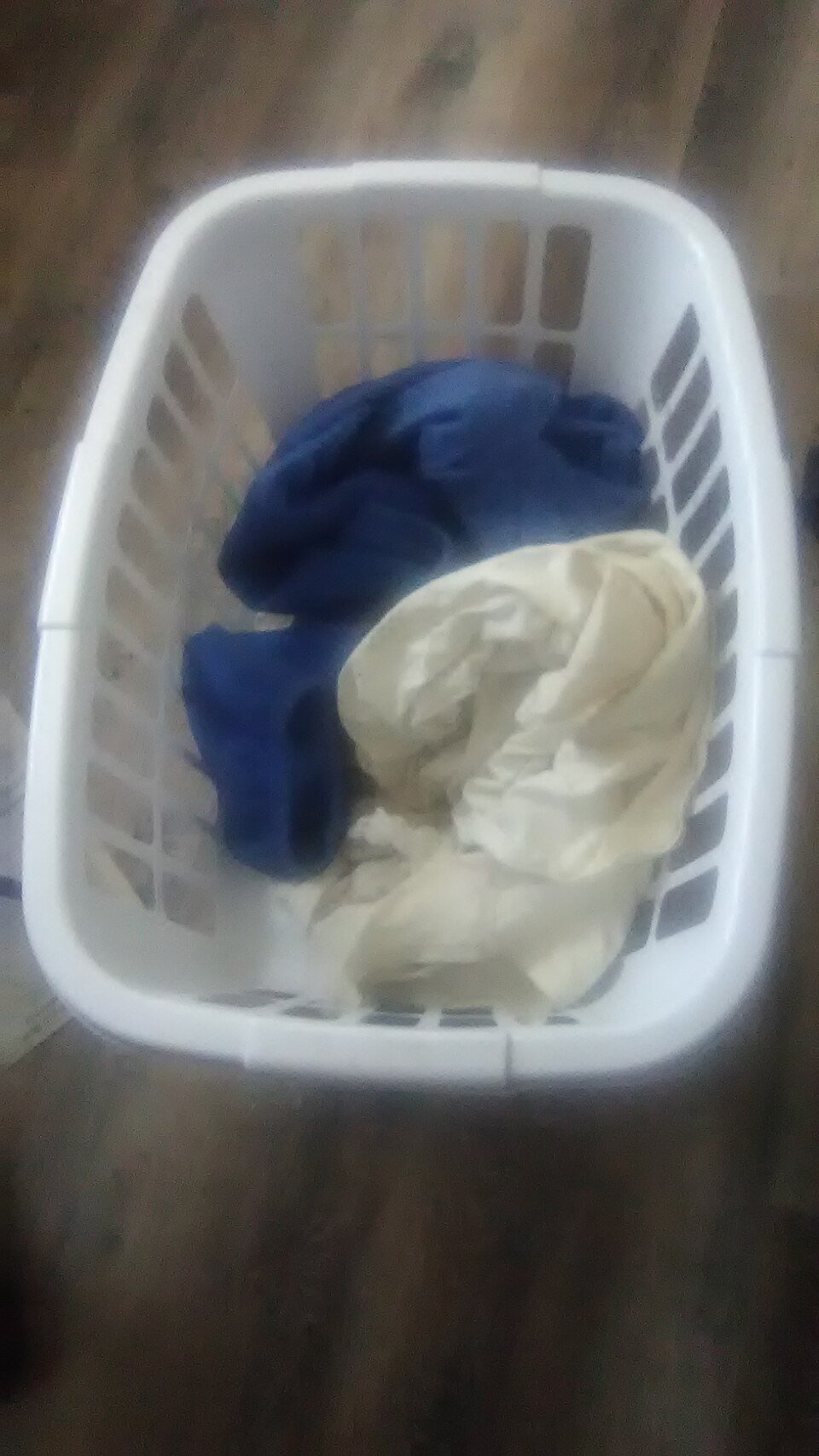
The basket illustrates a collection point, not a completed sort. Give the pet-soiled throw an identified route under its own care label, keeping incompatible garments and soil groups apart. Plan the permitted wash and drying stages together; the photograph cannot establish contamination, disinfection or a successful cleaning endpoint.
Photo & usage
Dean DiSalvo · CC BY-SA 2.0 · Source. Display copies resized and encoded as WebP; no instructional details were fabricated or removed.
If a pretreatment is permitted, follow its instructions before loading. Do not leave the textile in a concentrated product beyond the stated limit. Check that bulky folds can move appropriately in the selected programme and that the machine's guidance supports the item.
Plan unloading before the wash begins. The throw needs an approved drying destination and an inspection hold if a mark or odour remains. If another household member handles laundry, identify the throw and its status clearly. A completed machine cycle is one stage of the process, not evidence that the whole cleaning problem is resolved.
Read an illustrative decision comparison
The entries below are invented observations to illustrate routing. They are not results from washing or disinfecting pet throws, and they do not establish a universal safe process for infectious material. Each case still depends on the actual textile and circumstances.
| Situation | Material information | Practical route |
|---|---|---|
| Ordinary hair and paw dirt | Clear machine-wash label | Compatible cleaning and drying |
| Accident during pet illness | Restrictive heat and bleach limits | Resolve necessary process with veterinary guidance |
| Repeated deep wetting | Unwashable bonded backing | Assess replacement or maker-approved care |
The table separates information questions from washing actions. It does not rank products or promise that a hotter wash fixes every case. A replacement decision can be proportionate when the textile cannot undergo the process required for its use. Keep that decision explicit so the same unresolved throw does not circulate through routine loads.
Inspect after complete permitted drying
Follow the throw's drying instructions and check thick hems, labels, fringe and backing. Spread folded areas as permitted so the centre does not conceal a damp edge. Do not fold the throw for storage while any part remains damp or uncertain.
Check appearance and ordinary residual odour without placing your face against the soiled area. A strong product fragrance can obscure the original smell temporarily, so do not use fragrance intensity as the completion standard. If odour returns when the fabric is dry and in normal use, inspect the backing and the surface beneath it.
A persistent mark may be cosmetic, while persistent odour may point to retained soil or another affected layer. Neither can be diagnosed fully by smell alone. Review the treatment history and the maker's advice before repeating. Do not keep adding products until the original source becomes impossible to distinguish from cleaning residue.
Decide whether the throw still suits its job
A throw chosen for appearance may be difficult to care for after repeated accidents. Review the complete assembly rather than only its top fabric. A bonded backing, thick fringe or nonwashable decoration can make the required care impractical. Keep the existing item’s limits intact while deciding whether another textile would be easier to service.
Before purchasing a replacement, look for clear washing and drying instructions and consider the drying space already available. Do not infer suitability from the word washable without reading the method. A spare can support the rotation only if both pieces can finish their care route between uses. Record the dimensions and coverage needed so the substitute protects the intended resting area without bunching dangerously. This is a household manageability decision, not a claim that one textile prevents illness or resolves the pet’s underlying reason for accidents.
Restore the resting place and close the record
Clean the protected work area and laundry container using appropriate instructions for the contamination. Wash hands after removing gloves. Return products to secure storage and keep the pet away until any treated surface meets its label's return-to-use requirements.
Inspect the sofa, cushion or floor that was beneath the throw. A washed top layer does not close an accident that reached an uncleanable insert. Keep the throw out of service until the whole resting place has a clear status. Use an appropriate clean spare where available.
For recurrence, record the date, location and layers affected and seek veterinary advice about repeated accidents when appropriate. The household care change may involve a more serviceable cover or a different resting setup, but it begins with an accurate account. The finished task leaves clean dry fabric and a known next step for any unresolved source.
THE REFERENCE FILE
Sources & scope
Documentation reviewed 1 Nov 2026. Examples are illustrative; this article does not claim hands-on product testing. Follow the instructions for your actual material, model and location.