Inspect only what can be reached without risky moving
A room can look dry while the back of a small cabinet sits beside a damp external wall. The furniture creates a concealed location where cold surfaces and restricted air movement can matter. Start with a lightweight item you can move safely, following its instructions. Do not move a tall anchored wardrobe, disconnect a restraint or drag a heavy unit to improve access.
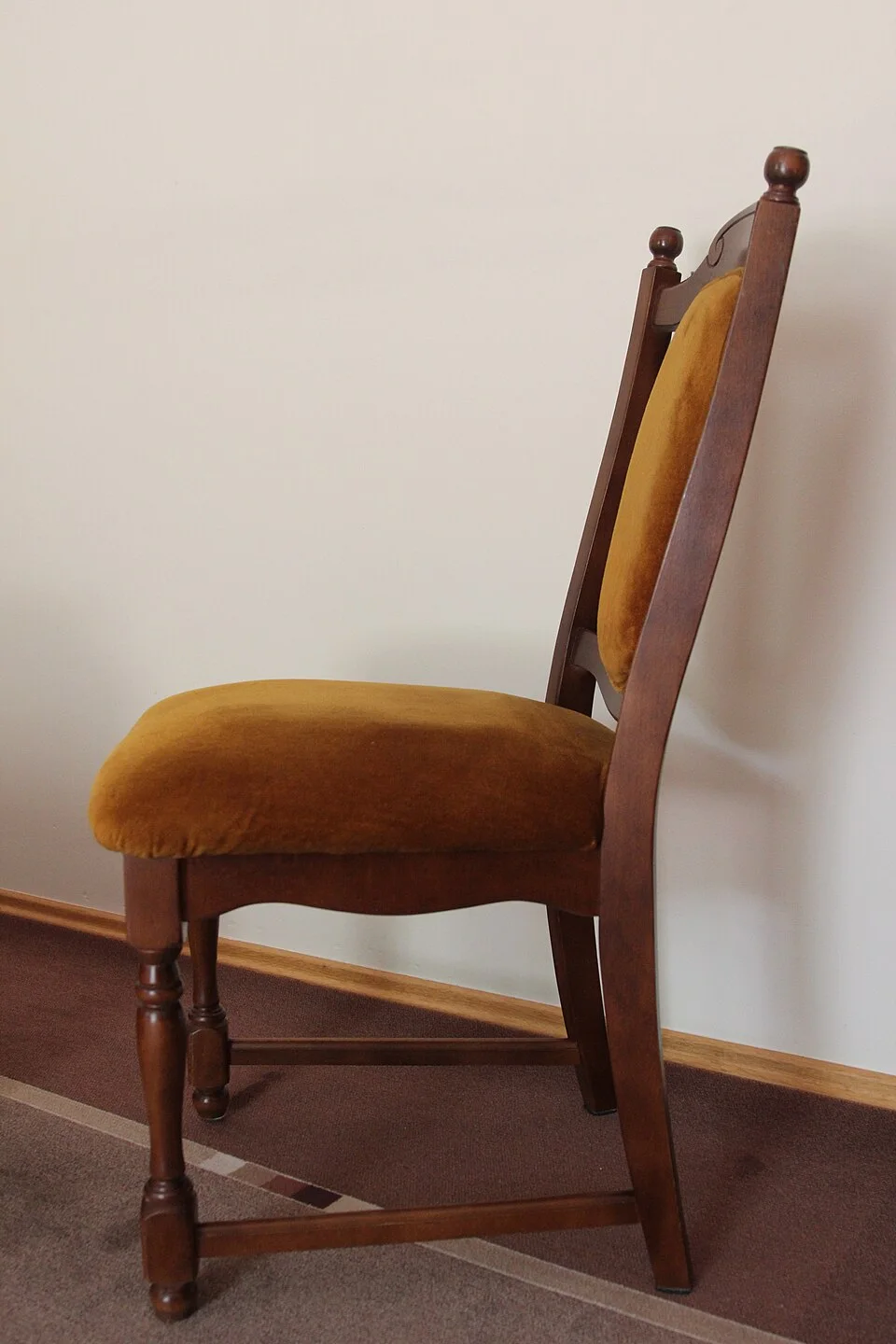
The chair legs, wall edge and nearby floor show the area to inspect before deciding whether an item can be moved. Choose only furniture you can actually handle within its instructions and keep the route clear. Appearance cannot establish weight, stability or hidden wall conditions; leave heavy, fixed or restrained furniture in place and observe only accessible surfaces.
Photo & usage
Fallaner · CC BY-SA 4.0 · Source. Display copies resized and encoded as WebP; no instructional details were fabricated or removed.
Photograph the ordinary arrangement and note which wall is external if known. Record any radiator, supply grille, cable or intended vent nearby. A layout adjustment must preserve those clearances and the furniture's stability. If access requires dismantling or moving a large item, ask for appropriate assistance instead.
Canadian Conservation Institute: Incorrect relative humidity explains how temperature differences near exterior walls can produce local humidity conditions unlike the middle of a room. That physical context supports inspecting the pocket. It does not establish that every mark behind furniture is condensation or that a particular gap dimension will solve it.
Describe the back, wall and floor separately
From the accessible side, look at the wall finish, the furniture back and the floor edge. Give each a separate note. A stained board and a damp wall may have a shared source, but their condition and care needs differ. Do not brush, scrape or vacuum suspected growth as part of this observation.
Record whether the surfaces are visibly wet, stained, distorted or apparently clear. Use a normal viewing distance rather than putting your face into the pocket to smell it. A persistent musty odour is relevant even without a visible patch, especially after known water damage. Keep the description ordinary and avoid guessing a mould species or medical significance.
Health Canada: Guide to addressing moisture and mould indoors includes hidden moisture concerns and limited circulation behind stored items in its household guidance. If material is deteriorating or growth is present, arrange suitable assessment and care promptly. The observation record should support that action, not postpone it until a room meter reaches a chosen percentage.
Give a local reading its own identity
If a meter can sit safely in the accessible pocket without touching wet material, label that position B. The normal open-room position is A. Follow settling instructions and record temperature and RH at both locations. With one meter, note the different times; the measurements are sequential, not simultaneous.
A lower temperature at B can help explain a higher local RH even when the central room display appears moderate. It cannot measure the moisture content of the wall or identify a leak. Do not leave the meter wedged behind furniture where ventilation openings are blocked or where retrieving it requires moving the unit again.
Repeat only if the comparison will affect the next action. If obvious water or damage already calls for repair, preserve the surface evidence and make the request. A neat set of local readings is not required to justify investigation of visible dampness. Avoid turning one cold pocket into a claim about every room.
Read a local difference with restraint
The table contains illustrative invented observations from one hypothetical room. Meter accuracy and settling requirements would need to be checked for a real comparison. The observations do not represent a measured building assessment.
| Position | Air reading | Surface observation |
|---|---|---|
| A: open shelf | 21°C, 49% RH | Visible room surfaces clear |
| B: accessible pocket | 17°C, 63% RH | Backboard damp-looking |
| B after layout change, different day | 19°C, 54% RH | No new visible droplets |
Initially B is 4°C cooler and 14 percentage points higher in RH than A. The later B reading is 2°C warmer and 9 points lower than before. Those differences support investigating local conditions, but the different day introduces weather and activity changes. The table does not prove the layout alone caused the improvement or that the backboard has fully dried.
Provide ordinary air access without compromising stability
Where safe and consistent with furniture instructions, reposition a lightweight item so it no longer encloses the troublesome surface tightly. There is no universal clearance number that guarantees a dry wall. The appropriate arrangement depends on the furniture, room, surface temperature and any restraints or services. Seek advice for fitted or anchored units.
Keep permanent vents, radiators and electrical equipment clear according to their own requirements. Do not use a spacer that makes furniture unstable or place a fan where fabric can fall into it. A layout change should leave the room practical to use, including access for inspection and cleaning.
EPA: A Brief Guide to Mold, Moisture and Your Home centres moisture control rather than cosmetic concealment. Do not cover the damp patch with an impermeable sheet or slide a new cabinet in front of it. If the surface needs cleanup or restoration, follow suitable guidance or professional advice before returning furniture. Air access can address one contributor while a leak remains unresolved.
Keep rain and plumbing in the record
Note whether the pocket worsens after cold nights, rainfall or nearby fixture use. Condensation is one possibility, but rain entry, a pipe leak or previous water damage can produce a similar concealed symptom. Do not assume that an external wall automatically means a thermal issue. Water can travel before emerging behind the unit.
If the patch grows during rain while the furniture is moved away, report that association. If it remains persistently wet despite ordinary air access, ask for assessment of the wall and nearby services. Do not drill, lift skirting or remove wallpaper to look for an answer. Material disturbance can widen the problem and erase the visible pattern.
Keep photographs from the same accessible view and record whether surfaces were wiped or treated. A cleaned patch looking better the next day does not establish that the source stopped. The comparison should distinguish appearance after care from recurrence under the original weather or household trigger.
Close when the pocket remains inspectable and dry
After the chosen layout change and any necessary repair, revisit the same wall and furniture surfaces under comparable conditions. Look before moving items back toward their old position. Confirm that no new droplets, damage or recurring odour appear during the original trigger. A mild-weather interval alone cannot close a cold-weather problem.
Keep the final arrangement easy to inspect. The best prevention routine is often a brief check during ordinary cleaning rather than another sensor permanently hidden behind furniture. Record the stable position and any required restraint or clearance so a later rearrangement does not undo the practical change.
Completion may mean the pocket stays dry with better air access, or that a qualified investigation has identified a separate source. State that outcome accurately. Neither a lower local RH nor a clear central display certifies the wall's hidden condition. The useful achievement is an accessible location, a credible explanation and a clear response if the original wetness returns.
THE REFERENCE FILE
Sources & scope
Documentation reviewed 1 Nov 2026. Examples are illustrative; this article does not claim hands-on product testing. Follow the instructions for your actual material, model and location.