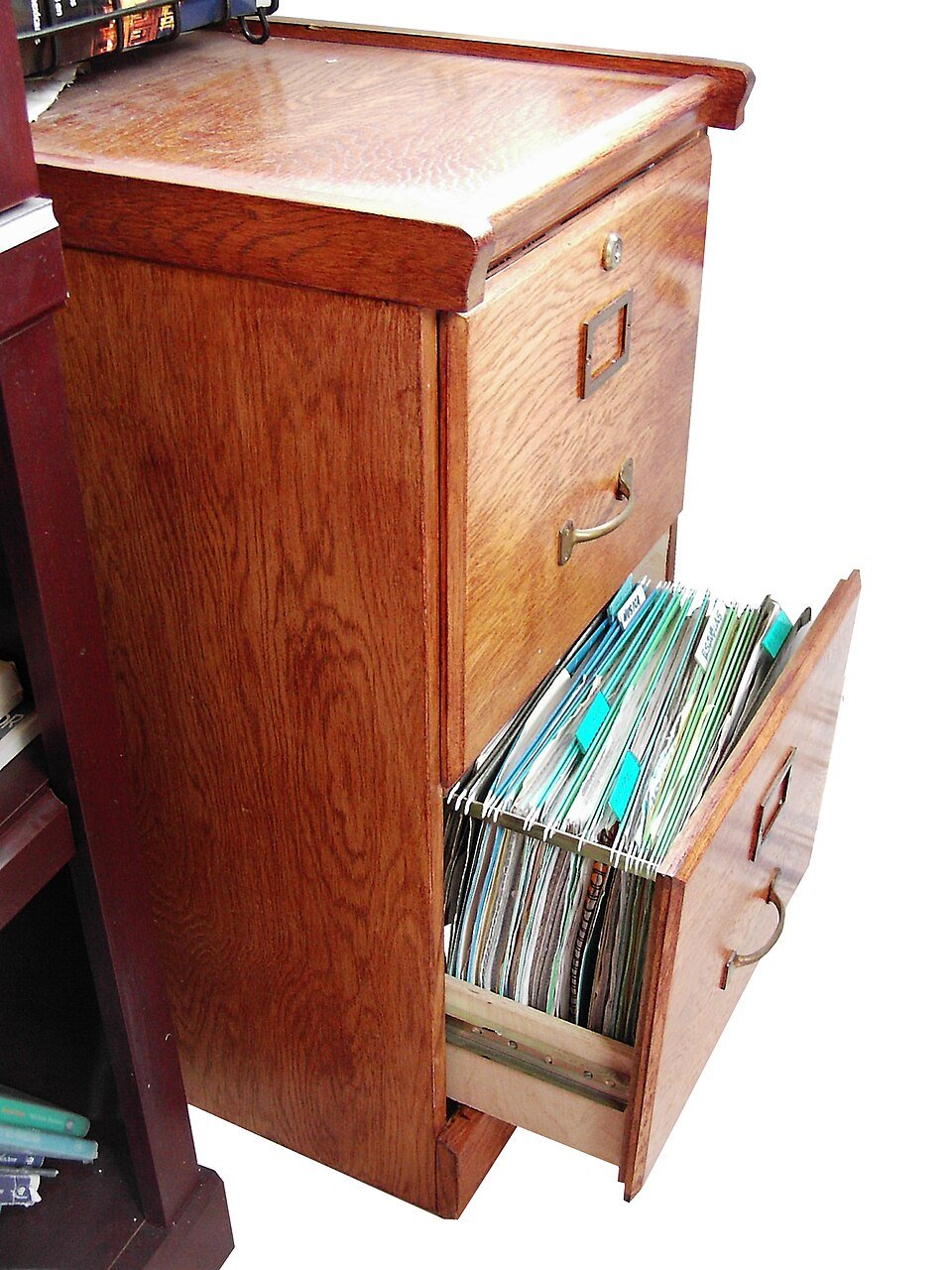
A dining or living room may also host puzzles, sewing, study or household paperwork. The difficult storage problem is often the unfinished task. Supplies have a cupboard, but the half-sorted papers or active project spread across the table has no overnight destination. It then migrates onto chairs and eventually the floor.
Plan the pause as carefully as the setup. Identify what must remain arranged, what can be grouped and where the complete paused task will live. This guide concerns portable storage and existing suitable furniture; it does not propose building a new room divider or altering the property.
Observe the room at its changeover point
Choose the moment when the room has to change function, such as study ending before dinner. Record every object on the active surface and the temporary locations used during clearing. Count double moves: papers placed on a chair and then moved again when someone needs to sit.
Ask which part of the task actually needs to remain intact. A jigsaw may need a suitable dedicated board, while sorted household papers can remain in labeled folders. Distinguishing preservation of progress from preservation of the entire spread can substantially reduce the storage footprint.
Do not begin by buying a deep general-purpose box. A box can hold supplies yet damage an arranged project or hide the categories needed for the next session. Record the shape and support required by the unfinished task, including fragile edges, loose pieces and anything that cannot be stacked. Those requirements define the suitable container or carrier.
Measure the paused project rather than the supply cupboard
Lay out the task in its smallest acceptable paused form. Measure width, depth and height, including protective covers or trays. Include the carrier's exterior dimensions and the space needed to grasp it. A flat project may consume little volume but require a wide uninterrupted storage position.
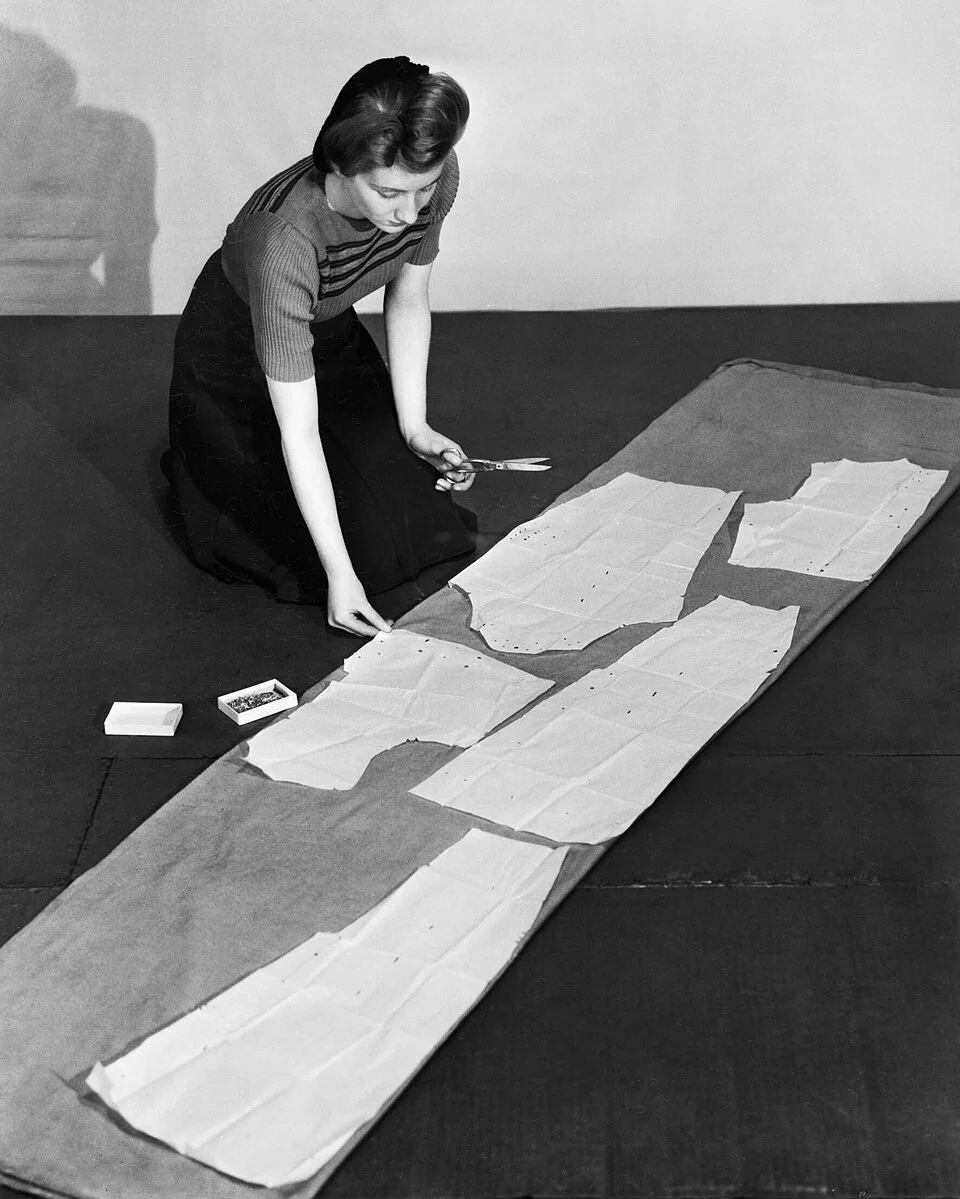
The paper patterns occupy a broad area across the cloth, so a box holding spare tools would not describe this project’s working footprint. Decide which pieces must stay in position when your own task pauses, then measure that arrangement with its required support, cover and carrier. Check the complete shape against the destination opening before planning the handoff.
Photo & usage
Ministry of Information Photo Division Photographer · Public domain · Source. Display copies resized and encoded as WebP; no instructional details were fabricated or removed.
Measure the destination opening and the path between the work surface and storage. Check corners and doors while carrying a light representative load. If the carrier must tilt, confirm that the contents can tolerate that orientation. A fit obtained only by tipping loose pieces onto one edge is not a practical fit.
The IKEA — SAMLA Box, Article 701.029.72 page demonstrates why nominal volume and external dimensions are separate information. Use exact container details for your own arrangement, and do not assume any ordinary storage box is designed to carry delicate work. Choose the support and enclosure appropriate to the actual task, then check its complete envelope in the room.
Calculate an illustrative container allocation
Here is an illustrative capacity example. A cupboard shelf offers 84 cm of clear width. Two active project carriers each use 32 cm, and a shared supplies box uses 16 cm. Their combined width is 32 + 32 + 16 = 80 cm, leaving 4 cm overall.
A third 32 cm project carrier would bring the total to 112 cm, exceeding the shelf width by 28 cm. That is a capacity boundary, even if the carriers can be stacked temporarily. Stacking is only suitable when their design and contents permit it and the lower carrier can still be retrieved appropriately.
The household can limit active projects, assign another suitable destination or change the carrier format. It cannot honestly describe the shelf as having room for three independent carriers. Use your own measured widths and retrieval needs, and retain enough clearance to handle each carrier. The numerical remainder alone does not establish convenient removal.
Keep the destination available during normal room use
A project destination fails if it is occupied by coats or shopping bags whenever needed. Label or otherwise define the assigned space, and remove unrelated overflow before adopting the handoff. The room should not need a second clearing operation merely to park the first task.
Check the destination at the time the room changes function. A carrier stored under a table may be inaccessible once dining chairs are occupied. A cupboard behind a sofa may require moving the furniture. These are scheduling and access conflicts that an empty-room demonstration can miss.
The Los Angeles Fire Department — Home Escape Plan escape-plan guidance calls for clear routes. Keep paused projects outside those routes, including when they are waiting briefly during a handoff. A floor position beside a door is not a neutral holding area. If storage requires leaving a carrier there while several other objects move, simplify the sequence or choose another destination.
Make setup and return equally explicit
Write the sequence from both directions. Setup might be retrieve carrier, place on a suitable surface, open the cover and fetch shared supplies. Pause might be return loose pieces, close the cover, park the carrier and return shared supplies. A clear return sequence prevents supplies accumulating around the paused project.
Time is not the only useful observation. Count how many other objects must move and whether the carrier can be handled comfortably. If every session requires lifting another project off the top, the arrangement has a dependency that may become irritating even when it takes only a short time.
Keep liquids, heat-producing equipment and sharp tools in their appropriate storage rather than treating the active carrier as universal containment. Let equipment cool and disconnect it as its instructions require before putting it away. The project's desire to remain intact does not override the separate conditions of the tools used to make it.
Close the trial only when the room changes function cleanly
Run a complete project session and the next room use. Check the table, seating and circulation after the pause. All intended seats should be available, and the next person should not need to relocate an unfinished project before beginning an ordinary activity.
At the following session, retrieve the carrier and inspect whether the task resumes in an understandable state. Missing categories, crushed papers or loose pieces at the bottom show that the pause method needs adjustment. Fix the carrier or category division rather than accepting damage as the price of a small shared room.
Completion means the task can pause without losing necessary order and the room can return to its shared purpose. Record the active-project limit and destinations. When a new project begins, allocate its paused footprint first; doing so keeps the next creative or practical task from becoming another permanent floor pile.
THE REFERENCE FILE
Sources & scope
Documentation reviewed 1 Nov 2026. Examples are illustrative; this article does not claim hands-on product testing. Follow the instructions for your actual material, model and location.