Write the practical problem in one clear sentence
A folder of humidity screenshots can hide the reason someone needs to visit. Begin with a plain sentence: the lower bedroom wall becomes wet after cold nights, or the bathroom stays visibly damp between ordinary showers. Include the location and recurring trigger if known. Avoid opening with a guessed diagnosis such as rising damp, failed insulation or inadequate air changes.
State any urgent condition separately. Active leakage, wet electrical fittings, sagging material or contaminated water should be reported through the appropriate urgent route rather than bundled into a routine appointment request. Do not wait to collect a week of readings before reporting obvious water damage.
Health Canada: Guide to addressing moisture and mould indoors recommends visual investigation of moisture signs and appropriate help where hidden problems are suspected. A household brief supports that work by making the evidence easy to assess. It does not replace inspection, establish legal responsibility or tell a professional which concealed component must be replaced.
Select a few records that show the pattern
Choose one wider photograph establishing location, one accessible closer view and a short event record. Keep dates and explain whether water was wiped before the photo. Do not crop away the nearby window, vent or plumbing fixture if its relationship matters. Avoid disturbing finishes or moving heavy furniture to obtain a better image.
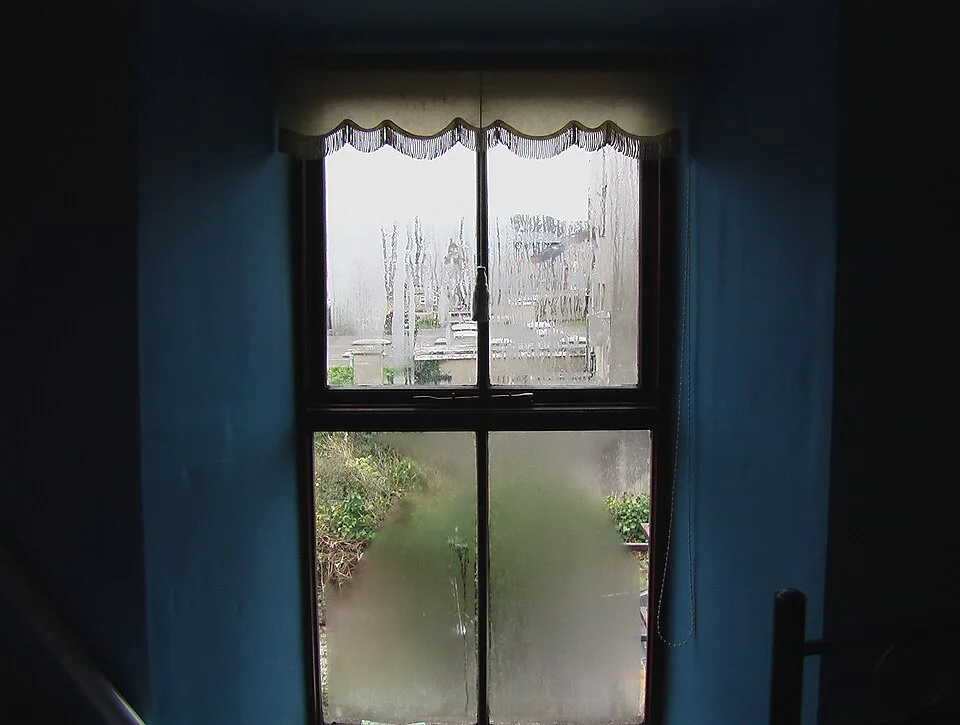
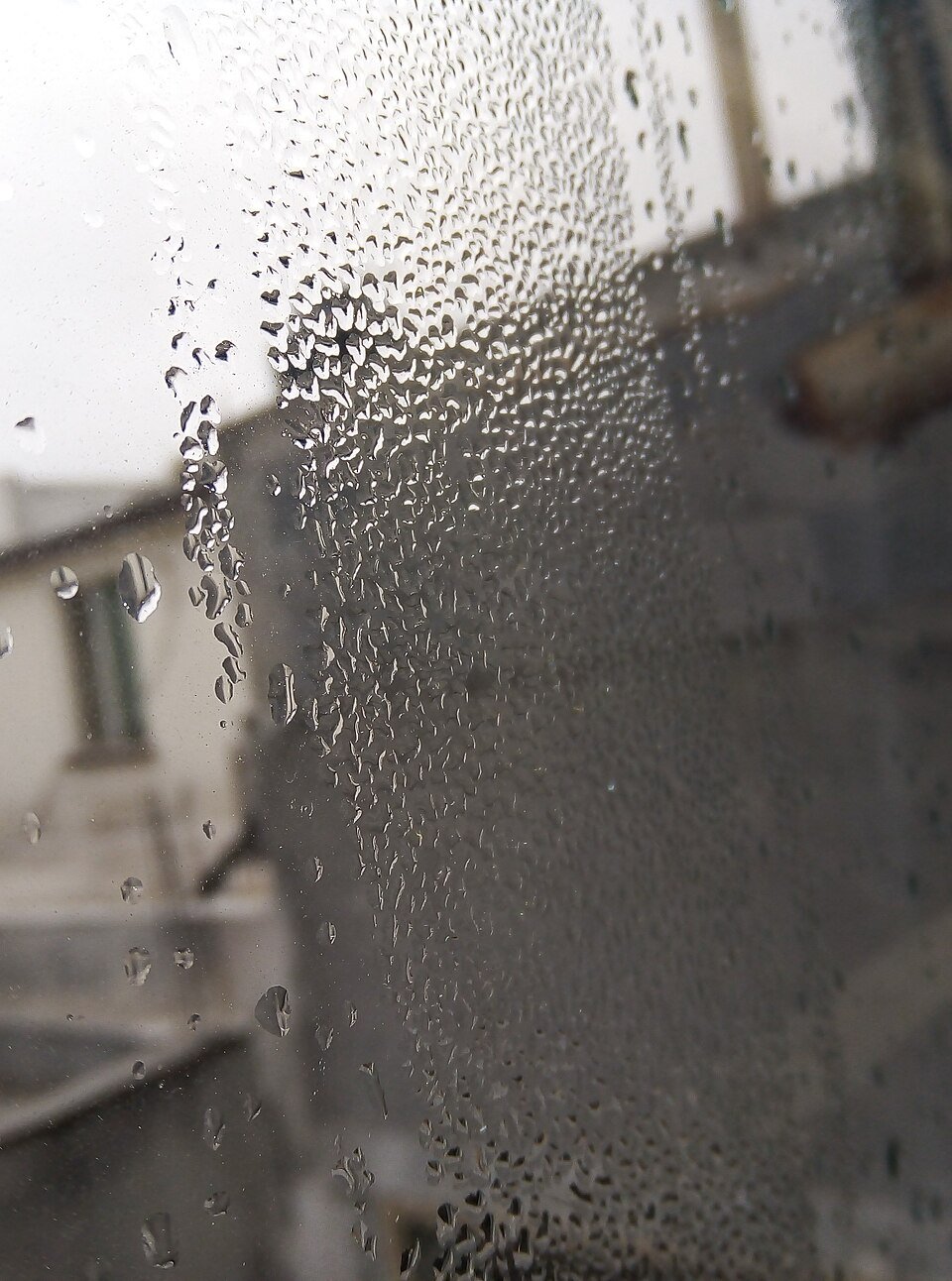
The wider window view retains the frame, covering and distribution of wet-looking areas, rather than showing only a droplet close-up. For a maintenance handover, add an accessible detail and dated event record, noting any wiping and meter moves. This photograph does not establish which face is wet, a failed seal or the moisture source in another property.
Photo & usage
Danielclauzier · CC BY 3.0 · Source. Display copies resized and encoded as WebP; no instructional details were fabricated or removed.
For air readings, include temperature with RH, the meter identity and its position. State its accuracy if known and whether readings were simultaneous or taken after moving one instrument. A screenshot without location, units or timestamp should not be the main evidence. If a graph includes a sensor move, mark that interruption.
Select both a typical affected entry and a useful comparison, such as the same location before bathing or a dry-weather baseline before rain. Do not include only the worst-looking moment. A representative record with a clear limitation helps more than a long selection designed to make one explanation seem inevitable.
Keep observations distinct from working explanations
Use two short fields: observed and question. Observed might say droplets on room-facing glass before curtains opened. The question might ask whether cold surface conditions and restricted air access contribute. Do not turn the question into a finding by changing the wording to caused by closed curtains.
EPA: Low-Cost Air Pollution Monitors and Indoor Air Quality explains the limited coverage of consumer monitors. Apply that limit explicitly if readings are included: the instrument measured air temperature and RH at the stated position. It did not measure mould species, all pollutants, airflow or wall moisture. A normal reading does not rule out a local leak or concealed damp material.
Record practical impact without medical interpretation. The cupboard cannot store dry bedding because its backing remains damp is an actionable household problem. A claim that a reading proves the room caused an illness exceeds this record. Personal health concerns belong with the appropriate clinician, while the maintenance brief stays focused on building and system observations.
Compare a vague request with an actionable one
These descriptions are illustrative and invented. They demonstrate the structure of a maintenance request, not findings from an inspected property. The clearer version still asks for assessment rather than prescribing a repair.
| Vague wording | More useful wording |
|---|---|
| The room is unsafe because the meter says 61% | At the open shelf, 20°C and 61% RH were recorded; the wall corner was visibly wet on three mornings |
| Replace the fan | The fan starts, but wall droplets remain between ordinary uses; please assess airflow, discharge and the relevant moisture source |
| The roof leaks | The stain darkened during two rain events; the entry point has not been identified |
The improved wording preserves what the household knows and what remains uncertain. It also makes the appointment more focused: the assessor can plan access, consider the system and ask for missing context. It does not guarantee a particular policy response, repair approval or conclusion.
Explain what changed before the visit
Record ordinary protective actions: wiping condensation, removing wet laundry, clearing an intended vent or stopping a leaking appliance through normal controls. Include the dates and whether the symptom changed afterward. If several actions happened together, acknowledge that their individual effects cannot be separated.
EPA: A Brief Guide to Mold, Moisture and Your Home emphasizes fixing moisture sources and drying affected areas promptly. The brief should therefore describe protection already taken without claiming that the problem is solved because the photographed surface was wiped. A cleaned patch and a repaired source are different outcomes. Ask about suitable drying or restoration for material already affected.
Do not perform invasive work to prove diligence before requesting help. Opening a wall, altering a shared fan setting or applying sealant can change the evidence and create other issues. State access limits clearly: the back of a fitted cabinet was not inspected, the exterior terminal is inaccessible or the ceiling void has not been opened. Those are useful planning facts.
Request findings and an operating explanation
Ask the visitor to identify likely moisture sources, assess the relevant ventilation or plumbing and explain what work or further assessment is needed. If a fan is involved, ask how residents should use the actual controls and whether measured airflow or discharge checks are appropriate. If water entry is suspected, ask how the source and affected materials will be assessed.
Request a description of the outcome and any follow-up conditions: what was repaired, what remains uncertain and which ordinary-use or weather event should be observed afterward. Do not demand a numerical pass criterion from a household meter that cannot establish it. Professional material checks may use different methods from the room log.
For a rental or shared building, use the established maintenance contact and preserve the record. This article does not interpret local tenancy law or promise a response deadline. The practical aim is a clear, reviewable report that someone can act on, with urgent issues routed appropriately and ordinary access prepared safely.
Finish with a result and a relevant recheck
After the visit, add the actual findings and instructions without rewriting the earlier observations to fit them. Keep the repair description beside the original evidence. If a professional identifies more than one contributor, preserve that complexity; a room can have a moisture source, a cold surface and an airflow limitation at the same time.
Revisit the original location under the relevant ordinary trigger. Check after a normal shower, comparable cold night or meaningful rain event as appropriate. A dry result under unrelated mild weather is not a strong follow-up. Note any wiping, equipment setting or occupancy change that affects the comparison.
The handover is complete when the problem has an identified next action, the household understands the operating guidance and any unresolved work is clearly recorded. It can close into a follow-up request if the symptom recurs. The useful product is a concise chain from observed problem to assessment and outcome, rather than a screenshot collection making claims beyond its evidence.
THE REFERENCE FILE
Sources & scope
Documentation reviewed 1 Nov 2026. Examples are illustrative; this article does not claim hands-on product testing. Follow the instructions for your actual material, model and location.