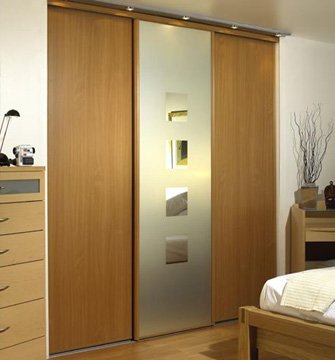
A seasonal wardrobe rotation is not simply an exchange of equal garment counts. Ten light shirts and ten padded outer layers occupy different amounts of rail, and folded knitwear can change the drawer's full-return peak. Measure the incoming collection before removing everything from the wardrobe.
Work progressively so the room remains usable. Prepare the off-season destination first, then move one category at a time. This workshop concerns the contents and portable storage, not alterations to wardrobe supports or the installation of additional rails.
Review the incoming season as a complete collection
Count the garments expected to be in regular use, including items currently being cleaned, repaired or worn. Separate occasional clothing that can remain elsewhere. Avoid basing the new arrangement only on what is visible in the wardrobe on sorting day.
Check condition before assigning storage. Follow care labels, and deal appropriately with dampness, stains or damage. The Canadian Conservation Institute — Basic Care: Textiles guidance describes the effects of unsuitable conditions and support on textiles. Apply additional care to fragile or valued garments rather than treating every seasonal item as suitable for tight compression.
Keep uncertain decisions in a small defined review group with an appropriate destination. Do not allow them to occupy the entire bed while the rest of the room remains unusable. Ask owners before reassigning their clothing. The rotation should reveal capacity and condition issues without becoming an unplanned disposal exercise.
Measure thickness using the intended hangers
Hang a representative group of incoming garments on an existing suitable rail. Space them for comfortable identification and removal, then measure the occupied length. Repeat for bulky and slim categories separately. An average across all garments can hide the extra room needed by outerwear.
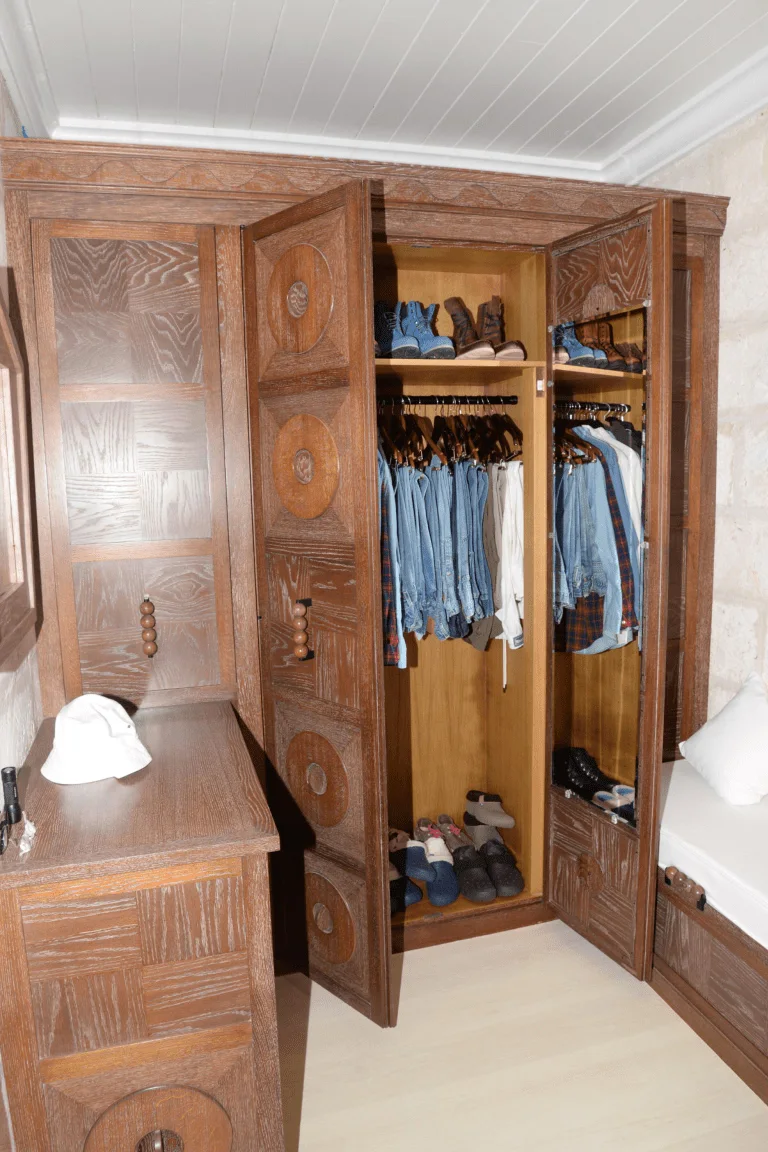
The hanging row makes differences in garment thickness and hanger spacing visible. Use a representative group of your incoming clothes on their intended supports, leave comfortable selection space and measure the occupied rail length. Record bulky and slim categories separately. The photograph provides no measured spacing, garment weights or load limit for this wardrobe or another rack.
Photo & usage
Federal Bureau of Investigation · Public domain · Source. Display copies resized and encoded as WebP; no instructional details were fabricated or removed.
Include hanger type and garment drop in the notes. A coat on a broad support may need more rail length and depth than the same count of shirts. Use the support appropriate to the garment rather than changing everything to thin hangers merely to preserve the old count.
Read the exact furniture limits if the seasonal load becomes denser. The IKEA — MULIG Clothes Rack, Article 601.794.34 page provides one model-specific example of dimensions and load information. Do not apply it to an installed wardrobe or another rack. Check the actual product documents, and avoid treating an unchanged garment count as evidence of an unchanged load.
Compare an illustrative summer and winter allocation
All figures here are illustrative. A 96 cm usable rail holds sixteen light garments at a planning allowance of 4 cm each. That uses 64 cm and leaves 32 cm for selection and variation. The same sixteen items replaced with garments averaging 7 cm would require 112 cm.
The incoming allocation exceeds the rail by 112 − 96 = 16 cm before preserving any working allowance. Reducing the active winter group to twelve at 7 cm uses 84 cm, leaving 12 cm. Whether that remaining space is convenient still requires an actual retrieval trial.
The example does not recommend twelve garments or a particular spacing. It shows why equal counts do not guarantee equal fit. Choose the active group, destination or storage form according to the real collection and product conditions. Do not compress the row until neighboring hangers lift together just to make the old number appear to work.
Prepare the off-season destination before unloading
Measure the intended container externally with its lid and handles, then check the cupboard opening or under-bed route. The IKEA — SAMLA Box, Article 701.029.72 listing illustrates that nominal volume and a complete container envelope are different information. Verify the exact box and lid combination before buying several.
Store garments clean and fully dry according to their care requirements. Choose support and protection suitable for the fabric and condition. A clear plastic container is not automatically archival housing, and a tight vacuum pack is not a universal answer for every textile. Follow relevant garment and storage-product guidance.
Label the category and season on the visible side. Include a simple contents note if several similar boxes are used. Keep the label specific enough that a sudden need for one item does not require opening every container. Assign a suitable temporary surface for the box during that retrieval.
Recalculate folded storage at the clean-return peak
Count the incoming folded category across the full laundry rotation. Measure the ordinary repeatable fold without pressing the stack hard. Include internal drawer height and any obstruction above it. A drawer that closes when several garments are being worn may fail when the complete clean group returns.
Test a full representative stack or row. Retrieve an item from the least convenient position and return it. If the pile collapses or the drawer catches fabric, reduce the assigned quantity or choose a more suitable arrangement. Dividers can preserve a successful format but cannot create missing volume.
Keep a small transition category for days when both seasons are in use. Give it a measured limit and review point. Without that boundary, the wardrobe can retain the entire outgoing season while absorbing the incoming one, making a carefully planned rotation ineffective.
Move one category through the complete cycle
Use an explicit sequence: inspect condition, prepare suitable off-season storage, remove one outgoing group, place the incoming group and test retrieval. Finish that category before emptying the next. This keeps routes and the bed available and makes any missing destination visible early.
Check the room after each category. Boxes should return to their assigned positions rather than lining the floor until the whole rotation is complete. Keep lids and packing materials outside walking routes. If the available destination fails, pause the transfer and resolve it rather than forcing the next group into the same unsuitable space.
Avoid using a temporary garment rack as unlimited overflow. Measure its loaded footprint and check the exact instructions and load limits. A rack that blocks dressing access or a doorway does not solve the wardrobe problem. Reduce the transition collection or choose another suitable destination before normal room use resumes.
Keep the transition group separate from permanent overflow
During mixed-weather weeks, identify the small group that genuinely needs to remain available from both seasons. Measure its hanging or folded footprint and give it an explicit position. This is different from leaving all outgoing clothes in place while adding the new season.
At the agreed review point, inspect the transition group and decide which items remain active. Update the category counts before moving more garments into storage. Keep condition and appropriate support as separate checks; an unworn item may still need attention before enclosure. A successful rotation ends with a stable active collection and a retrievable off-season collection, not with an expanding third category whose name changes from transition to overflow.
Confirm the allocation after ordinary wear and washing
Use the new wardrobe through a normal clothing and laundry cycle. Record items that remain on a chair, hangers that catch and categories that cannot return after washing. Those observations show whether the seasonal estimate matched reality.
Recheck the off-season labels and make sure the occasional retrieval method works without moving heavy furniture. Inspect contents and storage conditions at the next planned rotation, and respond appropriately to dampness, pests or damage rather than sealing the problem out of sight.
Completion means the incoming season fits at its fullest ordinary point and the outgoing season has a suitable retrievable home. Keep the measured spacing and category counts for next time, updating them when the wardrobe changes. The record is a practical starting point, not a permanent capacity promise for a different collection.
THE REFERENCE FILE
Sources & scope
Documentation reviewed 1 Nov 2026. Examples are illustrative; this article does not claim hands-on product testing. Follow the instructions for your actual material, model and location.