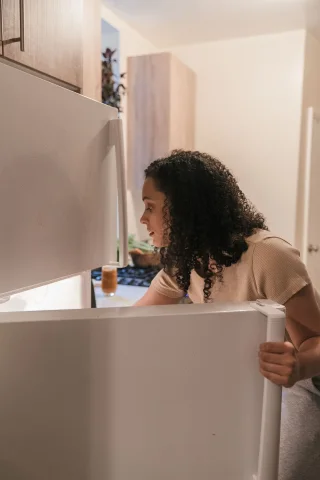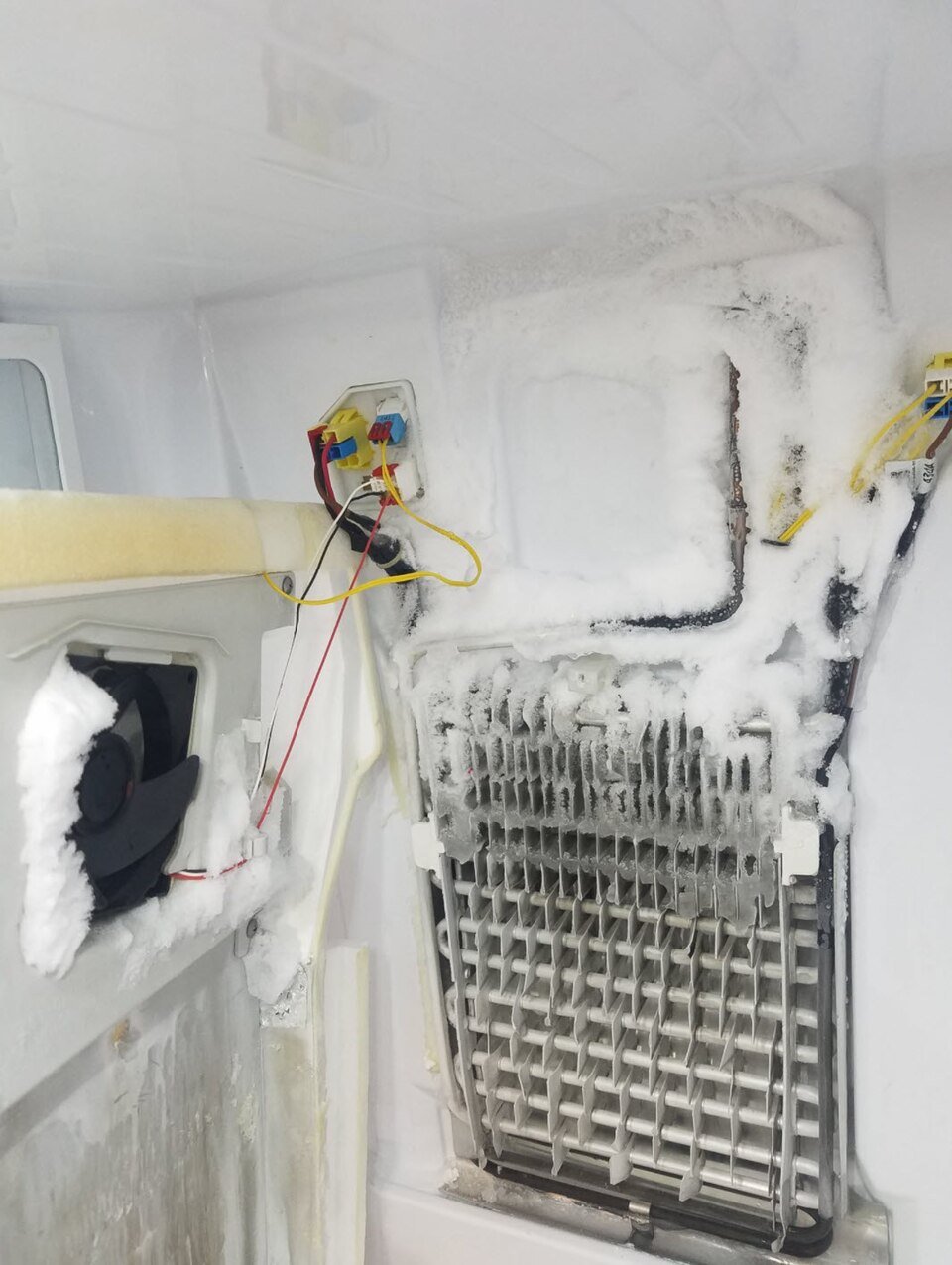
Set the food decision and the observation boundary
Recurring frost is easy to photograph badly and easy to overinterpret. A white bag and a white wall may look similar in a close crop, yet they describe different surfaces. The useful task is to record what is visible, where it appears and whether it recurs under comparable ordinary use. You do not need to expose components or remove the frost to begin that record.
First address any food concern. If an outage, thawing or uncertain temperature history affects the contents, decide what can be retained before observing the appliance. Consult applicable FDA cold-storage guidance; frost on packaging cannot certify the food's previous temperature history. Keep suitable food in dependable storage while any unresolved problem is addressed.
This method uses only surfaces visible during normal user access. Do not scrape, chip, probe, heat or wipe away the pattern for comparison. Do not remove panels, insert a measuring tool into a vent or attempt a defrost procedure. If frost prevents a drawer moving normally, stop rather than forcing access. A useful record may consist of a clear description of the blocked access and a service request.
Separate package frost from visible wall frost
Step 1 creates two observation lines. The package line describes external frost on a named bag, box or container. The wall line describes a fixed visible interior surface, such as the upper left wall beside the drawer opening. Add a third line for a shelf or drawer front if needed. Do not merge them into a single “freezer frosted” entry.
Record external package crystals separately from crystals visible inside a clear bag; they are different observations. Note whether the package was newly added, recently moved or unusually difficult to identify. A package that later leaves the freezer cannot serve as a fixed reference surface. Give it a temporary identity so the next entry can say “package removed” rather than suggesting frost mysteriously disappeared.
GE Appliances' frost guidance discusses frost on packages, shelves and walls in connection with door use and closure, and recommends service when frost continues after applicable checks. It does not let you identify a sealed-system fault from a visible wall pattern. Describe the evidence without naming an internal failed part.
Use fixed landmarks and the same ordinary viewpoint
Step 2 identifies landmarks that are already visible: a drawer edge, moulded corner or fixed shelf line. Sketch the area with the freezer closed. During the next ordinary retrieval, take a brief photograph from a repeatable position if this can be done without delaying closure or compromising handling. Make written notes after closing the door.
Keep the original wide view as well as any crop. The wide view establishes which surface is being shown; a close view may help describe texture. Avoid flash reflections that make a shiny wall look white. Record if lighting or angle changed. A brighter image does not necessarily represent more frost, and a darker image does not prove that it cleared.
Use the same simple visibility terms each time: surface clear, scattered crystals, continuous visible coating, or view obstructed. These are descriptive categories, not calibrated frost thicknesses. Do not press a ruler into ice or claim a millimetre measurement from a photograph. If a package hides the wall, write “not visible,” leaving the prior wall observation unchanged.
Record closure and ordinary-use context separately
Step 3 notes ordinary events that might help explain why observations differ: a shopping load, several meal-preparation openings, a door found ajar or a package relocated. Record an event only when it is known. Do not fill gaps with assumptions such as “someone must have left it open.” Context can support a question for service without proving a cause.
Watch the door or drawer close gently during normal use. If a loose package projects into its path and can be safely repositioned through ordinary access, move it and record that action. Observe the accessible gasket for visible cuts, folds or gaps without pulling it apart. Do not adjust hinges, heat a gasket or move the appliance as part of this record.
Find the exact model's user manual through its official regional support route, such as Whirlpool's manual finder for that brand. The document establishes whether the appliance's design expects periodic user defrosting and what access is permitted. This observation article supplies no defrost instructions. If the manual requires an action beyond this scope, plan it separately or ask support.
Compare visible coverage using the same descriptive map
Step 4 compares entries, keeping unknown areas visible. Here is an invented example using four named visual zones on one accessible wall. The zones are recordkeeping divisions, not equal physical areas or service test points. No tool touches the wall and no cover is removed.
| Date and normal access | Wall zones with visible coating | Package observation | Context |
|---|---|---|---|
| 1 November, dinner retrieval | 1 of 4 visible zones | Crystals on bag P1 exterior | Projecting loose package repositioned |
| 3 November, dinner retrieval | 2 of 4 visible zones | P1 unchanged in appearance | Door observed closing normally |
| 5 November, dinner retrieval | 3 of 4 visible zones | P1 removed for a planned meal | All wall zones visible |
The number of zones described as coated rises from one to three, a difference of 3 − 1 = 2 zones over four days. The fractions are 1 ÷ 4 = 25% and 3 ÷ 4 = 75% of named zones, a rise of 50 percentage points. They are not percentages of actual wall area, frost mass or lost cooling capacity.
That record supports “visible coating extended to additional named zones despite an ordinary closure correction.” It does not establish which internal mechanism is responsible. Had one zone been hidden on the last date, the proper finding would include that missing view rather than counting it as clear.
Choose service before collecting more dramatic evidence
Step 5 makes a practical decision. Seek manufacturer support or qualified appliance service if frost recurs or spreads after relevant safe user checks, if a gasket appears damaged, or if normal closure or access is impaired. Do not wait for a photographic series when cooling is unreliable or the door cannot close. Deal with food protection promptly and arrange help.
A pattern that appears stable across a few ordinary openings still does not prove that all hidden components are sound. Conversely, one package with external crystals does not diagnose an appliance fault. State the limits of the record when asking support whether the observation is expected for this exact model and operating situation.
Stop the comparison if it starts changing behaviour: opening the drawer purely for a new image, rearranging food to expose a larger patch, or delaying a normal retrieval for lighting. Those actions reduce comparability and may worsen the conditions being observed. A short honest record is more useful than a large gallery produced under artificial conditions.
Close the record with what remains unknown
Write the model, observation dates, named surfaces, ordinary-use context and any safe loose-item correction beside the original images. Keep package and wall conclusions separate. Record the completion decision as either ordinary monitoring within the manual's guidance or a request for model-specific service advice. Avoid adding a replacement-part recommendation that the evidence cannot support.
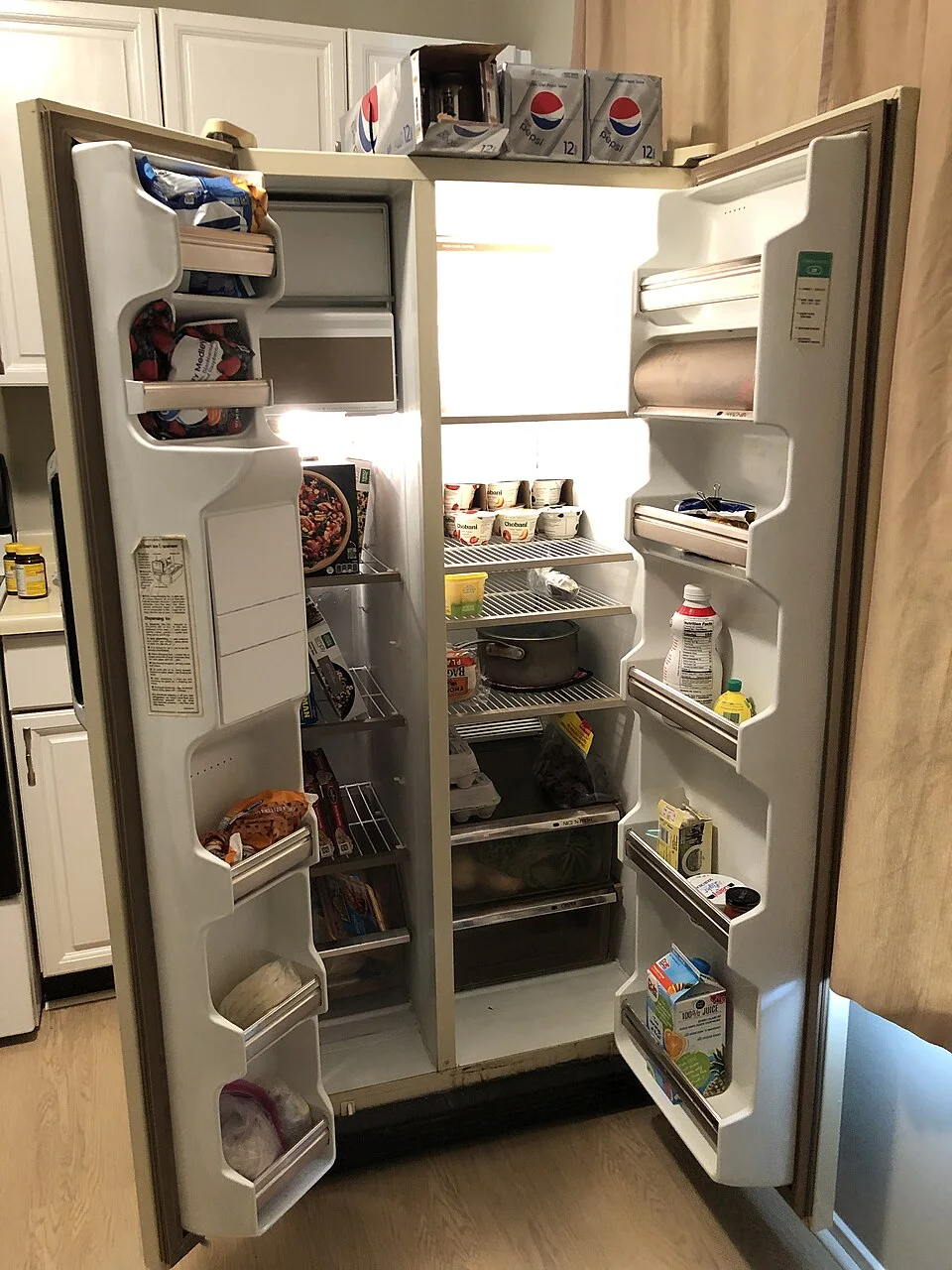
Fixed shelf positions, compartment walls and door bins provide named landmarks for an observation record. Describe where a visible pattern occurs without moving stored food solely for a photograph. This view shows no repeated frost sequence and cannot establish a cause; keep dates, ordinary-use context and unknowns alongside the actual observations.
Photo & usage
Famartin · CC BY-SA 4.0 · Source. Display copies resized and encoded as WebP; no instructional details were fabricated or removed.
The numbered empty-drawer reference image shows fixed compartment features and air slots. It can help explain the idea of naming stable landmarks. It shows no recurring frost sequence and does not establish the location of parts in your appliance. Its visible slots are not permission to reach behind an opening.
Completion means the comparison can be understood without guessing where a close-up was taken, the limits of visibility are recorded, and the decision does not depend on disturbing ice. Leave the pattern intact for any subsequent professional assessment and keep the food decision independent of the image record.
THE REFERENCE FILE
Sources & scope
Documentation reviewed 1 Nov 2026. Examples are illustrative; this article does not claim hands-on product testing. Follow the instructions for your actual material, model and location.