A faded care label creates a small research task before it creates a laundry task. The fibre content, a familiar brand and the garment's appearance can all provide clues, but none necessarily describes the assembled item's safe care route. Put the piece on hold while you gather evidence. The aim is one usable instruction for that garment, not an impressive collection of loosely related advice.
Preserve whatever the label still shows
Examine both sides under good light and photograph the label without pulling on its seam. Try a different viewing angle if the print is faint. Do not use solvent, heat or abrasive rubbing to reveal it; that can remove the remaining text and damage nearby fabric.
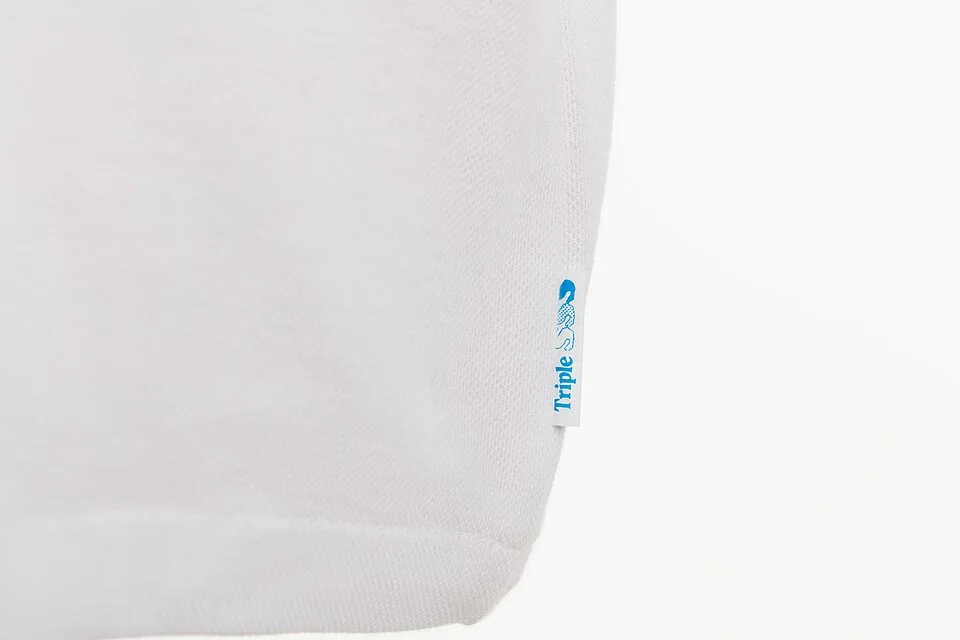
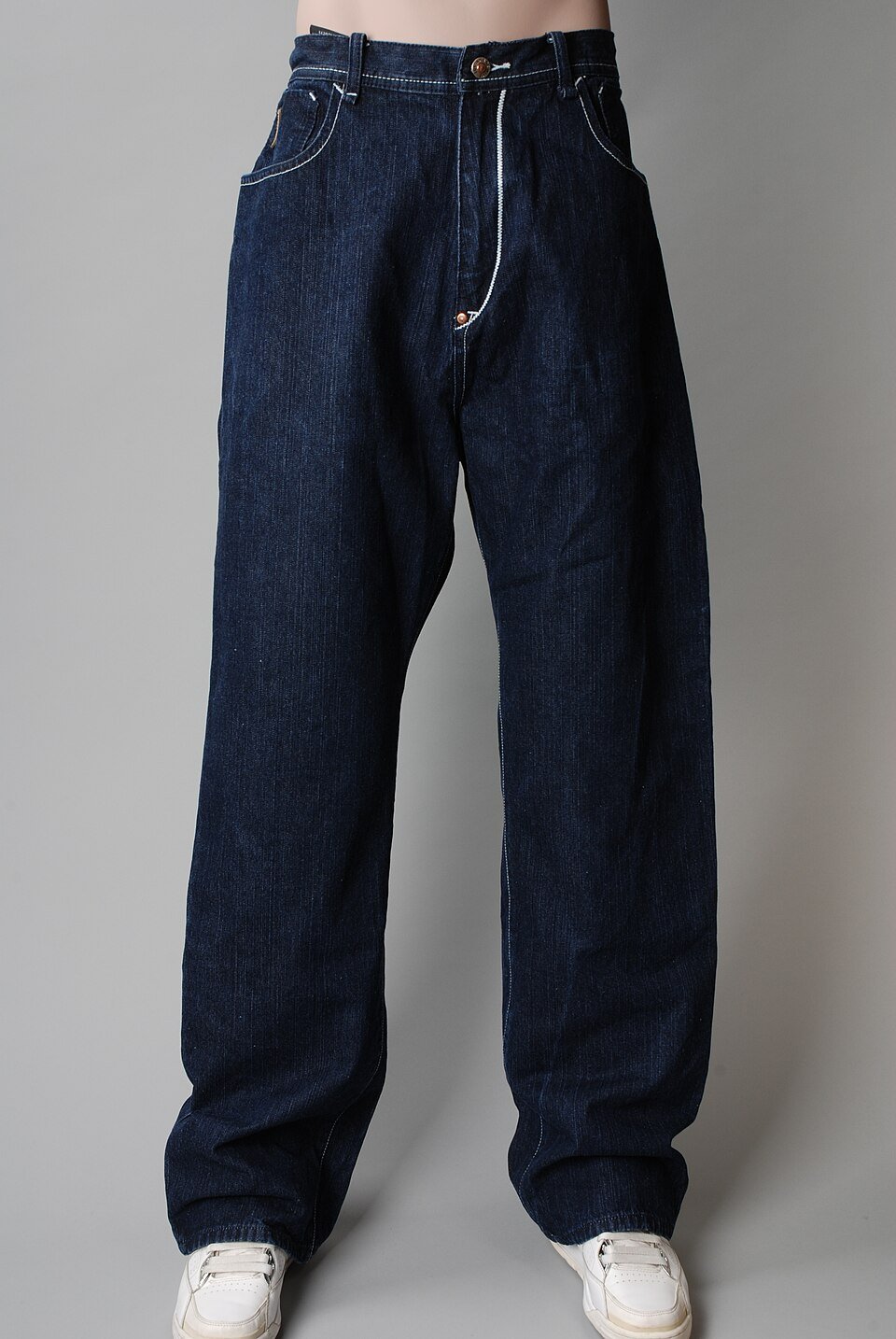
The small brand tag and its attachment seam show details worth recording when a full care instruction is missing or unreadable. Photograph surviving names, identifiers and both sides of actual labels without pulling the seam. This visible brand tag supplies identification context only; it contains no visible washing, bleach or drying permission.
Photo & usage
Triple SSS Sportswear Ltd · CC BY 4.0 · Source. Display copies resized and encoded as WebP; no instructional details were fabricated or removed.
Record partial symbols, words, product numbers, brand names and size information separately. A visible temperature number without the wash symbol and underlines is incomplete evidence. GINETEX explains that the complete symbol matters, including process restrictions; do not reconstruct a missing instruction from one surviving digit.
Check other labels in the garment, including side seams and pocket bags, without opening stitched construction. Keep the photographs even if they are difficult to read. The manufacturer may recognise a product code that means little to you. Store the garment dry and apart from the next load while the question remains open.
Search your own purchase evidence first
Look for an order confirmation, receipt, saved product page or original packaging. Match the product identifier, material option and approximate purchase date. A retailer may reuse a style name across different seasons, so a current page with the same title is not necessarily the same garment.
Compare distinguishing features: lining, trim, buttons, fabric composition and construction. Photograph them for a manufacturer enquiry. Do not assume a product image that resembles the garment establishes identical care. A small construction change can matter even when the outside looks familiar.
Keep a source note showing where each clue came from. “Order history: item code” is stronger than “similar shirt online.” If a retailer page includes only fibre content, record that limit. It may help identify the item, but it does not yet provide the complete washing, bleaching, drying and finishing instructions you need.
Ask a question that can produce a usable answer
Contact the brand or retailer with the identifier and photographs. Ask for the complete care instructions for the exact item and fabric option. Include any visible label fragments and the purchase date. A precise request is more useful than asking whether “polyester is washable.”
- Identify the product and construction as closely as possible.
- Attach clear label and garment photographs where the service permits them.
- Ask for washing method, temperature limit, bleach restrictions and drying method.
- Ask whether trim, lining or removable components need separate handling.
- Keep the response with the garment's record.
Do not convert a vague response into a detailed home-care recipe. If support says “gentle care” without defining the route, ask for clarification. A named washer cycle can vary by appliance, so translate any confirmed instruction through your own machine's manual before starting.
Separate fibre guidance from garment permission
FTC care-label guidance addresses the garment as a whole. A fabric can tolerate a process that its lining, glued elements, decoration or construction cannot. That is why a fibre chart is useful background rather than a replacement for the missing care label.
Woolmark similarly tells owners to check the garment's care claim before washing a wool sweater. Machine-washable wool and professional-care wool are not interchangeable categories. Do not choose a wool cycle simply because the jumper contains wool, and do not assume every polyester garment tolerates tumble drying.
A hidden water or colourfastness test answers only a narrow question. It cannot establish shrinkage, seam distortion or the response of inaccessible components during a full wash. Use testing only within a confirmed care route or with appropriate professional guidance, not as a way to invent permission for a garment with unknown construction.
Compare the strength of three evidence records
The entries below are illustrative and invented. They show why similar-looking clues lead to different decisions. No garment has been tested, and the table does not guarantee the accuracy of a retailer or manufacturer response.
| Evidence | What it establishes | Decision |
|---|---|---|
| Exact item code and maker's complete response | Product-specific care route | Check against garment and appliance |
| Current similar-looking product page | Possible identification clue | Confirm season and construction |
| Fibre content only | Some material information | Keep care route unresolved |
The distinction is practical: one record can support a wash plan, while the others support further enquiry. Keep uncertainty visible. If two apparently authoritative records conflict, send both to the maker instead of choosing the more convenient one. The household should be able to explain why the final instruction applies to this particular item.
Choose a professional route when evidence stops
For a valuable, delicate or complex garment, a professional cleaner can assess construction and discuss the uncertainty. Tell them the label is unreadable and provide the evidence already gathered. Do not present a guessed instruction as though it came from the maker.
A professional assessment is not a promise of risk-free cleaning. Ask what they can establish, what remains uncertain and whether they recommend proceeding. Keep any decision proportionate to the item's value, condition and intended use. Some garments may be better held or retired than subjected to an unsupported process.
Avoid repeated speculative enquiries that add no new identifying information. Once the useful evidence is exhausted, make an explicit decision between professional assessment, continued hold or acceptance that care cannot be established. The garment should not quietly return to the basket and lose its unresolved status.
Avoid borrowing instructions from another size or finish
When a retailer supplies an apparently exact match, check whether it describes a different finish, trim package or fabric option. A sequinned version and a plain version can share a style name without sharing care requirements. Send the distinguishing photographs back to support if the match remains uncertain.
Record the wording of the confirmed answer without silently simplifying it. “Remove belt before washing” and “wash separately” are operational instructions that can disappear when a detailed response becomes a one-word household label such as delicates. Keep the complete answer available even if the everyday note is short.
If the manufacturer identifies an archived instruction, preserve the product code and the source response together. A future website redesign may make the same page difficult to find. The record should remain usable by another household member who did not take part in the enquiry and cannot reconstruct why a similar-looking garment was excluded.
If the recovered instructions include a removable belt or accessory, store that component’s route in the same record. A later household user may otherwise wash the garment correctly while overlooking the separate piece. Describe where the accessory was found and how it is reattached, using photographs where useful. Keep the whole outfit’s care decisions together without assuming all its components share one method.
Make the recovered instruction easy to use
Save the confirmed route in a short household note linked to a clear garment description. Include the source and review date, plus any drying exception that matters at unloading. Do not attach a hard tag that can damage the garment or leave an ink mark near the care label.
Before the first confirmed wash, inspect the piece for existing damage and select a compatible machine process. Reserve its drying destination and tell anyone handling the load about the exception. Observe the result without claiming that one successful cycle proves every alternative method safe.
The research task closes when the item has a supported route or a deliberate held status. Keep the record accessible and remove it when the garment leaves the household. A concise, item-specific answer prevents the same faded label from becoming a new guess at every wash day.
THE REFERENCE FILE
Sources & scope
Documentation reviewed 1 Nov 2026. Examples are illustrative; this article does not claim hands-on product testing. Follow the instructions for your actual material, model and location.