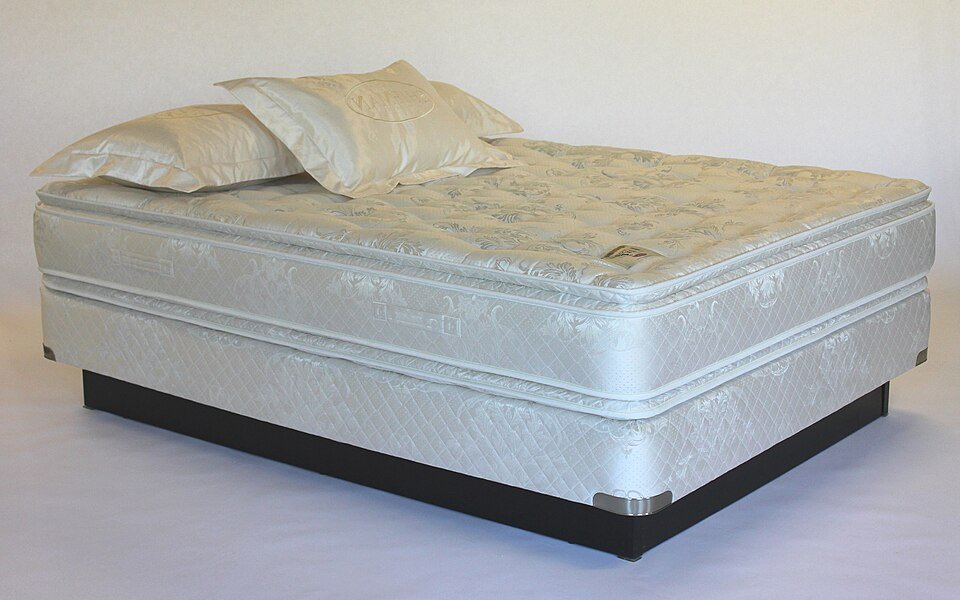
A glass of water beside the bed can wet four separate things: the sheet, a protector, the cover and the mattress beneath. Treating them as one washable object can push moisture into material that should remain dry. Start by locating the wet layers. Your immediate task is to limit further absorption, then establish a permitted care and drying route for each affected piece.
Stabilise the spill area first
Move the glass and any nearby electrical items away without touching wet plugs or equipment. Keep people off the wet area and remove loose bedding carefully. Fold the wet part inward so it does not drag across dry sections. Have clean absorbent towels available before exposing the next layer.
Do not stand the mattress on an edge or lift a heavy bed assembly alone. Its construction and handling instructions may require a particular position. If liquid reached an adjustable base or powered component, stop ordinary cleaning and follow the equipment maker's safety guidance. A textile workflow does not authorise work on wet electrics.
Note what spilled, roughly where and when, and whether there was sugar or milk in the drink. These details will help manufacturer support assess residual odour or staining. A cosmetic drink spill is different from floodwater or extensive contamination, which needs a separate assessment rather than a household spot-cleaning routine.
Map which layer is actually wet
Remove the sheet and inspect its underside. Lift the protector only as its fitting allows and check the mattress-facing surface. Look at seams, corners and the lower edge where liquid may have run. A dry centre does not establish that the protector caught a spill travelling down the side.
Record the affected layers separately. A simple note can name sheet, protector, outer cover and mattress material as dry, wet or uncertain. Keep wet removable pieces in a suitable laundry container rather than resting them on the dry bed. Do not press repeatedly into the mattress to estimate hidden water depth.
A protector's label tells you how to care for that protector; it does not establish how much liquid it can stop in every circumstance. If liquid has reached the mattress, move to the mattress manufacturer's instructions. Avoid adding cleaner while you are still trying to determine where the original liquid went.
Verify what the mattress instructions permit
Find the model identifier and care label before unzipping a cover. A zipper may be intended for manufacturing or servicing rather than routine removal. Check both the cover instructions and restrictions on the inner material. Do not assume every foam, hybrid or sprung mattress accepts the same cleaning equipment.
Tempur-Pedic's spill guidance says to blot excess liquid, avoid rubbing and never soak or wash its TEMPUR material. Its washable-cover directions are conditional on having a removable, washable cover. The UK TEMPUR care information likewise distinguishes product components. These are examples of why model and regional instructions matter, not rules to impose on every mattress.
If your label contradicts a general online article, contact the manufacturer with photographs and the product identifier. Until clarified, limit action to safe absorption of the fresh spill and keep the mattress exposed as permitted. Do not remove an inner protective sleeve or fire barrier to investigate moisture.
Blot and clean only within those limits
Use clean absorbent towels to lift excess surface liquid without dragging across the fabric. Replace the wet part of a towel promptly. Do not pour water onto the mattress to rinse a drink out. That can increase the affected volume and move moisture below the accessible surface.
For a cover that permits spot cleaning, follow its specified product and application method. Keep cleaner use controlled and avoid saturation. For a genuinely washable removable cover, use the label's wash and drying route separately from the mattress. Do not carry a general cover-washing temperature across models.
Avoid steam, extraction, powders and aggressive brushing unless the specific product instructions permit them. A mattress is a layered assembly, and access to its surface does not mean you can recover added moisture from the inside. If the spill is extensive or an odour persists after permitted care, manufacturer advice is the next step.
Make drying an observation process
Keep affected layers apart and exposed as their instructions allow. Tempur-Pedic's spill article requires complete air drying and mentions a fan as an aid; verify that the same approach is permitted for your mattress. Do not use concentrated heat or direct sun as an improvised shortcut.
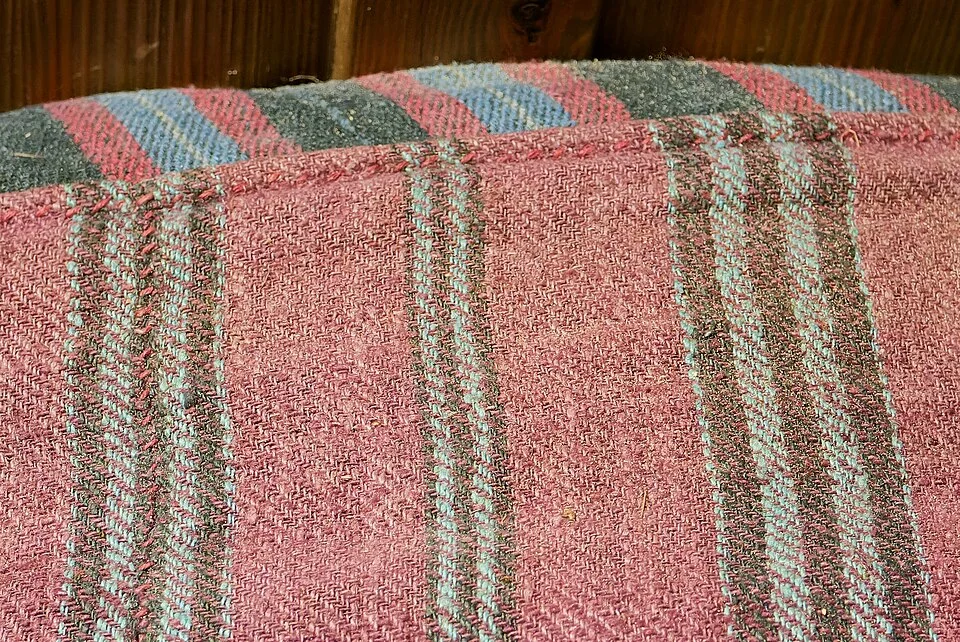
The raised stitched edge shows an inspection area that can remain concealed when bedding is layered back together. Keep affected layers separate as their makers permit and inspect accessible seams, edges and undersides before remaking the bed. This historic handmade mattress supplies no care method for modern foam or fillings, and a visible or dry-feeling cover cannot establish that inaccessible material is dry.
Photo & usage
Adaniel · CC BY-SA 4.0 · Source. Display copies resized and encoded as WebP; no instructional details were fabricated or removed.
A dry-feeling top fabric cannot prove that inaccessible material is dry. Check accessible seams, edges and the underside where the maker permits inspection. Compare suspicious areas with dry material of the same construction, while recognising that touch is only a limited observation. If you cannot establish a safe return-to-use condition, ask the manufacturer.
Reserve alternative sleeping arrangements if needed rather than covering an uncertain area with waterproof bedding. Enclosing remaining moisture defeats the purpose of the drying period. The calendar should not set the completion decision: room conditions, spill extent and product construction can all change how long the job remains open.
Use a layer comparison to make the decision
This table is an illustrative, invented observation record, not a mattress test. It shows why one dry component does not release the whole bed. The spill has affected a sheet and protector, while moisture at the mattress edge is uncertain.
| Layer | Observation | Status |
|---|---|---|
| Sheet | Washed by label; dry throughout | Ready separately |
| Protector | Corner binding remains damp | Continue permitted drying |
| Mattress edge | Surface improved; deeper moisture uncertain | Hold and seek model guidance |
Do not average these statuses into a general “mostly dry.” The least resolved affected layer controls whether the bed can be remade. Keep the record short enough to update when conditions change. If support gives a model-specific drying or replacement instruction, add it to the file with the product identifier rather than treating it as a general household rule.
Prepare a useful manufacturer enquiry
Send support the mattress model, label photograph, spill ingredients and the layer record. Describe what was blotted and whether any product or heat was applied. Ask about the specific accessible wet edge or unresolved area rather than requesting a universal cleaning recipe.
Include the approximate time since the spill as context, while avoiding a claim that a surface must be dry after a certain number of hours. If the manufacturer gives a model-specific instruction, save its wording and scope. Check whether it concerns the removable cover, inner material or base before acting. Keep the bed held if the answer does not resolve the uncertainty about the affected component. Accurate component names help prevent a washable-cover instruction from being mistaken for permission to wet the mattress itself.
Remake the bed only after a clear closeout
Confirm that every affected washable layer is clean, fully dry and structurally unchanged. Inspect the protector's backing, stitching and elastic before refitting. Check accessible mattress surfaces for residual moisture, odour or a changed cover texture, and resolve uncertainty with the manufacturer rather than masking it with fragrance.
Fit the approved layers without compressing a still-damp edge. Keep the spill record if a mark remains, noting products used and what the manufacturer advised. Stain disappearance alone does not establish that the interior is dry, while a remaining cosmetic mark does not by itself describe the mattress's condition.
Finally, clean and dry the towels and work area. Move drinks to a stable surface or use a suitable lidded container if spills are recurrent. The useful outcome is a bed returned to service within its actual care limits, with each layer checked and any unresolved issue explicitly held open.
THE REFERENCE FILE
Sources & scope
Documentation reviewed 1 Nov 2026. Examples are illustrative; this article does not claim hands-on product testing. Follow the instructions for your actual material, model and location.