
Define what must still work on the last evening
The hardest boxes to close are often the ones containing things still in use. A kettle, charging cable, towel and screwdriver can keep moving between rooms until nobody knows whether they belong in the truck or a personal bag. Start the final packing plan with household functions: sleeping, washing, eating, communicating and securing the property. Give each a final use time.
Write down who needs each function and where it will happen next. Someone leaving early for work may need a separate clothes bag. A household staying elsewhere overnight does not need to keep a whole bed operational. This is a cutoff plan for the last working day, rather than another inventory of everything owned.
Use the mover's confirmed arrival window as an external constraint. Ask when the team expects boxes to be sealed and which preparation is included in the service. A packing service and a transport-only booking create different deadlines. Save the answer with the booking.
Build a small load that stays with you
Set aside documents, keys, necessary medication, chargers and immediate personal supplies in clearly identified bags. Follow medication storage instructions and keep it under the responsible person's control. Include the contact details needed if mobile data or a phone battery fails. Do not put access codes on the outside of a bag.
Choose the actual transport position for these bags. A bright label is useful, but a bag left beside the moving cartons can still be loaded. Keep personal belongings in an agreed separate area and show that area to the crew leader. Check any airline or vehicle restrictions separately if travel involves more than a car journey.
Make the personal load small enough to carry without improvising several extra trips. If it contains an entire kitchen drawer, identify which meal or task requires those objects. Excess personal luggage can become a second uncontrolled moving load, especially when several household members independently add supplies.
Close functions in a deliberate order
Work backwards from departure. Decide when the last meal will be prepared, when bedding will be removed and when the bathroom supplies will be divided. Use simple food arrangements that fit the remaining facilities. Keep cleaning materials accessible only for the tasks actually planned, and preserve their labelled containers.
Give every late object one of three destinations: personal travel, a final carton accepted by the mover, or a disposal route arranged in advance. Never solve a late packing problem by slipping unaccepted chemicals or batteries into an otherwise ordinary box. Ask the carrier about its prohibited and restricted items before this stage.
Close a function only when its replacement works. Before packing the home router, download travel information and check another means of contacting the mover. Before stripping the bed, verify that overnight accommodation and bedding are available. The evidence is a usable alternative, rather than a confident intention to arrange one later.
Calculate the final packing window
This illustrative schedule assumes a carrier arrival at 09:00 and a household that wants all cartons ready by 08:30. It does not represent a mover's service commitment. The jobs are deliberately assigned to one person so their durations must be added rather than overlapped.
| Task | Minutes | Completion evidence |
|---|---|---|
| Remove and pack bedding | 20 | Sealed labelled carton |
| Close bathroom supplies | 15 | Travel bag separated |
| Clear breakfast items | 20 | Kitchen carton closed |
| Check rooms and keys | 15 | Departure sheet completed |
The work totals 70 minutes. Adding a chosen 20-minute buffer gives 90 minutes, so the starting time is 07:00. Beginning at 07:30 leaves only 60 minutes and therefore a 30-minute shortfall against this plan. Move breakfast preparation to the previous evening, delegate a defined task, or start earlier; do not simply erase the buffer.
If two people share the work, confirm that they have separate supplies and can use different rooms. Two names on a plan do not halve a task that depends on the same washing facility or vehicle.
Control the final carton
Choose a final-carton identifier before the main packing ends. Write its destination room and list the approved contents on a sheet kept with the move documents. Check the carton specification and usable capacity with the packing supplier or mover; a large container is not automatically suitable for dense contents.
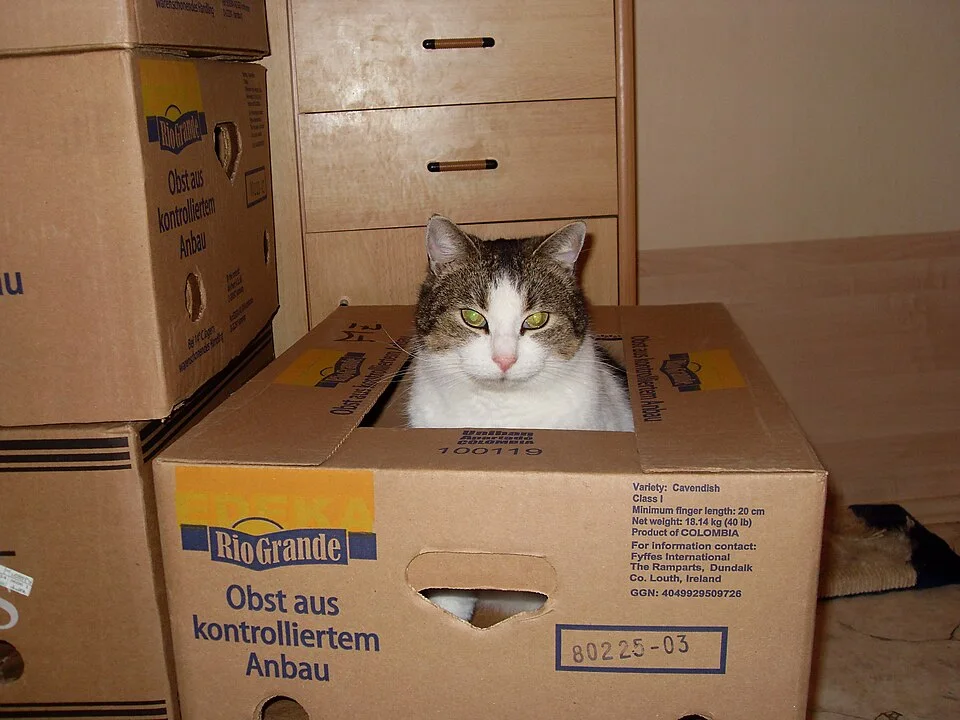
The carton is still unsealed among other boxes, illustrating a packing stage that needs a final check before closure. Give your own last carton a household identifier and destination, check its actual contents against the agreed list, then update the move record when it is sealed. Printed fruit branding does not identify this household’s packed contents.
Photo & usage
a.froese · CC BY-SA 2.0 · Source. Display copies resized and encoded as WebP; no instructional details were fabricated or removed.
Keep the sealing materials together, but store cutting tools where children cannot reach them. Leave the carton open only in its designated location. A final carton should not travel around the house collecting mystery objects, because that defeats the purpose of recording what is still outstanding.
When an item appears after sealing, update the record and tell the crew where it belongs. If the mover cannot accept it under the agreed service, arrange another appropriate destination. Avoid reopening several finished boxes to hide the delay. That creates new uncertainty about counts, labels and the condition record the crew is preparing.
Make the crew handoff explicit
At arrival, show the crew leader the completed cartons, personal area and anything awaiting an agreed packing service. Identify the final carton by its number. FMCSA's moving checklist advises being present to answer questions and accompanying the inventory process. For US interstate moves, its rights booklet also explains the documents involved; local and international arrangements can differ.
Read condition descriptions and box counts before signing. A household cutoff does not replace the carrier's inventory or contract. If the team finds an unprepared object, agree who handles it and whether the written service needs updating. Record the decision while the object and responsible people are still present.
Keep a usable passage to the entrance. Do not stack personal bags in a route merely because they are excluded from the moving load. The last stage should reduce the number of competing activities in the doorway, leaving the crew to handle the agreed load.
Finish with a departure proof
After loading, walk through wardrobes, drawers, cupboards and outdoor storage that formed part of the move. Check the personal bags against their short list, including every key that must stay with you. Open an accessible bag and verify its contents instead of assuming another household member packed it.
Resolve rubbish, recycling and unaccepted items through the routes already arranged. Check the empty property against any separate rental handover requirements. Save the carrier documents somewhere available during travel, and keep copies of relevant messages. FMCSA recommends retaining the bill of lading through delivery, payment and any claim resolution.
The cutoff has worked when all remaining objects have a known destination, the personal load is physically separate, the carrier record matches what was handed over, and the next place to sleep and wash is ready. An empty room alone does not demonstrate those four outcomes.
Handle people leaving at different times
Where household members leave separately, give each person an individual departure check. The first person out may accidentally take the only garage remote, while the last person may need that remote to let the carrier reach the load. Draw the actual key sequence: who opens, who closes, who returns keys and who retains access during the final inspection.
Keep a specific clothes change outside the load for anyone who will finish cleaning after others depart. Include suitable footwear and the supplies that person needs, then agree where the used items will go. A final cleaning task should not create an unplanned wet-textile bag or chemical container that the mover has already declined.
If someone must keep working until departure, ask them to identify the exact equipment and shutdown time. Confirm whether their employer permits equipment to travel in the household shipment. Save work, disconnect peripherals deliberately and label the resulting bundle before it joins the agreed transport route. That resolves a common last-minute conflict between a closed packing plan and a desk that is still operating.
THE REFERENCE FILE
Sources & scope
Documentation reviewed 1 Nov 2026. Examples are illustrative; this article does not claim hands-on product testing. Follow the instructions for your actual material, model and location.