Identify every reading type in the sequence
A large bill after several small ones can look like a sudden rise in water use even when it includes corrections to earlier estimates. Start by finding the last confirmed actual reading before the sequence and the next confirmed actual reading after it. Preserve every intervening bill.
Record the utility's read-type labels and ask what they mean if the legend is unclear. DC Water explains that estimated consumption may be based on previous patterns when an actual read cannot be obtained. Its process is local, so use the supplying utility's rules for your account.
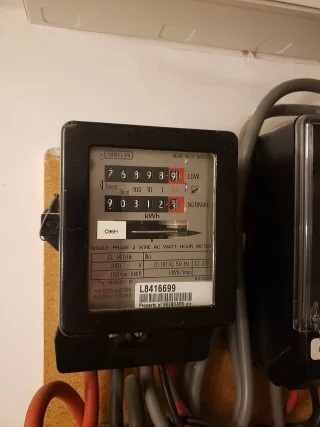
Do not assume an electronic meter always produced an actual bill reading. Transmission, access or billing issues can affect the record. Check the statement and account history rather than inferring read quality from the meter's appearance.
Build a ledger without rewriting the bills
Create columns for service dates, opening and closing values, reading type, billed volume, credits and adjustments. Keep the original amounts and add a separate reconciliation column. An adjustment should remain linked to the period the utility says it corrects.
Verify the meter identity and unit before comparing cumulative readings. A replacement meter may have a different opening value, so obtain both closing and opening records. Do not subtract across a known replacement as though it were one uninterrupted register.
Keep account payment entries separate. A paid estimate remains an estimate, and an unpaid actual bill still contains a measured volume record. The ledger's purpose is to understand consumption and correction, not to make assumptions about the account's legal or payment status.
Reconcile a hypothetical three-period sequence
This illustrative example begins at an actual cumulative reading of 1,000 cubic metres and ends at an actual reading of 1,038. Total measured consumption across the interval is 38 cubic metres. Two intervening estimates each billed 10 cubic metres.
If those 20 cubic metres have already been included in the account, the remaining volume to reconcile is 38 − 20 = 18 cubic metres, subject to the utility's adjustment method. That does not prove 18 cubic metres were used in the final service period.
If the complete actual-to-actual interval is 90 days, its average is 38 ÷ 90, or about 0.422 cubic metre per day. The example cannot allocate exact daily use within the interval. It also does not calculate charges, because tariff changes, blocks and earlier credits may affect the monetary reconciliation.
Keep unknown timing unknown
Compare any available remote history with the billing interval, checking its resolution and completeness. A daily portal record may help, but a gap or rounded value should remain visible. Do not distribute the catch-up volume equally across months and present that as measured history.
Record household events that might explain part of the interval: guests, absences, outdoor watering or a reported leak. Treat them as context unless their volume is measured. A remembered event should not be assigned the entire unexplained difference simply because it occurred near the latest bill.
If the utility has allocated consumption across tariff periods, ask for the method and retain the answer. The household's rough daily average is not authority to recalculate the invoice under a different allocation.
Use the approved customer-reading process
Ask whether the utility accepts customer reads and what identity, date and image information it requires. DC Water publishes a particular submission process, including a complete register image. Do not assume another supplier accepts the same channel or format.

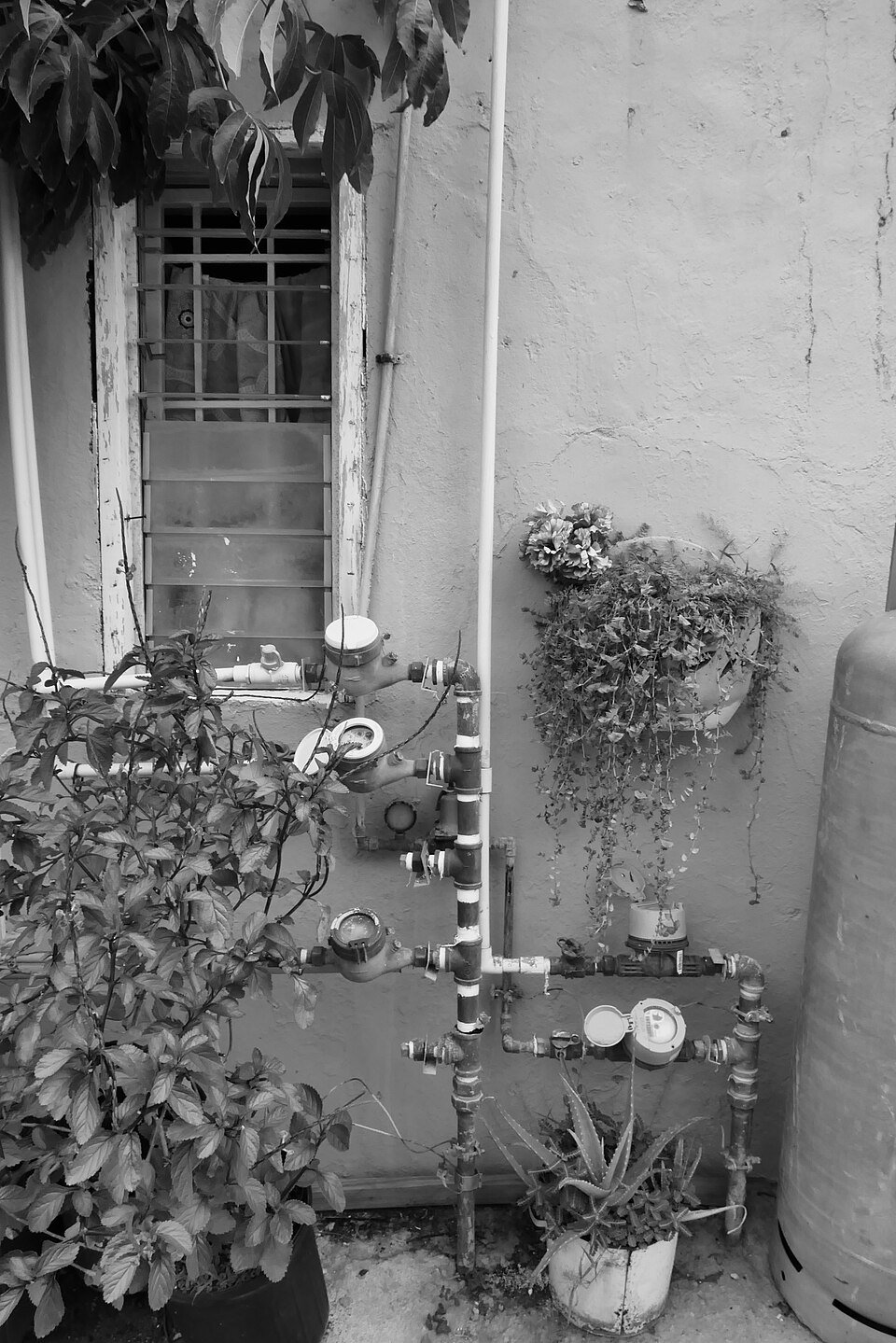
The full meter face includes the main digits, m³ unit, smaller dials and identification markings that can help a utility interpret an observation. Keep the date and supply identity with any submitted image. Follow the actual supplier’s customer-reading process; this example is not evidence of an accepted read or corrected account.
Photo & usage
Bijay Chaurasia · CC BY-SA 4.0 · Source. Display copies resized and encoded as WebP; no instructional details were fabricated or removed.
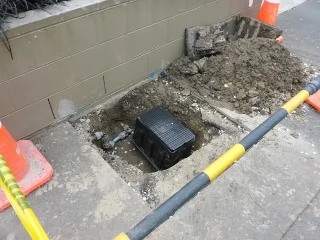
Only obtain a reading from safe, authorised access. Avoid heavy cover handling, confined spaces and tampering with seals or equipment. Use the portal or request assistance where access is unsuitable. A billing query does not justify a physical risk.
Keep the submitted image and confirmation. Mark the read as customer-provided until the utility states how it has been used. Sending a photograph does not automatically mean the account has been corrected or that the supplier has accepted your interpretation of the digits.
Trace credits and rebills separately from volume
Identify whether an earlier charge was reversed, credited or replaced. A later statement may show both a cancellation and a new charge, making the amount due look larger or smaller than the current-period service cost.
Match each correction with its reference and date. If the bill does not show the relationship clearly, request a transaction history or explanation. Do not subtract an estimated volume twice because its monetary charge appears as both a credit and an adjustment line.
Miami-Dade's sample bill distinguishes account summary, readings and charge components, illustrating why these are separate records. Use the actual supplier's statement definitions. Reconciliation should recover both the volume sequence and the account movements without forcing one to stand in for the other.
Ask a narrow question with the full interval attached
Send the last actual start, next actual end, intervening estimated volumes and your arithmetic through the approved query process. Ask which billed periods and corrections account for the difference. Keep private account details within the utility's secure channel.
If your concern is rate allocation, ask that separately from register interpretation. A correct total consumption can still require clarification about charges, while a unit error can make every price calculation meaningless. Resolve the earliest uncertainty first.
Follow the supplier's stated dispute, payment and assistance processes. This record method does not establish a universal right to withhold payment or a common response deadline. Save the actual instructions and dates supplied for your case.
Close only the questions that the evidence resolves
When the utility responds, update the ledger with its explanation and any revised bill. Preserve the original statements and mark superseded figures clearly. Check that the revised actual-to-actual volume still reconciles.
State the remaining limitation. A corrected total may resolve the account while leaving the timing of use unknown. Do not use that uncertain timing as a before-and-after measure of a new fixture or routine.
The ledger is complete when readings, estimates and corrections can be followed across the entire interval and unresolved questions have specific next actions. A catch-up figure then becomes an explainable record rather than an assumed sudden change in household demand.
Check a rebill for duplicated volume
List the net volume charged across the entire actual-to-actual interval, including explicit reversals. In an illustrative ledger, two estimates of 10 units each are reversed by a credit of 20 units, followed by a complete actual charge of 38 units. Net billed volume is 10 + 10 − 20 + 38 = 38 units.
If the utility instead leaves the first 20 units in place and charges only the remaining 18, the net is also 38. These are two different presentations of the same illustrative volume reconciliation. Do not combine the full 38-unit rebill with the earlier estimates unless the relevant reversals are also included.
A monetary credit may not display volume, so request clarification rather than inventing an equivalent unit count. Rate changes, fees and taxes can prevent a simple money-to-volume reversal. Keep the consumption ledger and account transaction ledger linked but distinct.
After a corrected statement arrives, compare the net with the actual reading difference again. Preserve the utility's explanation of any remaining discrepancy, including rounding or a documented meter change. The goal is a traceable sequence, not a spreadsheet that balances only because an unexplained adjustment was inserted.
THE REFERENCE FILE
Sources & scope
Documentation reviewed 1 Nov 2026. Examples are illustrative; this article does not claim hands-on product testing. Follow the instructions for your actual material, model and location.