A large electricity bill after several estimates can look like a sudden jump in household use. It may instead contain a correction for energy used across earlier periods. Read the sequence from one reliable actual endpoint to the next before deciding what happened during the latest month.
Keep the original statements and any corrected versions. This procedure helps organize the arithmetic and a concrete question for the supplier. It does not promise a particular credit, determine dispute rights or assume every utility presents estimated and corrected consumption in the same way.
Identify the reliable endpoints
Find the last confirmed actual reading before the estimated sequence and the first confirmed actual reading afterward. Record dates, meter identity, register and units. If a meter changed during the interval, obtain the utility's explanation of how the old and new readings connect before using a simple subtraction.

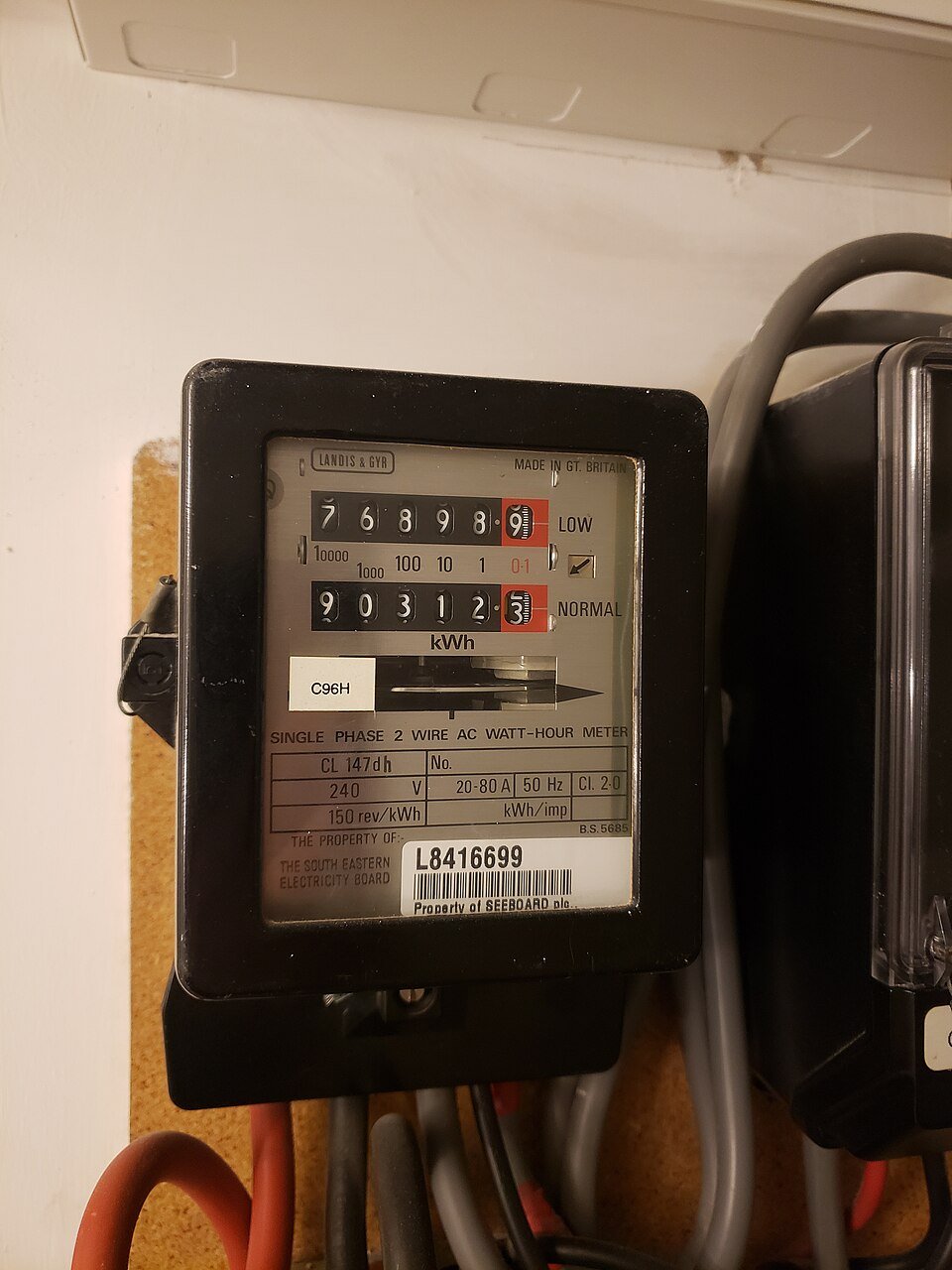
The register, kWh marking and meter identification can be recorded together when establishing reliable endpoints. Pair each reading with its actual observation date and supplier status. A single meter view cannot distribute consumption across the intervening estimated periods or establish how a replacement meter was reconciled.
Photo & usage
RobbieIanMorrison · CC BY 4.0 · Source. Display copies resized and encoded as WebP; no instructional details were fabricated or removed.
Mark every intervening reading as actual, estimated or otherwise described on the statement. Preserve the supplier's wording. A portal display labeled daily usage may also contain estimated data; do not assume a detailed chart is automatically a direct measurement for each day.
PSE&G — Meter Reading explains that its estimated bills are adjusted when actual readings become available. Use that as an example of why a later bill can reflect earlier uncertainty. Your own supplier's documents control the timing and format. If status is unclear, ask for the reading history rather than deciding from the size of the bill alone.
- Locate the actual reading before the estimated sequence and the next comparable actual reading.
- List final billed allocations once, distinguishing replacement statements from added corrections.
- Reconcile the complete interval before deciding whether the latest statement indicates higher household use.
Separate energy allocation from money adjustments
List the kWh assigned to each period and any later consumption correction. Then create a separate list of monetary debits and credits. A dollar credit is not itself a kWh quantity, and dividing it by the latest rate may be wrong when several rates applied.
Check whether a corrected statement replaces the original or adds an adjustment. Do not count both the original consumption and a complete replacement as new use. Mark document versions and the scope of each line so the ledger shows the supplier's final allocation once, not twice.
PG&E — Electric Rule 9: Rendering and Payment of Bills is one utility-specific source describing estimated billing and corrections. It is useful context for reading a sequence, not a universal rule about another supplier's tariff. Where rates changed, ask how consumption was allocated across the relevant dates instead of assuming the correction belongs entirely at today's price.
Build the actual-to-actual energy total
Subtract the earlier cumulative actual reading from the later comparable reading. Check the unit and any documented multiplier. The result represents the reliable interval's total under those conditions, even when the intervening monthly distribution remains uncertain.
Add the kWh already billed for the same interval according to the final statement versions. Compare that sum with the actual-to-actual difference. A gap can indicate a catch-up quantity, an unaccounted adjustment or a mismatch in boundaries; it does not automatically prove an error.
Portland General Electric — Understanding My Bill describes its own use of historical estimates and later corrections. Keep that process distinct from household behavior. An estimate may distribute total use imperfectly across months while the later actual interval still provides a meaningful total. The record should say which level is reliable: interval total, individual period allocation or neither yet.
Work through an illustrative catch-up sequence
All figures here are illustrative. The starting actual register is 8,000 kWh. Two estimated bills each assign 200 kWh, totaling 400 kWh. The next actual register is 8,750 kWh, so the full actual-to-actual interval contains 750 kWh.
The difference between 750 kWh and the 400 kWh already assigned is 350 kWh. If the supplier bills that remaining quantity on the latest statement under this simplified arrangement, it does not establish that all 350 kWh were used in the latest month. Some may reconcile earlier underestimates.
If the reliable interval lasted 75 days, its average was 750 ÷ 75 = 10 kWh per day. That interval average is supportable under the assumptions; exact daily use is not. Do not distribute the correction equally by day and present the result as measured history. An allocation estimate can be useful, but it must remain labeled as such.
Check the dates before interpreting a rate change
Compare the correction interval with any tariff changes. A final monetary adjustment can depend on rates, tiers, taxes or credits that varied during the sequence. Keep the original effective dates and the utility's allocation explanation with the ledger.
Do not multiply the whole catch-up quantity by a guessed average rate and call the difference an overcharge. A simple illustrative calculation can help frame a question, but the actual tariff may require period-specific treatment. Ask the supplier for the basis of a line that cannot be reconciled from the statement.
Keep prior balances, payments and late charges separate from energy charges. A larger amount due can include unpaid money as well as corrected consumption. The energy reconciliation should not absorb those account movements. A clean separation makes the eventual supplier question shorter and easier to answer.
Decide whether further household investigation is justified
If the actual-to-actual daily average resembles comparable reliable periods, the large latest bill may primarily reflect allocation and correction. Review pricing separately before changing appliances. If the reliable interval average is genuinely higher, examine occupancy, weather and equipment use with that broader timing in mind.
Do not diagnose a particular appliance from the catch-up bill. The data does not identify which day or device used the energy. Select a specific follow-up measurement only after clarifying what the bill can establish. Keep safe equipment operation and normal household needs intact during any observation.
Contact the supplier when meter identity, endpoint readings or final billed totals do not reconcile. Prepare the exact figures and documents, and ask a focused question. Avoid presenting an unresolved difference as proof of misconduct. The aim is a corrected or clearly explained record, not a predetermined outcome.
Distinguish a replacement statement from an added adjustment
A corrected document may restate the entire service period instead of adding only the difference. Read its wording and account history carefully. Keep the original for traceability, but count the final consumption allocation only once when summing the interval.
In an illustrative case, an original 220 kWh allocation is replaced by 250 kWh. The final period quantity is 250 kWh, and the change is 30 kWh. Adding 220 and 250 would incorrectly record 470 kWh. A separate adjustment presentation might instead retain 220 and add 30; the same final quantity emerges through a different document structure.
Check how payments and credits appear alongside the replacement. An earlier payment may remain applied even though the energy lines have been rewritten. Do not interpret the full corrected charge as an entirely new unpaid amount without reading the account balance. When the document structure remains unclear, ask the supplier which statement supersedes which and retain that explanation in the file.
Complete the file when the final allocation is traceable
Save the original and corrected statements with clear version names. Record the two actual endpoints, interval days, total kWh, already assigned kWh and the remaining adjustment. Note any unresolved allocation or pricing question in plain language.
After the next actual bill, check that the new opening endpoint matches the completed sequence and that the earlier correction is not counted again. If another estimate occurs, mark it provisionally rather than treating the ledger as permanently settled.
Completion means the interval total and the supplier's final billing treatment can be followed without double counting. Where a question remains, retain it explicitly for the supplier. The successful record prevents an estimated-period correction from being mistaken for precise evidence of a new one-month consumption spike.
THE REFERENCE FILE
Sources & scope
Documentation reviewed 1 Nov 2026. Examples are illustrative; this article does not claim hands-on product testing. Follow the instructions for your actual material, model and location.