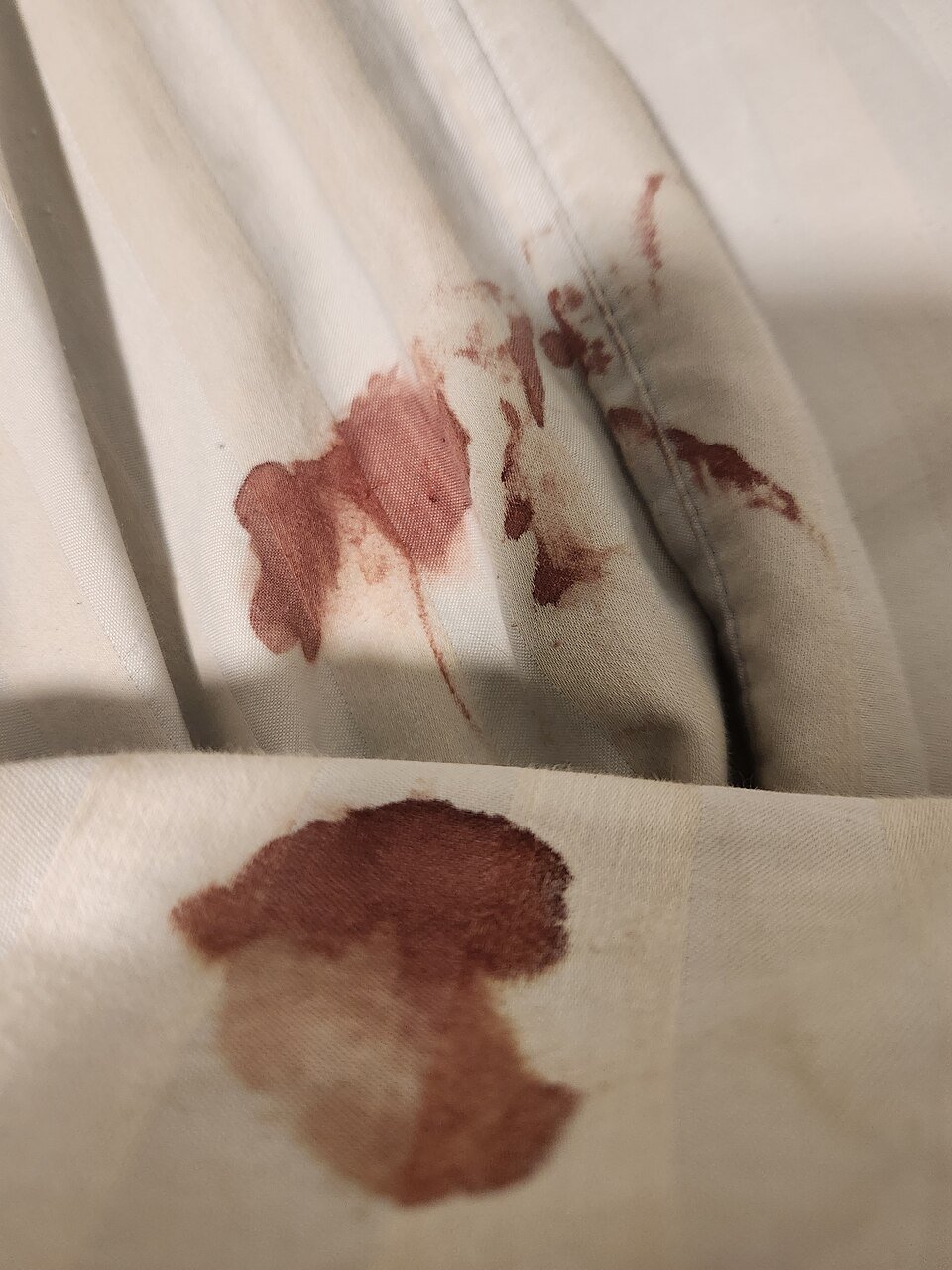
A small blood mark on a washable sheet needs prompt, controlled attention rather than a hot wash chosen by instinct. This workflow concerns an ordinary small personal stain whose source is known. Large blood spills, unknown contamination and specialist infection-control situations need appropriate guidance beyond stain removal. Start by checking the textile, then keep the cleaning sequence simple enough to evaluate.
Define the item and the limits of the job
Identify the affected piece: a sheet, pillowcase, protector or filled bedding item. Do not treat the entire bed as though every layer shares the same instructions. A washable sheet may sit above a protector with a membrane and a mattress that must remain dry. Separate these layers carefully before applying water.
Read the full care label, especially any restrictions on washing, bleach and drying. GINETEX's symbol guide can clarify a symbol that is present, but cannot supply a missing manufacturer's instruction. Fragile embroidery, coloured trim or a professional-care label changes the route. Put unresolved items aside rather than testing a visible stain as your first experiment.
Wear suitable gloves when handling soiled fabric, protect the work surface, and wash hands after removing the gloves. Avoid splashing or shaking the item. These handling steps do not turn the household process into a validated disinfection procedure; the purpose here remains safe handling and cosmetic stain treatment.
Prevent transfer to other layers
Place the affected area over a suitable washable basin or clean support. Fold the rest of the sheet so the mark does not touch clean pillowcases or clothing. Keep supplies within reach before wetting the fabric, including clean cloths and the selected laundry product's directions.
If the mark is fresh, blot gently with an absorbent cloth rather than rubbing. Remove any support that has become soiled. Do not leave the sheet against the mattress while rinsing the spot: liquid can carry the problem into a layer that is harder to clean or impossible to wash.
Inspect the mattress protector and the bedding below the mark. If those layers are affected, create separate care decisions. A stain that passed through several layers cannot be declared finished because the top sheet looks better. If the underlying mattress is wet, follow its manufacturer's spill guidance and avoid saturating it with a sheet-cleaning method.
Begin with a compatible cool-water step
For bedding that permits washing, use cool water in the stain area, following the textile's instructions. The ACI stain toolkit specifies cold-water treatment for blood and warns against hot water at this early stage. Keep this stain-removal choice distinct from any separate need for a medically directed laundry process.
Control the flow so the stained area remains separate from the rest of the sheet. Avoid vigorous wringing, hard brushing or pressure that stretches a fine weave. Observe whether the colour is moving into the rinse or cloth and whether the fabric itself remains unchanged.
Do not interpret partial fading as completion. A faint edge can remain after the obvious red colour has gone. If the textile begins losing colour or a trim responds differently, stop the wet treatment. More water or a longer soak does not correct an incompatible fabric response. Preserve the item and review the instructions before proceeding.
Choose pretreatment without borrowing a recipe
Use a laundry stain remover or detergent labelled for the textile and the intended stain treatment. Check whether it is suitable for the fibre: an enzyme-containing product that suits an ordinary washable sheet may be unsuitable for wool or silk. The product label and bedding instructions must agree.
Test a hidden area where the product directions require it. Apply the permitted amount and respect any contact-time limit. Keep treatment local and avoid combining bleach, peroxide, ammonia or household acids. This article does not prescribe a homemade chemical mixture or suggest that more products provide a better result.
If the item is old, delicate or already treated, ask a cleaner before escalating. Tell them the known stain source and the exact products already used. A treatment history is useful evidence. A succession of unrecorded remedies makes it harder to assess both the remaining mark and the fabric's condition.
Launder and inspect before heat
Wash using the fabric-permitted route and the washer's guidance for the item. Measure detergent rather than assuming a large sheet needs an extra cap. Keep heavily soiled items separate from ordinary lightly soiled laundry as appropriate. Do not pack the drum so tightly that a large sheet cannot move according to the programme instructions.

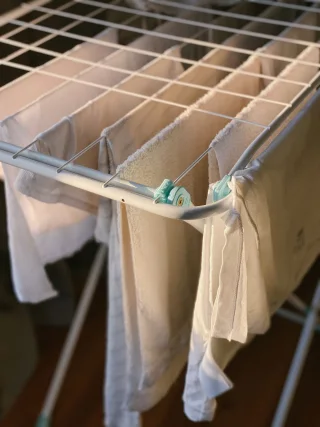
The suspended sheets illustrate an air-drying route that keeps bedding available for inspection before dryer heat. Follow your bedding’s own drying limits and check the original marked area, both sides and folded edges after washing. This historical laundry setting does not demonstrate blood removal, a safe drying time or disinfection.
Photo & usage
Steven Lek · CC BY-SA 4.0 · Source. Display copies resized and encoded as WebP; no instructional details were fabricated or removed.
At unloading, locate the original area and check both sides. Look at seams and folded edges as well as the centre. A damp sheet can hide a pale stain, so choose a permitted air-drying method when the result is uncertain. Hold the item out of the dryer until the stain decision is clear.
CDC distinguishes routine cleaning from disinfection. Do not call an ordinary stain-free wash disinfected solely because the water was warm or the fabric smells fresh. If a household illness creates a separate laundry requirement, follow the relevant guidance and material limits. A cosmetic inspection cannot establish microbial safety.
Compare three possible dry results
The following comparison is illustrative and invented, with no hands-on testing implied. Each item has received a label-compatible treatment. The differences concern what is visible after permitted air drying, which is a more useful point for assessing a faint residual stain than a quick glance at wet fabric.
| Dry appearance | Other observation | Decision |
|---|---|---|
| No visible mark | Texture matches adjacent sheet | Return to ordinary care |
| Faint brown outline | No colour loss or roughness | Review a permitted repeat |
| Pale patch | Fabric feels rougher | Stop; assess possible damage |
The brown outline does not prove that a stronger treatment is safe. It only identifies the unresolved cosmetic problem. The pale patch may indicate loss of colour or surface change; treating it as more blood to remove could make matters worse. Keep the stain record and dry observation together when deciding whether professional care is justified for the particular item.
Keep a colour observation distinct from disinfection
A sheet can lose its visible stain without the household having carried out a specified disinfection process. Conversely, a cosmetic shadow can remain after an appropriate care route. Keep these judgments separate in the note.
If special infection-control advice applies to the situation, follow that advice with attention to textile compatibility and seek clarification where the instructions conflict. Do not substitute an extra stain-remover application for the required process. For ordinary cosmetic closeout, describe the dry mark and fabric condition precisely instead of using the broad word sanitised. That wording prevents another person from inferring a safety claim that the household inspection cannot establish.
Finish the bedding and the handling area
Confirm that the sheet is fully dry, including seams and folded hems, before storage. Check its shape and the condition of any elastic or trim. If the result is acceptable, return it to the linen rotation. If unresolved, label the hold so another person does not iron the area or repeatedly treat it without the history.
Clean the basin and work surface with a suitable product and follow any required disinfection instructions for the situation. Keep fabric treatment products away from children and store them in original containers. Dispose of soiled single-use materials appropriately and clean reusable tools by their own care route.
Review the underlying layers one final time. A clean sheet cannot conceal an unresolved wet protector or mattress. The job closes when each affected layer has a clear status, the handling area is ready for normal use and the remaining decision is documented in plain terms.
THE REFERENCE FILE
Sources & scope
Documentation reviewed 1 Nov 2026. Examples are illustrative; this article does not claim hands-on product testing. Follow the instructions for your actual material, model and location.