A linen sofa cover can be removable without being washable. Zippers may exist to fit the upholstery during manufacture, and a linen blend can contain backing, piping or lining with different care needs. Before a stained cover reaches the washing machine, establish whether its maker permits laundering and how the entire cover must be dried and refitted.
This guide concerns covers explicitly labelled washable. Where the label specifies professional cleaning or prohibits removal, follow that route instead. It focuses on preserving fit and color rather than providing a generic laundry routine. A cover that is clean but no longer fits its cushion has not met the practical aim of the job.
Recover the cover-specific instructions
Photograph every label before unzipping anything. Find the fabric name, fiber blend, cleaning symbols and the furniture model. Check whether the base cover, seat covers and scatter cushions have separate directions. A room can contain several visually similar linens with different backing and treatment.
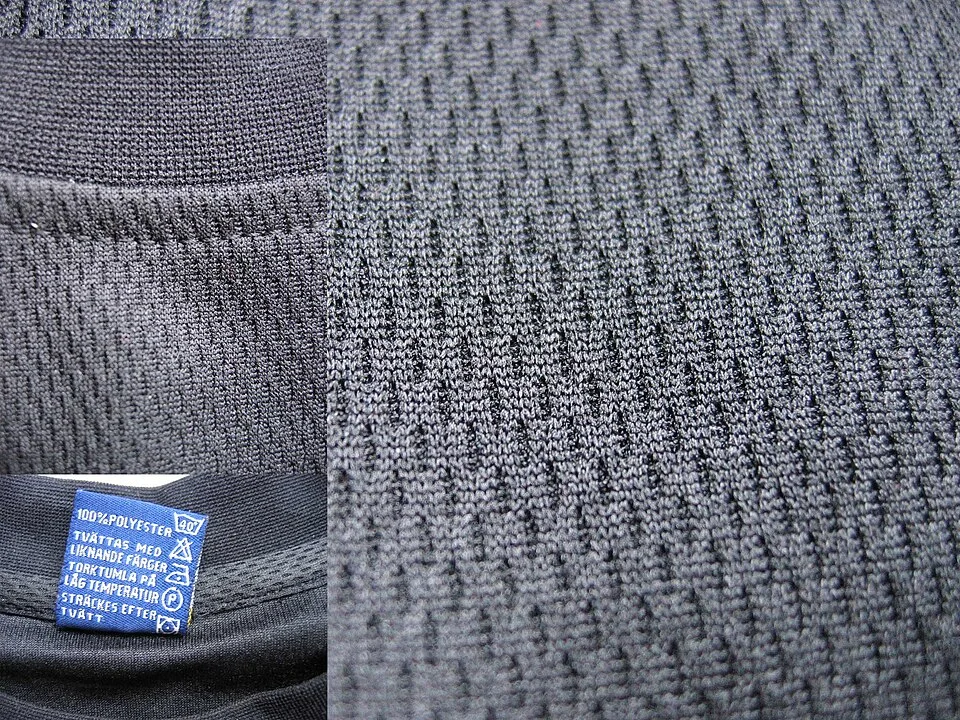
The blue garment label sits within the textile construction and carries its own composition and care information. Use that as a label-reading reference while locating every instruction on your actual furniture covers, including separate cushion labels. This polyester-shirt example does not establish linen content, slipcover removability or permission to machine wash a sofa cover.
Photo & usage
Antimoni · CC BY-SA 3.0 · Source. Display copies resized and encoded as WebP; no instructional details were fabricated or removed.
LinenMe's care guide addresses its linen homewares, while Pottery Barn's fabric guide gives different directions for specific upholstery and slipcover products. Ethan Allen warns that zippers alone do not authorize separate cushion-cover cleaning. Use those distinctions to avoid transferring a linen bedding instruction to a structured sofa cover. If the furniture's directions are unclear, ask the maker whether removal and machine washing are permitted for that exact cover before proceeding.
Record fit before removing the cover
Photograph seams, piping and zipper positions with the cover fitted normally. Note which cushion belongs in each position, especially if shapes are similar but not identical. Write left and right from a stated viewpoint on a paper sketch rather than attaching adhesive labels to the fabric. Include the direction of any visible weave or pattern.
Measure a few repeatable seam-to-seam dimensions without stretching the cover. Measurements help document the starting condition, not establish a universal shrinkage allowance. Note existing tight corners, sagging areas and damaged stitching so they are not later attributed automatically to washing. If a zipper already requires force, stop and assess the fit problem before removing the cover; aggressive pulling can tear tape or seams.
Inspect stains and seams before laundering
Vacuum loose dry debris using the furniture-approved tool, including piping and folds where crumbs gather. Check seams for loose threads and zippers for trapped fabric. Do not trim structural stitching or pull a loose yarn to make the edge neat. A weak seam may need repair before any permitted wash cycle.
Record the stain source where known. Use only a pretreatment compatible with the cover label and its color, and test as directed. A washable label does not authorize chlorine bleach, concentrated stain paste or long soaking. Natural slubs and small variations in linen texture are not necessarily dirt. Avoid scrubbing a pale smooth patch into the weave while trying to remove a feature that belongs to the textile.
Plan loads by the actual cover and machine
Follow the cover's washing temperature, cycle and detergent requirements. Check the machine's instructions for bulky items and do not force a large cover into a drum merely because its dry weight seems acceptable. It needs room for the approved wash and rinse action. If the base cover cannot be accommodated appropriately, ask the maker or a suitable cleaner about the correct alternative.
Where the instructions require cleaning a set together for consistent appearance, plan that as one coordinated job even if separate machine loads are necessary. Keep colors separated as directed. Close zippers and fasteners only as the cover instructions specify, checking that they cannot snag adjacent fabric. Do not add softener, bleach or fragrance treatments that the maker has not permitted simply to make a stored sofa smell fresh.
Treat drying and refitting as one sequence
Read the drying and refitting instructions before starting the wash. Some specified slipcovers are refitted slightly damp, while others must dry fully before returning to the furniture. These are product-specific directions, not contradictory universal rules. LinenMe's general dry-storage advice does not override a furniture maker's explicit refitting sequence for a particular construction.
Prepare the allowed drying space in advance. Support the cover as directed so its wet weight does not distort corners or stretch a narrow hanging point. Avoid improvised high heat to hurry the job. If a tumble dryer is allowed, use the stated setting and check the instructions for removal timing. Keep the sofa out of use until the cover and any affected components meet the maker's completion conditions.
Work through an illustrative fit comparison
Suppose an illustrative seam-to-seam width measures 70 centimeters before cleaning and 68.6 centimeters afterward under the same relaxed measuring conditions. The difference is 1.4 centimeters. Dividing 1.4 by 70 and multiplying by 100 gives a two-percent reduction. These invented measurements demonstrate a comparison, not an expected shrinkage rate for linen slipcovers.
A two-percent change can matter around a fitted cushion, but the measurements alone do not establish why it occurred. Fabric relaxation, different tension and measurement error can contribute. Compare several dimensions and the actual seam alignment rather than pulling harder on one zipper. Do not use the percentage to justify stretching the cover forcibly over a corner or applying steam that the label does not permit.
Read the cleaned cover before fitting it fully
| Observation | Question | Response |
|---|---|---|
| Seams align and zipper closes without strain | Does fit match the original record? | Complete the directed drying sequence |
| One corner is tight while matching covers fit | Is the correct cushion in this cover? | Check the position sketch first |
| Several dimensions are reduced | Has fit changed during cleaning? | Stop forcing and ask the maker |
| Stain remains but fabric is otherwise sound | Is another treatment compatible? | Seek cause-specific advice before repeating |
The observations are invented. Their purpose is to make fitting a controlled check rather than a contest with the zipper. A clean cover can still need a repair or a maker's assessment if the original fit cannot be recovered under the permitted procedure.
Avoid improvising around a stubborn stain
Do not increase the wash temperature or repeat long cycles automatically because a mark remains. A stain can be more persistent than the fabric's tolerance for extra treatment. Ask the supplier about the identified substance and the exact fabric blend. A linen-look performance fabric may not contain linen at all, and its stain process can differ from a conventional woven linen cover.
Also avoid washing only one heavily used seat repeatedly while ignoring the maker's set-care recommendation. Differences in wear, color and texture can become conspicuous beside untouched panels. A professional cleaning assessment may be more appropriate for widespread soil than repeated separate washes. Disclose previous pretreatments so the cleaner does not mistake their residue for the original spill.
Finish with a fit and dryness check
Compare seam alignment, piping, texture and zipper tension with the starting photographs. Follow the required refitting and drying sequence to completion before normal use. Check hidden folds and the interface with filling for retained dampness where relevant, without claiming that a dry-looking face proves all internal material is dry.
Record the cover identity, actual machine settings and outcome for next time. Store spare covers only when completely dry under their instructions, away from conditions that could transfer dye or create persistent creases. The successful result is specific: the approved cleaning removed manageable soil, the cover still fits without strain and the textile retains its intended character. Fiber content alone never had to carry the whole cleaning decision.
THE REFERENCE FILE
Sources & scope
Documentation reviewed 1 Nov 2026. Examples are illustrative; this article does not claim hands-on product testing. Follow the instructions for your actual material, model and location.