Dry clothes do not mean the room lost water
An indoor rack can produce dry shirts and a wetter room at the same time. Water has left the fabric, but it may still be in the air or collecting on cool surfaces. A simple load-mass record makes that distinction concrete. Use it to compare your normal drying arrangement, not to determine whether a room is safe or to produce a universal litres-per-load claim.
Choose an ordinary washable load and follow its fabric-care labels. Use a household scale suitable for the mass, plus a dry basket that fits it stably. Keep the scale away from water and avoid lifting a heavy basket awkwardly. If weighing is impractical, a consistent fabric and surface observation record is still useful.
Health Canada: Guide to addressing moisture and mould indoors identifies laundry activity and inadequate moisture removal among household moisture concerns. The practical question is whether the drying arrangement manages both the fabric and the room, especially when outdoor drying is unavailable.
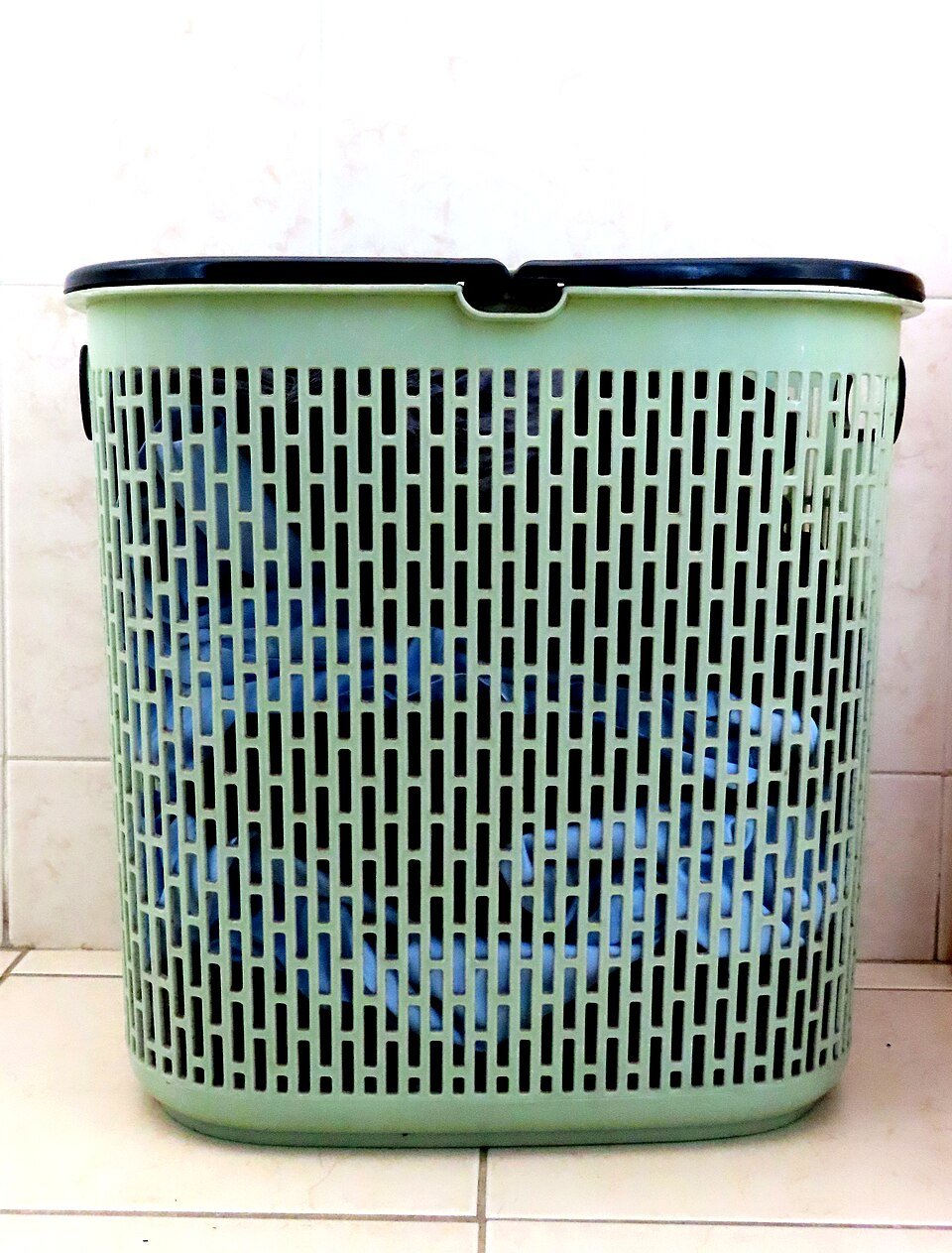
Use the same basket and describe the load
Record the empty basket's mass or use the scale's tare function according to its instructions. Weigh the load after its normal spin cycle, without adding a second load or wet towels later. List the main fabric types. A load of thick cotton towels is not interchangeable with lightweight synthetics even when their starting masses match.
Weigh again at a useful intermediate stage and when the items meet their ordinary care requirement for dryness. Return each item to the same arrangement after weighing. Small measurement errors can come from an unstable floor, touching the basket, water left in the basket or a scale that rounds coarsely. Record the scale's resolution and do not report more detail than it shows.
Do not deliberately leave a load wet to complete a graph. If drying stalls or the room becomes wet, improve the arrangement promptly. The notebook serves the household routine rather than making the household preserve poor conditions for the notebook.
Change spacing without blocking the home
Spread items so overlapping layers and bunched seams do not conceal damp fabric. Follow care labels for flat drying or other special arrangements. Keep the rack clear of heaters, cooking equipment, walkways and intended air openings. A good location has room to use the rack without draping clothing over a vent or appliance.
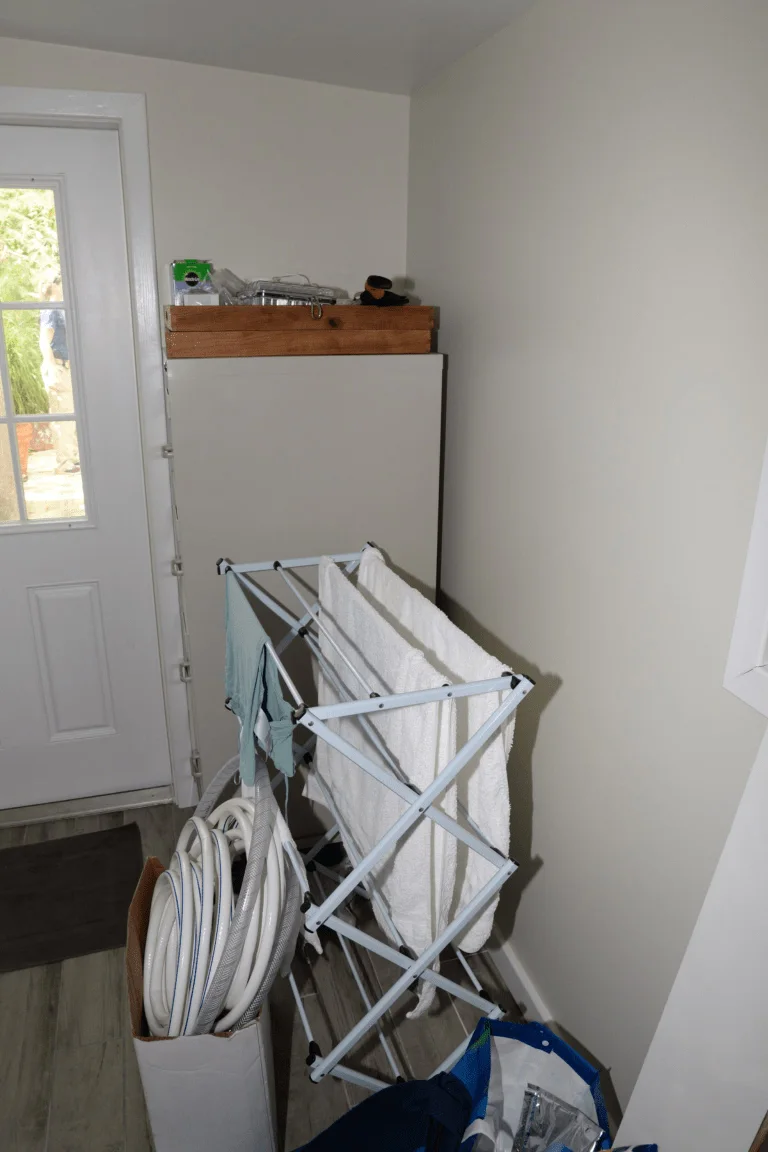
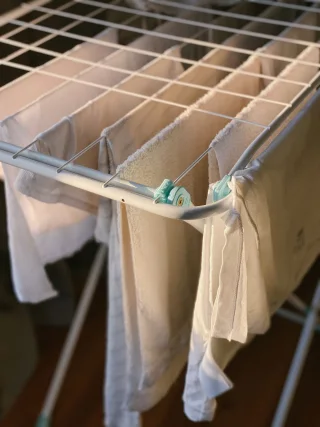
The towels and nearby stored items show why the rack’s surroundings belong in the drying comparison. Check that your actual arrangement keeps intended air openings, door movement and walking routes clear, then compare one change in fabric separation or location. This crowded storage view is an observation reference, not a recommended clearance or evidence of a drying rate.
Photo & usage
Federal Bureau of Investigation · Public domain · Source. Display copies resized and encoded as WebP; no instructional details were fabricated or removed.
For a comparison, change one feature you can describe: fewer items per rack, better separation between thick pieces, or a different appropriate drying location. Keep the usual spin program and broadly similar load composition where practical. Do not claim a precise spacing rule that applies to every rack and fabric.
Use existing moisture extraction as intended. A circulating fan may improve movement around cloth but does not itself remove water from the home. A tumble dryer must use its own designed venting or collection arrangement. Never redirect a vented dryer's moist exhaust indoors to warm the room or accelerate another load.
Calculate what left the fabric
This worked example uses illustrative invented measurements. Basket mass has already been removed, and no items are added or lost between weighings. The dry-end mass is an observed comparison value in the scenario, not a laboratory determination of completely water-free fabric.
| Stage | Load mass | Change from previous stage |
|---|---|---|
| After spin | 4.8 kg | Starting point |
| Intermediate check | 3.9 kg | 0.9 kg lower |
| Ordinary dry endpoint | 3.2 kg | 0.7 kg lower |
Total loss is 4.8 minus 3.2, or 1.6 kg. Assuming the change is water loss, this is approximately 1.6 litres of liquid-water equivalent. It is not 1.6 litres proven to have left the building. It may have been exhausted, collected, retained in indoor air or transferred to materials. A household mass record cannot divide those destinations.
Record room effects at the same time
At the start and during ordinary checks, note room temperature and RH from the same suitable meter position. Look at the nearest accessible cool window or wall and record any new water. Keep the sensor away from direct wet fabric and appliance discharge so it represents the chosen room position rather than a local plume.
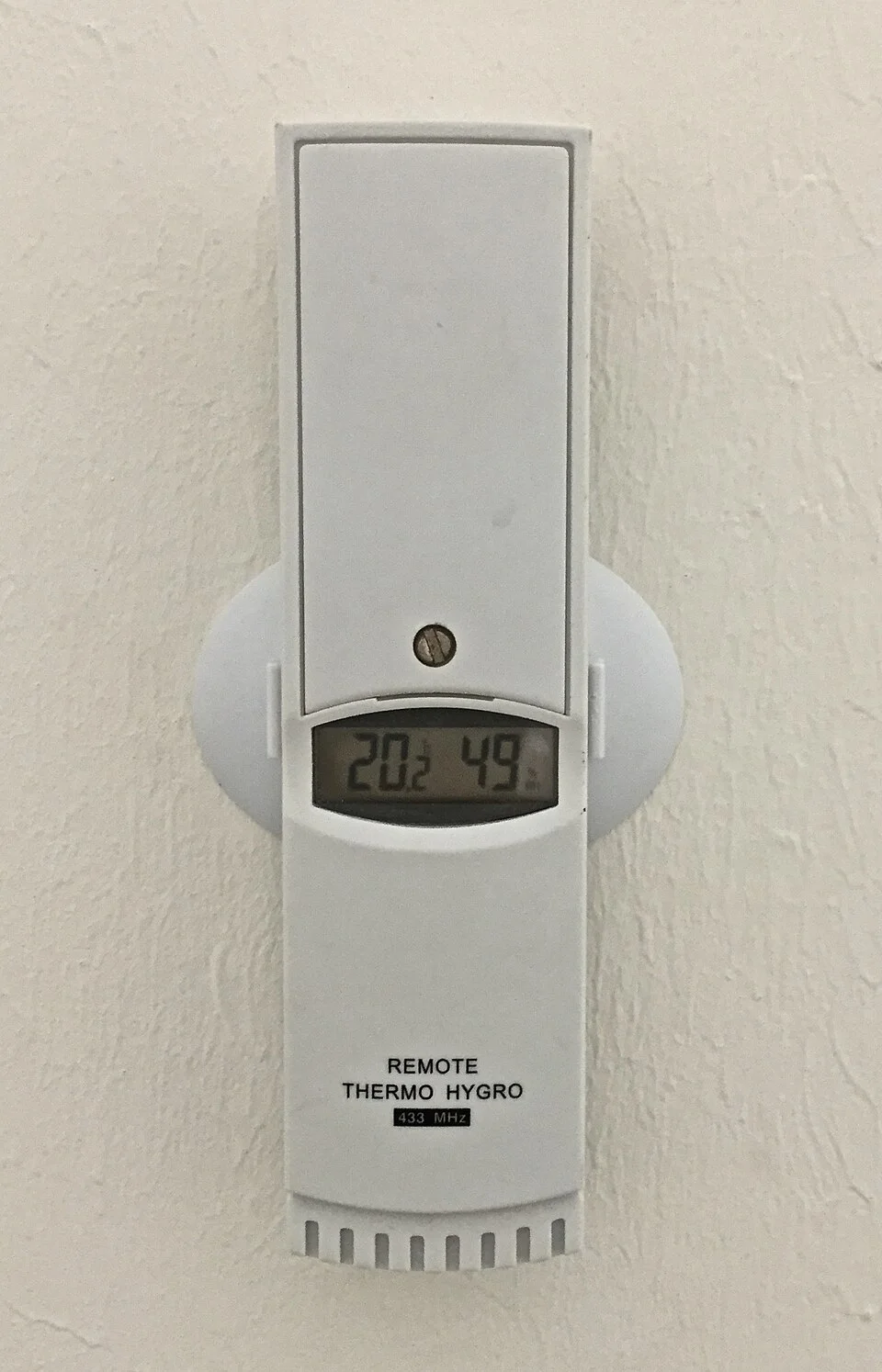
The display combines temperature and relative humidity, while the lower slots show why nearby fabric should not cover sensor openings. During drying, record both quantities at the same suitable position and note window water separately. Follow the particular model’s mounting and settling instructions; this single reading cannot show drying progress, water removal or the room’s moisture source.
Photo & usage
FaceMePLS from The Hague, The Netherlands · CC BY 2.0 · Source. Display copies resized and encoded as WebP; no instructional details were fabricated or removed.
If a dehumidifier is used, record its normal setting, operating interval and whether its bucket was emptied. ENERGY STAR: Dehumidifiers distinguishes water-removal capacity from bucket capacity and provides operating considerations. A full bucket can stop collection, depending on the model; an unattended log should not silently count that stopped period as active drying.
Avoid comparing one cold, rainy day with one warm, dry day as if rack spacing were the only difference. Keep the weather and ventilation notes. A mass loss is direct evidence about the load; the accompanying room record helps determine whether the household moved the moisture problem somewhere else.
Recognize when the drying method needs changing
Thick seams or folded areas still damp at the next ordinary check suggest uneven drying. Reposition items according to their care needs, reduce crowding and consider an appropriate alternative drying arrangement. Do not put partially dried textiles into a closed cupboard simply because the exposed surface feels dry.
If windows start running with water or the room remains persistently damp, reduce the indoor moisture load and investigate extraction or dehumidification. EPA: A Brief Guide to Mold, Moisture and Your Home emphasizes prompt moisture control. Do not wait for a particular RH number before addressing visible condensation. The reading is not a measurement of moisture at every surface.
Repeated odour, damaged storage or a room that cannot accommodate normal laundry warrants a more durable plan. That may involve splitting loads, changing the drying location or obtaining advice on the existing ventilation. Avoid promising an energy saving from one faster load; neither this mass record nor a drying-time comparison measures whole-home energy use.
Close with dry fabric and a manageable room
Check the thickest seams and hidden overlaps before storage, using the fabric's normal care requirements. Confirm that the rack location has not left a damp wall, wet sill or obstructed vent. Clean and dry any collection container according to its instructions, and return the room to normal use without hiding wet equipment in storage.
Write a brief outcome: the load reached its ordinary dry endpoint under the revised spacing, while the room did or did not develop recurring condensation. Keep the load description with the mass figures. A comparison between different textiles should remain qualified even if its numbers look tidy.
The task is complete when the routine handles both sides of the water path. The clothes are appropriately dry, the room does not carry persistent wetness into the next load, and the household knows when to use another method. That is more useful than celebrating the largest mass loss or the shortest stopwatch time alone.
THE REFERENCE FILE
Sources & scope
Documentation reviewed 1 Nov 2026. Examples are illustrative; this article does not claim hands-on product testing. Follow the instructions for your actual material, model and location.