Matte engineered quartz often shows hand marks differently from a polished counter. A fingerprint may look like a dark stain in one direction and disappear when viewed from another. A streak of cleaner can be equally conspicuous. The useful task is to remove the residue while retaining the specified matte surface, rather than trying to buff the top until it reflects like polished stone.
Engineered quartz is distinct from natural quartzite, and one manufacturer's approved stain remover may not suit another's product. Identify the brand, range and finish before choosing anything beyond routine care. This guide builds a controlled cleaning comparison and a clear stopping point for persistent marks or changed sheen.
Find the exact finish instructions
Look at the installation invoice, underside label if safely visible or leftover sample. Write down whether the supplier calls the finish honed, matte, concrete, rough or something else. These names can describe different textures and care requirements. A countertop selected from a sample years ago may also have received a later treatment that needs its own documentation.
Daltile notes that some quartz colors and finishes show grease or fingerprints more readily. Caesarstone distinguishes care needs among its finishes, and Cambria publishes separate product-care requirements. The agreement is that finish matters; their detailed product permissions are not interchangeable. Use the actual maker's current instructions for the installed product, and ask the fabricator when the documentation does not resolve a particular cleaner.
Separate fingerprint, film and physical mark
View the dry top under diffuse daylight and side light. Record whether the patch follows fingers, a bottle base or a long wiping stroke. A narrow gray line after moving cookware may be transferred metal rather than dirt embedded through the slab. A glossy island left by earlier scrubbing suggests a different problem from a fresh oily hand mark.
Do not diagnose using a razor, abrasive pad or a solvent spot. Those tests can create the very sheen difference you need to assess. Photograph the whole panel and the mark before cleaning. If cracks, chipped edges or an open seam are present, keep liquid treatment away from those defects and ask the fabricator about repair. An intact face does not establish that all adjacent joints are sound.
Prepare a residue-removing routine
Remove crumbs with a soft clean cloth or other maker-approved tool. Prepare the approved mild cleaner according to its instructions. Daltile's routine guidance describes mild detergent, water, rinsing and drying; the installed product may have additional restrictions. Check that the cloth has not carried metal polish or a stone sealer from another job.
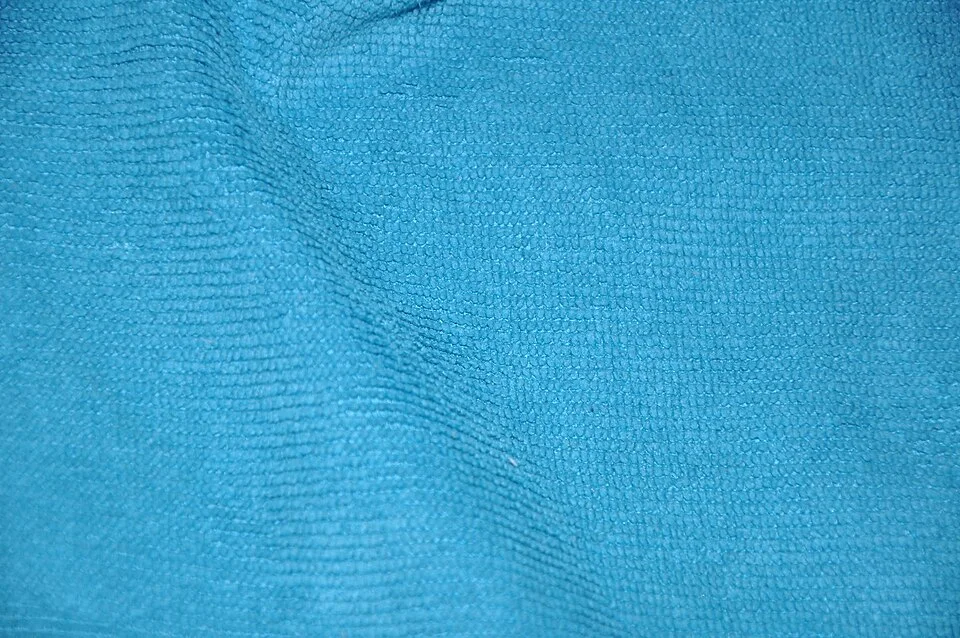
The looped face and fold make textile contact surfaces visible for a residue and grit check before use. Prepare separate clean cloths for the approved cleaning and finishing stages so lifted soil does not return to the quartz. This close view cannot establish cleanliness, dampness or compatibility with a particular matte finish.
Photo & usage
Philippe Alès · CC BY-SA 3.0 · Source. Display copies resized and encoded as WebP; no instructional details were fabricated or removed.
Work first on an inconspicuous representative area, completing the entire cleaning sequence. After it dries, check for new light patches, shine, drag or streaks. A wet comparison is insufficient because liquid changes the way texture reflects light. Only extend the method if the maker permits it and the trial preserves the finish. Keep a different cloth ready for the final dry stage so lifted grease does not return to the top.
Clean a manageable area evenly
Use light pressure and the supplier's prescribed motion. Avoid attacking only the center of a visible fingerprint with repeated force. Where the instructions call for a broader cleaning area, follow that boundary so residue is removed consistently around the mark. Rinse or wipe away solution exactly as directed, including at the back edge where product can collect.
Change cloth faces as they soil and use fresh rinse water. Do not let a cleaner dry on the counter unless its instructions explicitly require that. Keep overspray away from wood trim, metal fittings and electrical outlets. If a spill includes dried food, follow the maker's permitted softening or lifting method; a metal knife is a poor substitute for product-specific advice. Stop if removal requires pressure that changes the surface.
Read an illustrative observation grid
| Initial appearance | After routine care | Decision |
|---|---|---|
| Dark fingertip outlines | Gone with original texture preserved | Resume normal care |
| Broad pale wiping bands | Clear after thorough residue removal | Correct the rinse and cloth routine |
| Bright circular patch from prior scrubbing | Unchanged | Ask the maker about finish damage |
| Fine gray line after moving a pan | Persists | Request the specific metal-mark method |
These comparisons are invented, not performance claims. They deliberately distinguish an outcome from a diagnosis. A remaining line does not prove a scratch, and a bright patch does not prove the entire slab was defective. Preserve the history and ask a focused question about the product. That is more useful than reporting that every cleaner has failed without knowing which products were used.
Treat stubborn marks within the brand's boundaries
Check the maker's list of approved stain-removal products and prohibited ingredients. Do not generalize a permission from a different brand, color or finish. Daltile warns against harsh chemicals and bleach-containing cleaners for its quartz guidance, while other manufacturers describe their own selected cleaning products. The relevant rule is the one for the installed top and the chosen treatment.
Never add a sealer or polish merely because the top looks uneven. Engineered quartz care differs from sealing certain natural stones. An oil-based shine product can add a film and create a new fingerprint problem. Abrasive creams, scouring pads and repeated concentrated spot treatment may create a glossy island. If routine care fails and no compatible stain method is documented, stop and contact the supplier rather than building an escalating list of experiments.
Use area measurements to plan access
For an illustrative island measuring 180 by 90 centimeters, the face area is 16,200 square centimeters, or 1.62 square meters. Dividing access into three equal strips gives strips of 60 by 90 centimeters, each 0.54 square meters. The arithmetic helps plan reachable sections; it is not a cleaner dose or an instruction to leave solution on three areas at once.
Choose sections small enough to complete the required rinse and drying without stretching across a wet top. Keep a dry route for supplies and avoid placing the bottle on the area being assessed. If a stool is needed to reach a backsplash, use suitable access equipment rather than standing on a chair or the countertop. A manageable workflow supports consistent cleaning without introducing pressure marks or spills.
Keep the fabricator sample as a limited reference
If a spare sample remains, label it with the confirmed range and finish and keep it free of household polish. It can help communicate the intended texture, but it has not experienced the installed counter's wear, sunlight or earlier products. A sample that looks different is therefore a useful discussion point rather than proof that the installed top needs polishing.
When asking the supplier about a glossy island, include a photograph showing the boundary with untouched texture and state whether an abrasive was previously used. Do not demonstrate the proposed correction repeatedly on adjacent patches. Multiple trial islands can make the final appearance harder to assess. Ask for the authorized next step on the actual finish, including whether any repair must extend across a larger panel for a consistent result.
Confirm the finish remains consistent
After full drying, view the top from the same positions used before cleaning. Fingerprints and cleaner film should be reduced without a new shiny patch, pale ring or sticky residue. Check seams and edges for retained moisture. Return items on compatible supports and use boards and trivets for the activities specified by the maker.
Record any unresolved mark, its history and the exact products used. A clean matte counter can still show its designed texture and natural variation in reflected light. Completion means the removable residue is gone and the specified finish remains intact. If the persistent problem is a physical change, the next step is a manufacturer or fabricator assessment, not another round of polishing.
THE REFERENCE FILE
Sources & scope
Documentation reviewed 1 Nov 2026. Examples are illustrative; this article does not claim hands-on product testing. Follow the instructions for your actual material, model and location.