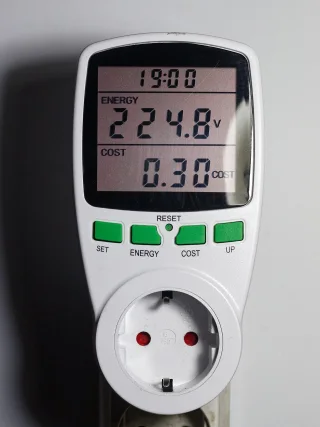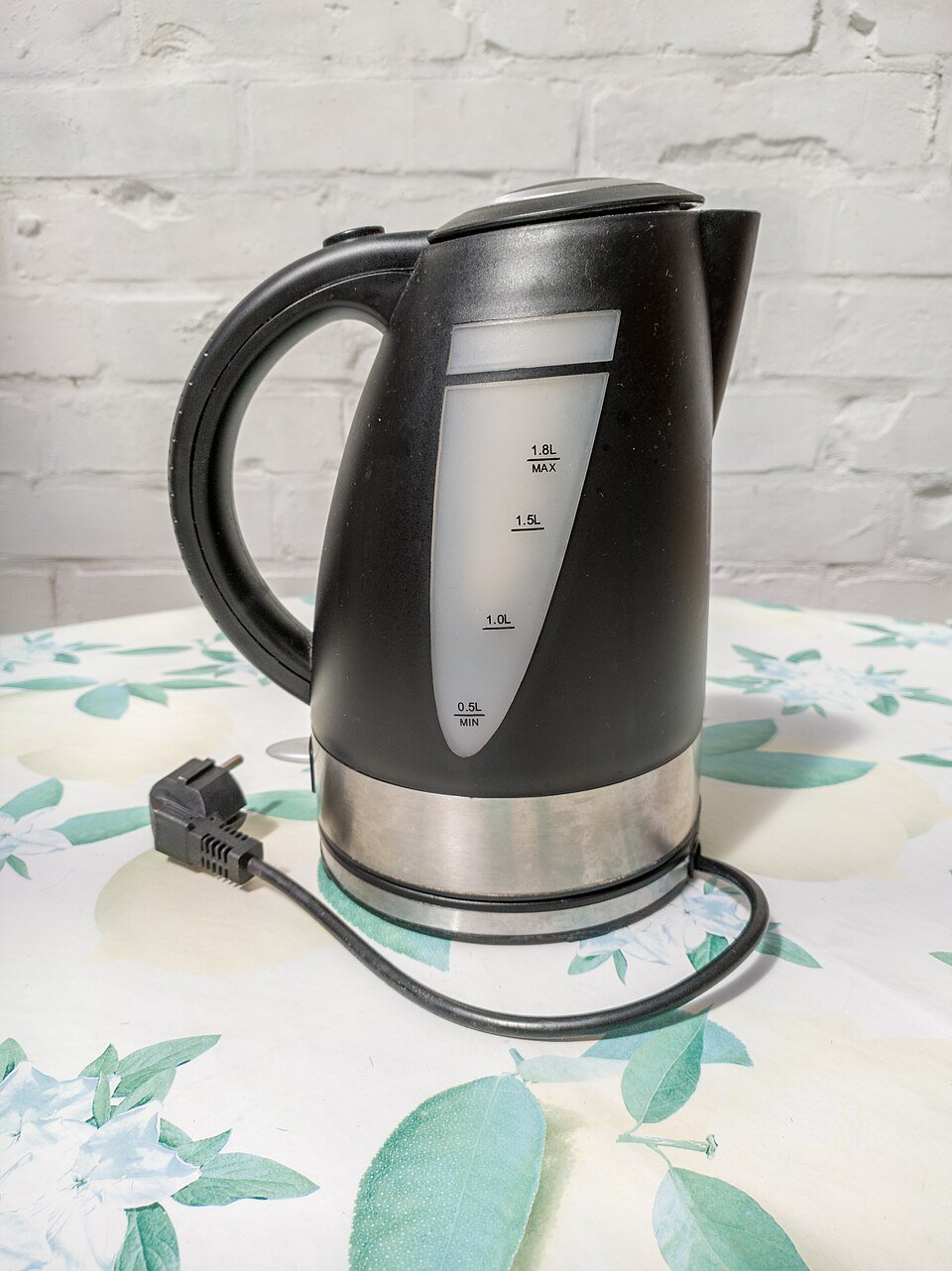
A nameplate can be the easiest number to find on an appliance, making it tempting to use for every running-cost calculation. But a rating is not automatically a record of continuous consumption. Equipment can cycle, change modes or draw different power during different parts of a task.
Keep the rating and energy observation in separate fields. This guide helps decide what each number can support. It does not interpret every electrical marking or authorize testing equipment beyond the compatible instrument's limits. When the rating's meaning is unclear, use the manufacturer's documentation.
Record the exact label and its context
Copy the model identity, rating value and unit from the accessible label or official documentation. Note whether the figure is watts, amperes, volts or another quantity. Keep a private photograph if useful, without moving heavy equipment or removing covers to reach it.
Do not assume a charger rating describes the device's actual continuous consumption. An input rating, output rating and appliance operating draw have different boundaries. The manufacturer's documents should explain the relevant label; a household spreadsheet should not silently convert one purpose into another.
EIA — Measuring Electricity explains power and energy as different quantities. Keep that distinction visible in the record from the beginning. A watt figure needs a justified time profile before it becomes kWh, and a kWh figure already includes an interval or defined use basis that should not be multiplied by hours again.
If a label lists several operating conditions, retain each description rather than selecting the largest or smallest value without context. A combined heater-and-fan rating may answer a different question from fan-only operation, so the chosen mode belongs beside every estimate.
- Copy the accessible model label and retain the rating’s stated unit and purpose.
- Use representative energy evidence or comparable published consumption for the running-cost question.
- Preserve electrical compatibility requirements even when a measured operating average is much lower.
Define whether the equipment is steady or variable
Observe the normal operating sequence without opening the appliance. Does it run continuously at one setting, cycle on and off, complete a program or move between active and low-power modes? Record the sequence relevant to the intended cost question.
A steady-load estimate may use a supported average power and actual hours. A cycling or programmed device generally needs accumulated energy over representative operation or suitable published consumption information. Do not infer the duty cycle simply because the appliance is quiet; low sound does not prove zero electrical draw.
Avoid inventing a universal fraction of nameplate power for every appliance. A guessed twenty-five or fifty percent factor can make the arithmetic look sophisticated while remaining unsupported. If a rough scenario is useful, label both the assumed fraction and its uncertainty explicitly, and do not present it as a measurement of your equipment.
Choose an appropriate evidence source for consumption
For safely compatible plug-connected equipment, a suitable instrument may provide accumulated kWh over an ordinary session. Follow both appliance and meter instructions and ratings. Hardwired, high-load or inaccessible equipment requires another appropriate method or qualified help rather than improvised connections.
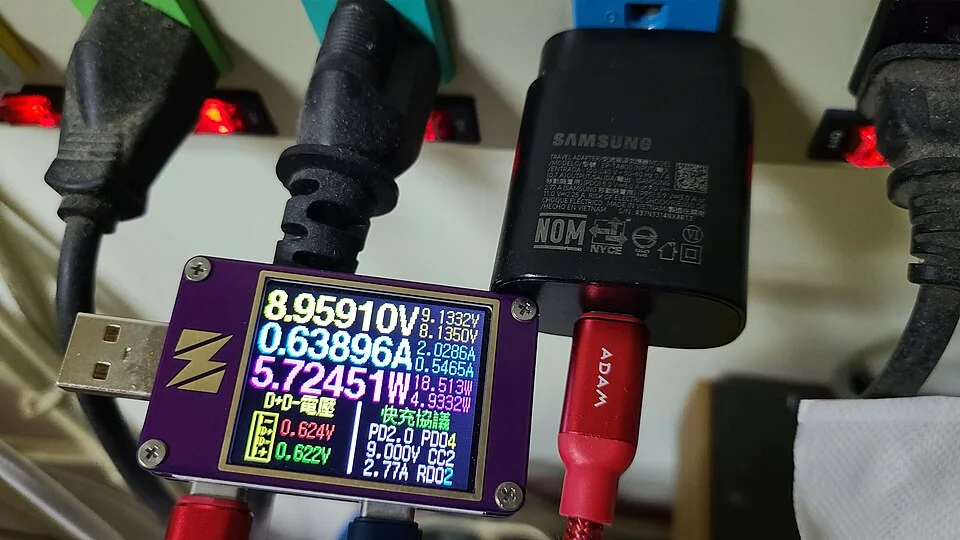
The USB tester presents measured electrical quantities beside the adapter’s printed ratings, making their different roles visible. Keep the measurement boundary explicit: USB-side watts are not wall-side accumulated kWh and omit conversion losses. Use an appropriately compatible instrument and representative interval for household consumption evidence rather than treating an output reading as annual mains use.
Photo & usage
OnionBulb · CC BY-SA 4.0 · Source. Display copies resized and encoded as WebP; no instructional details were fabricated or removed.
The P3 International — P4400 Operation Manual illustrates cumulative energy and time recording on one specific meter. It does not make that model suitable for every appliance or country supply. Check the exact product label and instructions before any use, and retain the instrument identity with the record.
Published standardized consumption can also support comparison. FTC — How to Use the EnergyGuide Label to Shop for Home Appliances explains that EnergyGuide operating costs are estimates dependent on use and local energy prices. Keep the label's test basis distinct from a household observation. A difference between them does not automatically establish a defect or an inaccurate label.
Compare an illustrative continuous-rating estimate
All figures here are illustrative. A device has a 240 W rating. Treating that as continuous for 24 hours gives 240 ÷ 1,000 × 24 = 5.76 kWh per day. At USD 0.20 per kWh, that scenario costs USD 1.152 per day, or about USD 1.15.
Suppose a representative energy record instead contains 1.44 kWh over 24 hours. Its interval-average power is 1.44 × 1,000 ÷ 24 = 60 W. The corresponding illustrative energy charge is USD 0.288, or about USD 0.29 per day.
The difference shows why a rating should not automatically replace average consumption. It does not prove that any real 240 W appliance averages 60 W. The second number must come from its own supported record. Keep both values with their labels: electrical rating and observed interval average under stated conditions.
Convert sessions to annual scenarios transparently
For a programmed task, use energy per comparable session multiplied by a supported or clearly assumed annual session count. For a continuously operating device, use representative period consumption with stated limits on seasonal extrapolation. The time model matters as much as the power figure.
Write the hours or sessions as a separate input that another person can challenge. A precise meter result multiplied by an unrealistic usage schedule produces a poor annual estimate. Use household records where available and label future use as a scenario rather than a measured fact.
Do not add standby energy twice. If a whole-day accumulated measurement already includes idle periods, adding a separate standby estimate for those same hours duplicates consumption. Conversely, a session-only measurement may exclude the waiting period. Define the boundary before combining active and low-power records.
Use the rating for its proper decision boundary
An electrical rating remains important for compatibility and safe operation, even when it overstates an average-energy estimate. Do not use a low measured average to justify an instrument, extension accessory or supply arrangement that is unsuitable for the device's specified requirements.
Keep questions of electrical capacity with the relevant manufacturer instructions and qualified advice. This cost-record exercise does not establish wiring adequacy or safe loading of a circuit. A favorable energy result is not permission to ignore a maximum rating or modify a plug.
For a purchase comparison, prefer comparable standardized energy information or representative measurements with equivalent service. Two products with different capacities or functions may not be interchangeable merely because one has a lower watt number. Record the useful output and conditions so energy efficiency is not confused with doing less work.
Treat a maximum rating as a compatibility boundary
A maximum input figure may matter when choosing an instrument or accessory even when ordinary average draw is much lower. The low average describes accumulated operation; it does not prove that startup, heating or another permitted stage will stay below that average. Keep the applicable ratings and manufacturer requirements intact.
In an illustrative record, a 60 W daily average and a 240 W rated condition can coexist without contradiction. The energy calculation uses the supported time average, while compatibility checks still require the exact equipment instructions and ratings. Do not choose a meter solely because its limit exceeds 60 W in that example.
If a rating label lists voltage and current rather than active watts, obtain the manufacturer’s relevant information before treating their product as a measured watt figure. Different loads can have different electrical behavior. This record does not establish power factor, circuit capacity or safe accessory use. A missing specification is an information gap, not an invitation to invent a conversion that makes the cost model look complete.
Finish with separate rating and consumption conclusions
Save the nameplate information, consumption evidence, time assumptions and cost basis in distinct fields. Mark any missing documentation or measurement limitation. Another reader should know which number came from the manufacturer and which came from household observation or an illustrative scenario.
Write the conclusion narrowly: the rating alone is insufficient for an annual estimate, the measured interval supports a particular average, or comparable label data supports a defined model comparison. Avoid claiming a fault from a mismatch between unlike quantities.
Completion means the record prevents the easiest visible watt figure from becoming an unsupported continuous-energy claim. Update it when the operating mode or usage schedule changes. The useful distinction is not which number looks smaller, but which evidence answers the particular cost question.
THE REFERENCE FILE
Sources & scope
Documentation reviewed 1 Nov 2026. Examples are illustrative; this article does not claim hands-on product testing. Follow the instructions for your actual material, model and location.