Measure the shared container
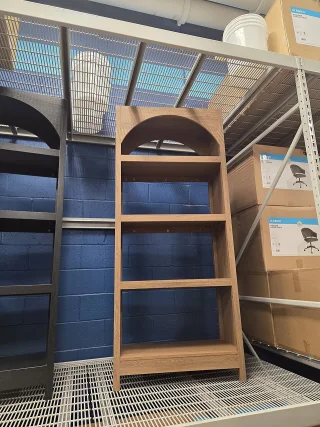
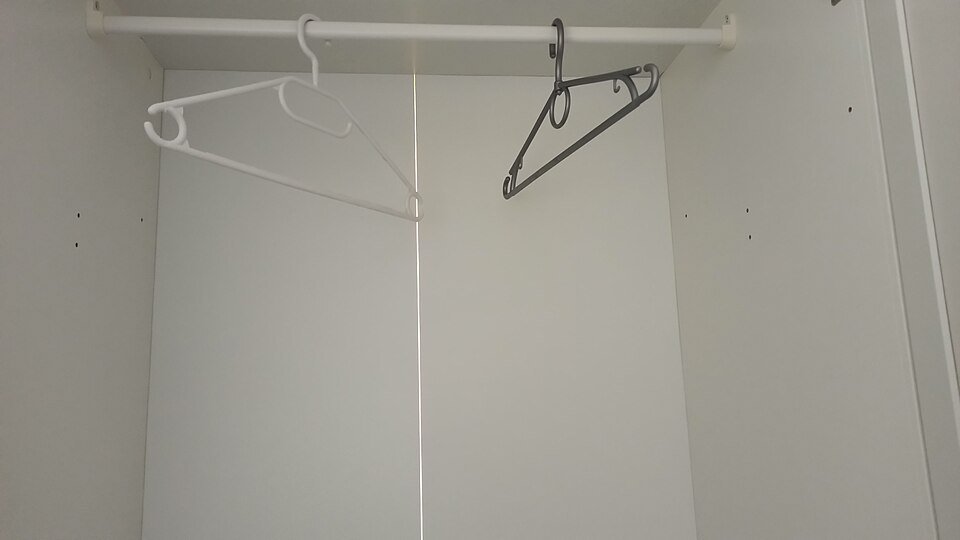
Record usable shelf widths, depths and heights, allowing for hinges, internal fittings and access. Pottery Barn's furniture measuring guidance supports checking real space and obstructions before committing to a layout. Use a paper plan if surface-safe marking methods are uncertain.
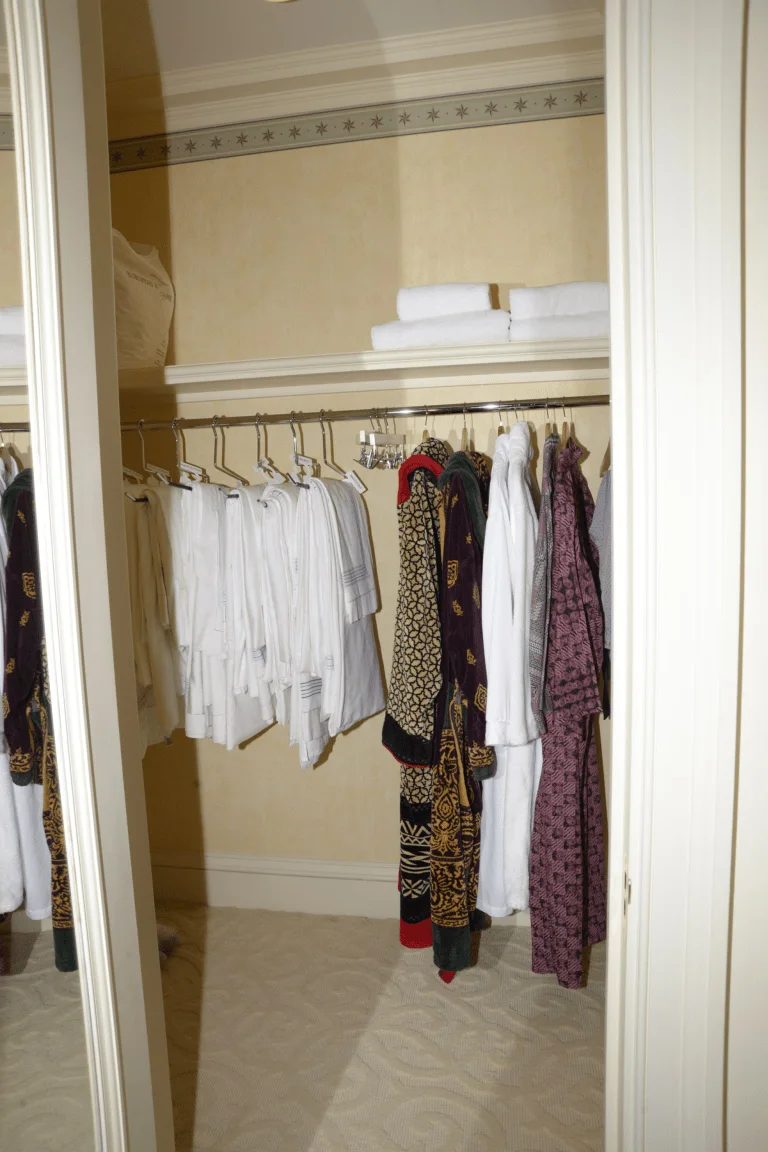
The cupboard has a shelf above a hanging rail, making two distinct storage zones visible. Measure the usable interior of each zone and the opening needed to retrieve its contents before agreeing an allocation. The photograph does not supply dimensions, load limits or a fair division for a particular household.
Photo & usage
Federal Bureau of Investigation · Public domain · Source. Display copies resized and encoded as WebP; no instructional details were fabricated or removed.
Divide the storage by function first. Reserve room for equipment everyone uses before negotiating personal overflow. If an appliance requires access or clearance, follow its instructions. The entire interior of a cupboard is not automatically available for objects simply because they can physically be pushed inside.
Ask each person to place their proposed retained selection in the assigned space without forcing, stacking unstably or blocking another category. Observe which items are inaccessible. A storage allocation succeeds when people can retrieve and return belongings through ordinary use, not just when the door can be closed once.
Gather evidence about actual use
For disputed everyday equipment, keep a short record of use during an ordinary period. Note the date, task and whether another item could have performed it at that time. Avoid treating a holiday week or unusual visitor schedule as representative of the household's normal needs.
Seasonal and sentimental belongings require different evidence. A seasonal item needs a credible planned use and suitable storage. A sentimental object may be retained because of meaning rather than frequency. State that reason openly so nobody invents a practical use merely to protect it from a frequency test.
EPA Ireland's circular economy guidance includes repairing, borrowing and sharing. Discuss whether those options genuinely meet the household's need. Sharing works only if the item is available when required, has a responsible keeper and can be returned in agreed condition. A vague offer to borrow later is not equivalent to an accessible household tool.
Allocate a cupboard using real dimensions
In this illustrative cupboard plan, three usable shelves are each 90 cm wide, giving 270 cm of linear shelf width for items of suitable depth and height. Shared equipment occupies 110 cm. The remaining width is 160 cm, which the household chooses to divide equally between two personal collections: 80 cm each.
One collection currently occupies 105 cm and the other 70 cm. Under the chosen allocation, the first exceeds its share by 25 cm while the second has 10 cm unused. Even transferring that unused 10 cm leaves a 15 cm shortfall. The numbers expose the negotiation; they do not dictate who deserves more space.
The household could reduce a collection, assign a different suitable location or agree a different split. It should not claim that rotating the boxes fixes the problem without checking depth, height and retrieval. Linear width is only one constraint, and the example assumes those other dimensions already work.
Give unresolved items a bounded holding place
Choose one container or defined area for unresolved objects, with permission from everyone affected. Label each item with its owner, the unanswered question and a review date. Do not use an essential circulation route or a room that another household member needs for work.
At review, bring the missing evidence: a repair quotation, a measurement, a family member's answer or a confirmed donation option. If nothing has changed, decide whether keeping the item is now the explicit choice and assign it permanent space. Repeatedly postponing the same question should not silently enlarge the holding area.
Keep borrowed items outside this process until the owner has been contacted. Returning something can be a useful exit route, but it needs a real handoff. Do not leave another person's property in a communal area or donate it because they have not replied within your preferred schedule.
Separate memory from bulk when people agree
For a large sentimental group, ask whether a smaller selection can represent the memory adequately. A photograph, a written story or one representative object may help, but only the owner can decide whether that preserves what matters. Do not present digitising as a universal replacement for an original.
Identify fragile or vulnerable materials before repacking them. Keep objects in suitable conditions and seek specialist advice where value or material sensitivity warrants it. Avoid applying a general household cleaning method to an unfamiliar keepsake merely to make it easier to store.
If several people want the same family object, record the agreement about custody and future changes. A household storage project cannot settle every inheritance or ownership question. Keep disputed objects secure and separate from confirmed release items while the people with authority resolve the issue through the appropriate process.
Confirm consent at the handoff stage
Before collection, show the agreed release list to the relevant owners. Include the exact objects, their condition and destination. This final identity check prevents a similar-looking retained item from leaving by mistake when several boxes are assembled in one place.
Check donation acceptance locally. Habitat ReStore's published FAQ explains that local criteria and available space affect what is accepted. Tell the service about defects and dimensions rather than assuming shared household approval makes the object suitable for donation.
Assign the actual dispatch work: booking, carrying within safe limits, being present and clearing the emptied space. A decision meeting that leaves all physical work to one person can fail despite apparent agreement. Keep tasks proportional and acknowledge where outside help or a different collection route is needed.
Review the arrangement through ordinary use
After the cupboard or room is reset, ask each person to retrieve and return a frequently used item. Watch for blocked shelves, lids that cannot open and belongings displaced into another room. Correct those specific failures before declaring the storage allocation successful.
Keep the agreement short enough to remember: assigned spaces, shared equipment, review dates and the rule for adding large items. New acquisitions need a destination before they join the cupboard. Avoid turning the arrangement into surveillance of minor everyday choices.
The shared decision project is complete when owners have authorised releases, retained objects fit usable spaces and unresolved matters no longer expand unnoticed. Agreement should be visible in the room itself: accessible shared equipment and personal belongings with clear, workable homes.
Agree how future additions enter shared storage
Choose a simple rule for new bulky objects: identify the intended space and check the effect on shared equipment before acquisition. This is a conversation about a limited container, not permission for one person to approve every small personal purchase. The rule should apply equally to everyone using that storage.
For gifts and inherited items, allow a short review period with a defined temporary location. Record who will ask about ownership or future use. A surprise arrival should not automatically displace the household's daily equipment. At review, either assign permanent space, arrange an agreed transfer or keep the unresolved question visible within the original holding limit.
THE REFERENCE FILE
Sources & scope
Documentation reviewed 1 Nov 2026. Examples are illustrative; this article does not claim hands-on product testing. Follow the instructions for your actual material, model and location.