Sort purchases by how hard they are to change
A room project shopping list usually mixes samples, standard stock, custom goods and heavy furniture. Buying everything together can fix uncertain dimensions too early and create deliveries with nowhere to go. Begin by ranking purchases according to the evidence they require and the cost of changing your mind.
Samples and dimension drawings often help resolve a decision. A custom curtain order or tinted coating may commit to that decision. A bulky cabinet also creates an access and storage problem even if the seller permits returns. Read the actual terms for the specific order rather than assuming a familiar shop policy applies to every product.
Create a table with item, prerequisite, decision owner, order date and receiving location. Keep the order pending until its prerequisite is evidenced. A wishlist is useful for ideas; this table controls commitments that affect the project's space, money and sequence.
Find dimensions that depend on other work
Ask which dimensions can be measured now and which will change. Curtains may need the installed rail and selected heading. Built-in storage may depend on finished surfaces and installer tolerances. Furniture needs both an installed layout and a reviewed delivery route.

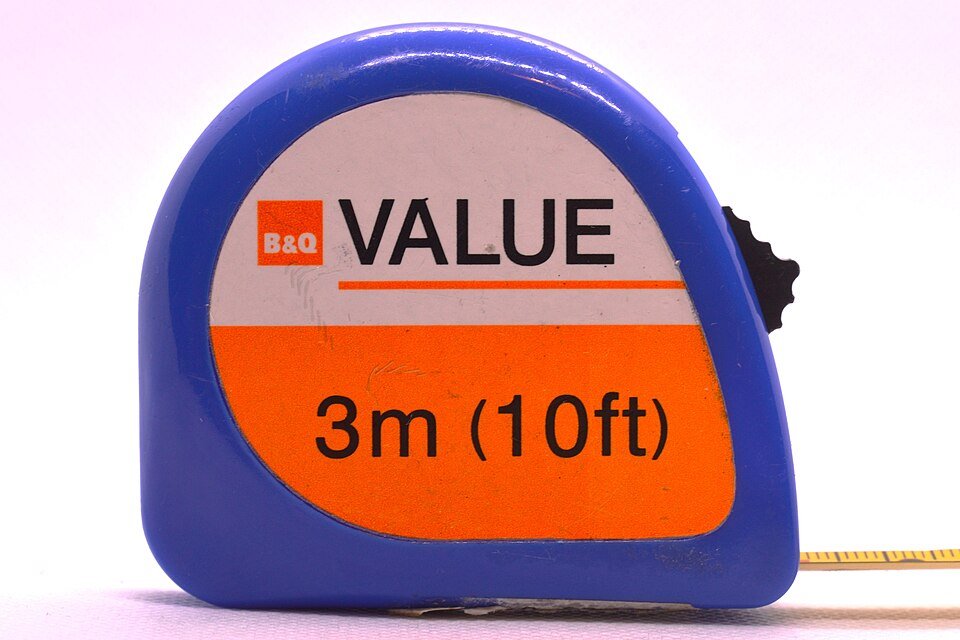
The extended tape identifies a real span between wall features, unlike an unplaced measuring tool. For a room purchase, record which finished faces define the required dimension and whether further work will change them. Follow the maker’s convention for the actual item. This exterior example supplies no room-order dimension, installer tolerance or transferable measurement.
Photo & usage
Caliskaneren1 · CC BY-SA 3.0 · Source. Display copies resized and encoded as WebP; no instructional details were fabricated or removed.
Obtain the maker's measurement convention before collecting numbers. John Lewis's curtain guide distinguishes ready-made and made-to-measure routes, and the required order information differs. Do not submit a window-glass width where the maker requests track width, or add fullness yourself when a service expects the finished coverage measurement.
Pottery Barn's furniture guidance supports measuring the usable room and route. Keep the exact product drawing with those dimensions. If a listing changes or a configuration is substituted, repeat the relevant checks instead of carrying over approval from a similar-looking item.
Buy evidence before buying volume
Use samples to resolve a named uncertainty: colour beside a retained cabinet, fabric opacity at the window or the appearance of a finish under room lighting. Record what the sample represents and what it cannot establish. A small textile sample does not show the full pattern layout or the weight of a completed curtain.
For coatings, distinguish colour sampling from the final product specification. Manufacturer technical sheets describe substrate preparation and application requirements for the actual product. A sample jar's appearance cannot confirm that a different final coating is suitable for the surface.
Set a decision date after the observations needed to compare samples. Avoid ordering the main goods before the sample stage is complete merely because delivery dates are attractive. If the schedule cannot accommodate a necessary check, revise the schedule or choose a less committed option with suitable terms.
Calculate the latest order date backwards
This illustrative calendar example assumes a desired installation date of 28 November. A maker quotes a 14-calendar-day production interval after measurement approval, followed by three calendar days for delivery. The household chooses a further two-day receiving buffer.
The planned total is 14 + 3 + 2 = 19 calendar days, so approval would need to occur by 9 November under those assumptions. If measurement cannot be confirmed until 12 November, the same 19-day sequence reaches 1 December. The original installation date is unsupported by this invented programme.
Actual suppliers may quote business days, ranges or production beginning after payment or stock confirmation. Write the start event and counting method beside the quote. Do not convert a stated range into its shortest value to make the project fit. Ask about a revised date or a different product route.
Reserve receiving and inspection space
Record package count and dimensions where available, who will receive the delivery and how it reaches storage or installation. A purchase that fits the final wall can still block the household for a week while awaiting assembly.
Ask how quickly goods need to be inspected and how damage or missing parts should be reported under the seller's terms. Arrange access to the packaging without dismantling a carefully packed item prematurely. Keep proof of purchase, specification and delivery documents together.
If a purchase arrives before the room is ready, follow its storage guidance. Do not leave textiles in a damp work area or stack heavy packages on newly finished surfaces because the final position is unavailable. The receiving location is part of the buying decision, not an afterthought.
Read return and change terms at the commitment point
Check whether the order is standard stock, altered, tinted, cut or made to order. Ask what can be changed, by when and at what cost. Save the applicable terms with the order confirmation so later decisions are based on the actual transaction.
Separate the right to return from the practical cost of doing so. A large item may require suitable repacking, collection arrangements or an access review. Avoid treating returnability as permission to skip measurements or to use the household as a long-term product warehouse.
If several dependent products are involved, decide what happens if one is delayed or cancelled. Matching textiles may need consistent batches; a coating substitution may change application requirements. Ask the supplier rather than assuming visually similar stock will complete the original scheme.
Review commitments at a fixed checkpoint
Before each major order, compare the current room plan, confirmed dimensions and product reference. Check that no later change has invalidated the decision. A new floor level, revised cabinet position or different curtain heading can alter measurements that were previously correct.
Record open questions and keep the order pending where they affect fit or suitability. Minor decorative choices can remain flexible, but structural, access and product compatibility questions need answers. A salesperson's general reassurance should be translated into a specific response for the actual item and dimensions.
Keep one purchasing record across the household. Two people independently ordering “the remaining fittings” can create duplicates, mixed finishes and confusing returns. Assign an owner to each item and mark the order confirmed only when the final specification is checked.
Close purchasing through reconciliation
At delivery, compare the received item, configuration and quantity with the order. Inspect according to the seller's process and retain relevant packaging until questions are resolved. Update the record if an approved substitution was supplied.
After installation, file the final specification and care instructions. Return eligible unused goods within the actual terms or store suitable spares deliberately. Do not keep unidentified extra parts simply because the project budget already paid for them.
The purchasing plan is complete when orders match installed results, missing items have named actions and the room is no longer serving as a holding area for unresolved purchases. The record should explain what was bought and why it was ready to be bought.
Keep substitutions tied to dependent items
If a product is unavailable, identify which later choices depend on it before approving an alternative. A different cabinet depth can change the route; a different fabric width can change the curtain quantity; a different coating can change the application schedule. Review those links explicitly.
Record the proposed substitute's exact reference and the supplier's answers, then update the order table. Cancel superseded orders through the actual retailer process and keep confirmation. Do not assume that agreeing to a replacement automatically cancels an earlier item already in production. At the next checkpoint, compare outstanding orders with the current room plan so the household is not receiving two versions of the same decision.
THE REFERENCE FILE
Sources & scope
Documentation reviewed 1 Nov 2026. Examples are illustrative; this article does not claim hands-on product testing. Follow the instructions for your actual material, model and location.