Do not make the busiest evening the permanent baseline
Visitors, several showers and a late meal can put an unusual moisture load into a home. A high reading during that evening may be real, but it does not describe every ordinary day. Begin by labelling the event and writing what was different. The aim is to understand the load and recovery, not to excuse persistent wetness because guests happened to be present.
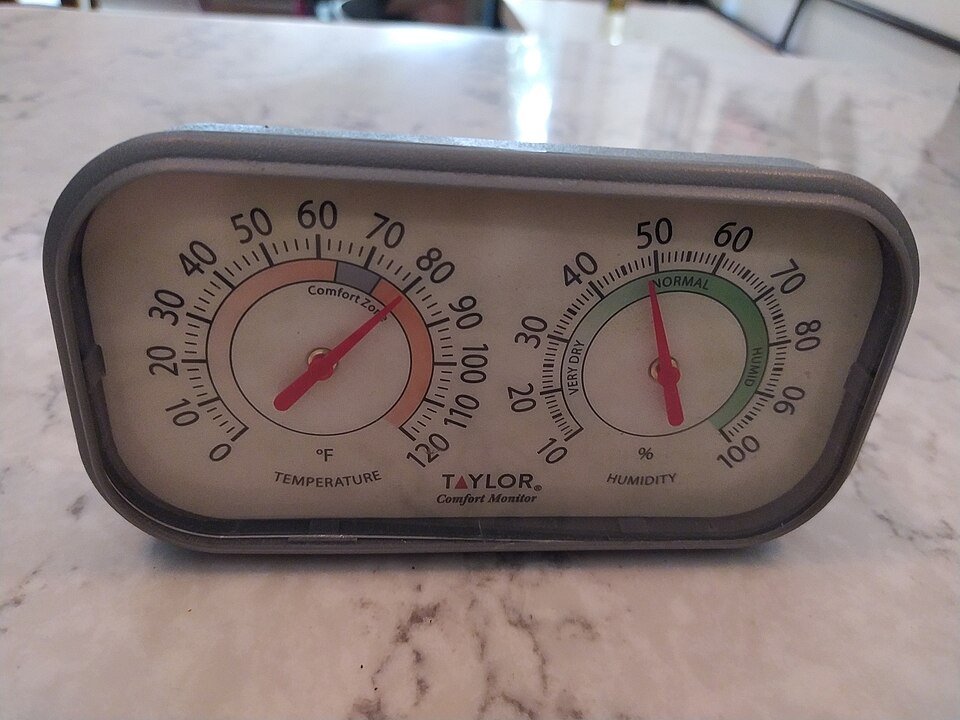
Choose one room with a clear practical concern, such as new window droplets or a drying rack that remains damp after the gathering. Keep the meter at a documented representative position. Record temperature with RH, and do not move the instrument between rooms while treating its trace as a single continuous location.
EPA: Low-Cost Air Pollution Monitors and Indoor Air Quality explains that consumer monitoring has a limited scope. Your log can show an indicated pattern and its context. It cannot measure every indoor pollutant, establish a ventilation rate or certify the home because the display later returns to a preferred range.
Record activities before interpreting the graph
List the approximate times of cooking, bathing, laundry drying, humidifier use and changes to windows or extraction. Record occupancy in ordinary terms without turning each person into a calculated moisture source. Published average generation rates cannot reliably divide this household's actual water contribution among guests, pans and towels.
Use the existing kitchen and bathroom extraction as intended during their activities. Do not turn it off to make the spike easier to demonstrate. Remove ordinary standing water promptly and keep wet textiles in suitable drying arrangements. The log should accompany sensible care rather than preserve a deliberately poor evening routine.
If several activities overlap, say so. A rise beginning while two showers and cooking occur cannot confidently be assigned to one of them. Note a gap in the record when nobody checked the room. Automatic sampling can show timing more closely, but it still needs accurate activity notes and a known sensor position to support interpretation.
Choose comparable ordinary reference periods
Take an ordinary pre-event reading and another after the main activities have ended and the room has had its normal recovery opportunity. Add a comparable ordinary-day reference if available. Similar temperature, weather, occupancy and system operation improve the comparison, though a lived-in home rarely holds all of them constant.
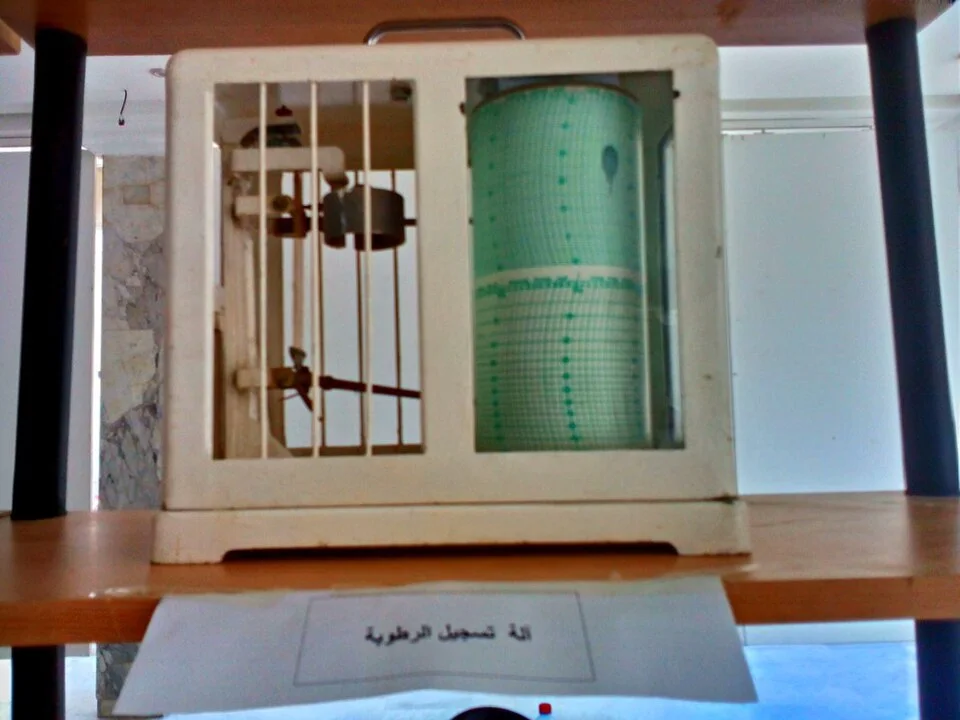
The recording arm and chart drum illustrate a humidity record that extends beyond a single glance. For the household comparison, keep the actual trace’s times aligned with occupancy, moisture events and the ordinary recovery period, and record temperature alongside it. This museum instrument does not supply a readable household baseline or prove the cause of a later change.
Photo & usage
Sami Mlouhi · CC BY-SA 4.0 · Source. Display copies resized and encoded as WebP; no instructional details were fabricated or removed.
National Weather Service: Dew Point vs Humidity explains why RH changes with temperature. A room warming during a gathering can show a lower RH than expected even while water vapour is added. Cooling after guests leave can shift the percentage in the opposite direction. Keep temperature beside every figure rather than selecting the most dramatic percentage difference.
Define recovery as an observed return toward the room's own ordinary pattern with accessible surfaces no longer developing unwanted wetness. It is not a universal minute count. If the room stays wet or material damage appears, act promptly and seek appropriate assessment rather than waiting for the event to fit a planned observation window.
Calculate an event rise and a residual difference
All figures in this example are illustrative and invented. The meter remains at one position, and the temperature is deliberately the same in the comparison entries to make the arithmetic clear. Real observations may be less comparable.
| Stage | Room reading | Activity note |
|---|---|---|
| Before visitors | 21°C, 48% RH | Ordinary background |
| Late evening | 21°C, 66% RH | Cooking and bathing overlap |
| Next ordinary check | 21°C, 53% RH | Main activities ended; normal systems used |
The event rise is 66 minus 48, or 18 percentage points. The later reading is 13 points below the event value but still 5 points above the initial display. These are indicated differences, not percentages of water removed. Meter uncertainty, weather and unrecorded sources still limit the conclusion. The table cannot apportion the rise between cooking and bathing.
Choose one routine that can improve the next event
Review the activity notes for an avoidable load or missed practical step. Perhaps the laundry rack was moved into the occupied room, the bathroom fan's intended run-on was interrupted, or wet coats were shut into storage. Choose a specific routine change that fits the actual source rather than lowering every control and buying equipment at once.
Health Canada: Guide to addressing moisture and mould indoors includes everyday activities and inadequate extraction among moisture contributors. Use that source-based approach to define the next action. Keep essential ventilation operating as designed and ask about confusing controls. A recirculating device should not be recorded as outdoor extraction simply because it moves a noticeable amount of air.
At the next naturally occurring comparable event, record the chosen change and the relevant outcome. Do not organize extra showers or create steam to repeat the experiment. If the next gathering is smaller or the weather is warmer, preserve those differences. The practical routine can still be useful without a claim of controlled proof.
Know when the event explanation is insufficient
If the same wetness occurs on quiet days, the unusual evening is not a complete explanation. Check for ongoing sources, cold local surfaces or water entry using an appropriate non-invasive record. A stain that grows after rain or a cabinet wet before bathing needs a separate question. Do not continue blaming the most recent visitors.
Persistent musty odour, repeated material damage or air readings that remain elevated under comparable ordinary conditions justify further investigation. A single recovery entry cannot establish hidden dryness. Likewise, the absence of window droplets on a warmer day does not demonstrate that the underlying source disappeared.
Keep the room's physical observations separate from comfort impressions. A busy room may feel warm or stuffy for several reasons, and RH alone cannot explain all of them. Do not use the event record to diagnose symptoms or claim a health or energy benefit from the revised routine. Its evidence is about recorded activity, indicated air conditions and visible moisture outcomes.
Close with a plan for the next busy evening
Write a short event routine: use intended extraction during the relevant activities, keep wet items in suitable drying locations, remove standing water and check the previously affected surface afterward. Assign a natural follow-up time such as the next morning rather than a universal drying deadline. Make the routine manageable enough to survive another busy evening.
A useful completion check is whether the household can distinguish ordinary background, unusual load and persistent unresolved wetness. Keep one representative event record and one ordinary comparison. If the revised routine helps, state the observed result and remaining differences in conditions. If it does not, use the record to request a more focused assessment.
The log closes when the next practical action is clear. It does not need to prove exactly how much water each activity produced or certify the room after recovery. A well-described event prevents both overreaction to one exceptional reading and underreaction to a moisture problem that continues after the visitors have gone.
THE REFERENCE FILE
Sources & scope
Documentation reviewed 1 Nov 2026. Examples are illustrative; this article does not claim hands-on product testing. Follow the instructions for your actual material, model and location.