Investigate the warm cushion, not the whole house
An afternoon sofa can feel unpleasant even when the room thermometer seems ordinary. The cushion may have sat in direct sun before anyone arrived. Begin with that local sequence: when the beam reaches the upholstery, when the seat is occupied, and when the complaint begins. This is a narrow operating trial for an existing blind, not a promise to solve every source of room heat.
Check the window's actual afternoon exposure from indoors. A west label is a useful clue, but balconies, adjacent buildings and seasonal sun angles determine whether the sofa receives a beam. Note which end of the sofa warms first and whether moving to another cushion changes the experience. Keep the usual furniture arrangement during the first observation.
If the problem is a bright reflection in the television rather than a warm seat, record that separately. The blind setting needed for the screen may be different. Trying to fix both with one unexplained closing time makes it hard to know whether an earlier operation improved the thermal complaint.
Find the first relevant exposure
On a suitable ordinary afternoon, check the sofa at 20- or 30-minute intervals before the expected problem. Record first sun on the floor near the seat, first sun on upholstery and the time someone normally sits down. Describe the cushion condition by comparison with an unexposed cushion rather than pressing a room thermometer against fabric and calling it surface temperature.
If using a consumer infrared thermometer, first read its surface and distance limitations. Reflective or unsuitable materials can mislead it. You do not need such a device for this exercise; timed observations and a consistent seated response can establish a practical routine. Avoid prolonged contact with surfaces that feel excessively hot.
YourHome's shading publication distinguishes intercepting sun from dealing with heat after entry. That supports testing an earlier blind operation. It does not establish a universal number of minutes by which a household blind must lead the sun. Choose the lead from your own exposure record and retain the interval uncertainty.
Compare early operation with the ordinary routine
Keep a baseline from normal use: perhaps the blind is usually lowered only when someone sits down at 16:00. For the trial, lower it before sun reaches the upholstery, using a position that actually intercepts the beam. Record the setting in terms the household can repeat, such as lower edge at sill or slats tilted until the cushion is shaded.
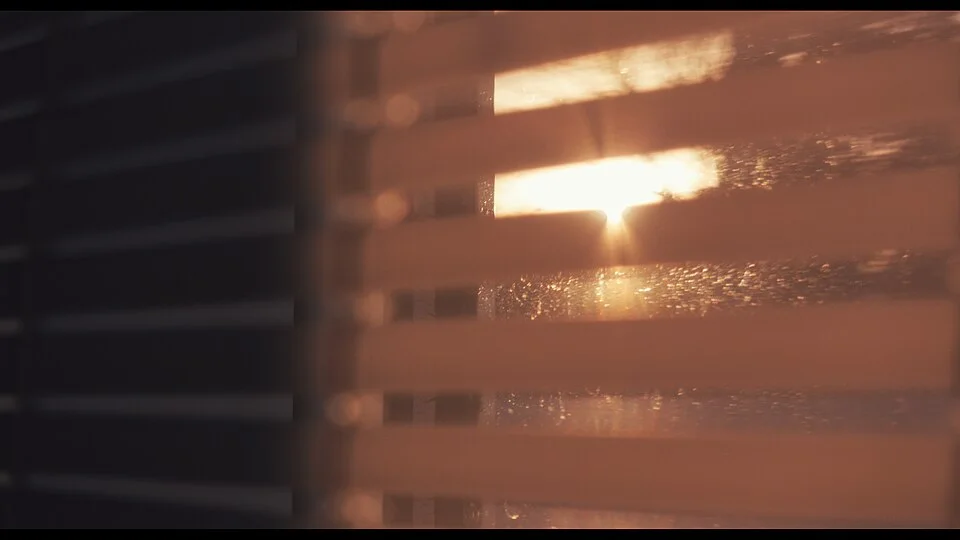
Direct sunlight through the slat gaps shows why the covering state matters before the seat is exposed. In the actual afternoon trial, use the normal control to intercept the beam before it reaches the cushion and record that position. Compare similar weather, cooling and occupancy; this single photograph provides no sofa temperature, west orientation or result from operating the blind earlier.
Photo & usage
SavidgeMichael · CC BY 4.0 · Source. Display copies resized and encoded as WebP; no instructional details were fabricated or removed.
Compare two or more broadly similar afternoons where possible. Note weather, cooling settings, window position and nearby activities. Do not deliberately leave the seat intolerably hot to create a baseline. Previous ordinary observations or a shorter comfortable exposure are enough to identify the practical question.
Sit in the same place at the usual time and describe whether the back, cushion and nearby arm feel comfortable for the intended activity. A room air reading can accompany that note, but should not replace it. HSE's thermal comfort framework includes radiant conditions, helping explain why changing sun exposure may matter without a large change at the wall thermometer.
Work through the timing arithmetic
Here is an illustrative comparison with invented times. On three baseline days, the first observed sun on the cushion occurred at 14:20, 14:30 and 14:25. The ordinary blind operation was 16:00. The delays were therefore 100, 90 and 95 minutes. Their mean was 95 minutes, calculated as 285 divided by three.
For a trial, the household chooses 14:05 as the reminder time. Relative to the earliest recorded arrival at 14:20, this gives a 15-minute lead. Relative to the latest arrival at 14:30, it gives 25 minutes. Those leads describe a convenient initial routine, not a measured thermal optimum.
Suppose the 16:00 seated note improves on two trial afternoons while the room display remains within its normal fluctuation. Keep that as evidence about the seat, not proof of a whole-room temperature reduction. If a cloudier trial day produces the only improvement, repeat before crediting the reminder. Timing arithmetic can be exact while causal interpretation remains uncertain.
The useful output is a reminder tied to a visible exposure event, with weather context. No calculation here supports an electricity saving or a product performance percentage.
Preserve daylight outside the beam path
Once early operation works, explore whether the whole covering must stay closed. A partial drop or adjusted slat angle may shade the sofa while leaving another portion of the room pleasantly lit. Check from the occupied seat, because a bright opening above the cushion can still be directly in someone's view.
Keep the initial full-shade result as a reference, then change only the opening. If direct sun returns to the upholstery before the normal sitting time, the partial position has failed the local objective even if it looks more attractive. If the room becomes too dim for the intended task, consider moving that activity or using suitable existing lighting.
Avoid attaching reflective films or improvised boards to glass during a blind-operation trial. Glass compatibility and exterior installation are separate matters. Use the covering's intended controls, keep fabric clear of heat sources and vents, and maintain safe access. The smallest adjustment that works repeatedly is more useful than a complicated arrangement nobody wants to operate.
Account for stored warmth and changing weather
A sofa already heated by sun may stay warm after the blind closes. That does not show that the covering has no effect. It shows why comparing immediate before-and-after sensation on one afternoon is a weak test of earlier operation. Start the next suitable day with the agreed early setting and observe the later seat condition.
Conversely, a cooler seat on a cooler outdoor day does not establish a blind effect. Record the context honestly. YourHome's cooling material treats heat gain as one part of a broader pattern; cooking, warm air entry and cooling operation can all alter the room's afternoon behaviour. Your trial should remain focused without pretending those influences disappear.
Review after seasonal changes. The beam may start earlier, pass beneath an overhang or reach another cushion. If a formerly successful position no longer shades the occupied area, update the map and repeat a short comparison. A static clock reminder needs occasional observation to stay connected to the sun path it was meant to anticipate.
Decide whether the routine earns its place
Keep early operation when the occupied seat repeatedly improves under comparable conditions, controls remain easy to use and the daylight cost is acceptable. Document a cloudy-day exception if the room otherwise becomes unnecessarily dark. Assign reopening to a clear event, such as the beam leaving the window, rather than trusting someone to notice later.
If the seat remains uncomfortable despite preventing direct sun, investigate the recorded alternatives: nearby warm glazing, hot outdoor air, another exposed surface or the room's cooling arrangement. Moving the sofa away from the window for a separate trial may answer the next question. Do not keep extending the closing lead indefinitely without evidence.
The completion check has three parts: the cushion stays shaded through the relevant period, the normal user finds the seat usable, and the covering can be operated safely without rearranging the room. Keep those observations with the closing time. They provide a practical reason for the routine while respecting the limits of a small household comparison.
THE REFERENCE FILE
Sources & scope
Documentation reviewed 1 Nov 2026. Examples are illustrative; this article does not claim hands-on product testing. Follow the instructions for your actual material, model and location.